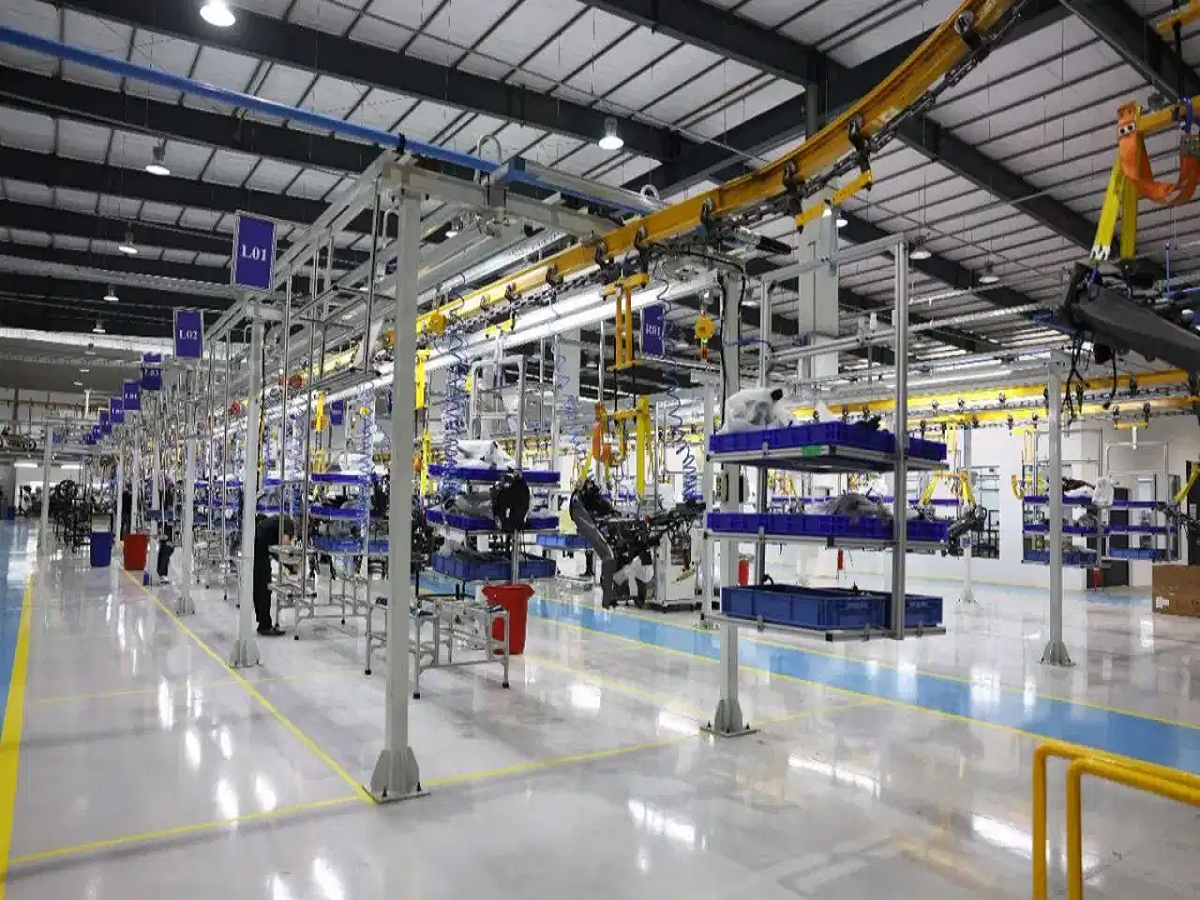
Bajaj Auto is preparing to expand its manufacturing capacity to meet growing demand across electric scooters, premium motorcycles and three-wheelers. The company plans to increase its annual production capacity from approximately 6.25 lakh units to 7.75 lakh units over the next six to nine months.
The expansion comes as the company experiences strong demand in domestic and international markets. According to information shared by Joint Managing Director Rakesh Sharma during discussions on the company's Q2 FY27 results, capacity constraints have emerged in several important business segments.
1. Strong Export Demand Drives Production Expansion
Bajaj Auto's international business has recorded significant growth, with exports reaching approximately 7.8 lakh units during the second quarter, representing a 41% increase compared with the corresponding period last year.
The company has benefited from demand in several international markets, particularly Africa and Latin America.
In Africa, the motorcycle market grew by approximately 35%, while Bajaj Auto's motorcycle exports increased by 83%. In Latin America, the company's sales rose by 44%, compared with market growth of around 12%.
The company also maintained growth in Asia, where the overall market declined by approximately 7% but its sales increased by 5%.
Nigeria remains an important market for Bajaj Auto, where the company reportedly holds around 60% market share. Its Boxer 125 Heavy Duty motorcycle has also gained traction in African markets, contributing to higher export volumes.
2. Chetak Electric Scooter Production to Reach 80,000 Units Monthly
The growing popularity of the Chetak electric scooter is another major reason behind the planned capacity expansion.
According to the supplied report, Chetak retail sales exceeded 45,000 units in September, while its market share stood at approximately 23% during the quarter. However, production was unable to keep pace with demand.
The company produced around 40,000 scooters in September, below its target of 60,000 units.
To address this gap, Bajaj Auto plans to increase Chetak's monthly production capacity to 80,000 units by the fourth quarter. It also plans to open 75 new exclusive Chetak stores during the third quarter.
The expansion could help the company improve vehicle availability, reduce waiting periods and strengthen its position in India's competitive electric scooter market.
3. Premium Motorcycles Deliver Record Sales
Bajaj Auto's premium motorcycle business, which includes KTM and Triumph, has also contributed to growth.
Sales in its Pro Biking business increased by 31% to approximately 40,000 units in the second quarter. Sales during the first half of the financial year reached around 80,000 units, marking a record for that period.
Demand for KTM's adventure motorcycles and high-performance street bikes has supported this performance. Premium motorcycles are an important part of the company's strategy to expand beyond its traditional commuter motorcycle portfolio.
Additional production capacity could help Bajaj Auto meet demand while supporting the growth of its premium motorcycle partnerships.
4. Three-Wheeler Business Continues to Grow
Bajaj Auto's three-wheeler business has also recorded strong results. Sales increased by 13% to approximately 1.62 lakh units during the second quarter.
The company reportedly holds around 90% market share in CNG passenger three-wheelers and more than 50% in the cargo segment. Its share of the electric auto market stood at approximately 32% in September.
Demand for both conventional and electric three-wheelers has exceeded available production capacity by around 10%, according to the report.
Expanding manufacturing capacity for these vehicles could allow the company to fulfil more orders and capitalise on demand from passenger transport operators and commercial businesses.
5. Spare Parts Business Adds Another Growth Opportunity
Bajaj Auto's spare parts business also delivered a strong performance, crossing ₹2,000 crore in quarterly revenue for the first time. Revenue grew by approximately 15% year-on-year.
The segment benefits from the company's extensive installed base of motorcycles and three-wheelers across domestic and international markets.
Although spare parts revenue does not directly determine vehicle manufacturing capacity, it provides an additional source of business growth and supports the company's wider after-sales ecosystem.
What Does the Expansion Mean for Bajaj Auto?
Increasing annual production capacity from 6.25 lakh to 7.75 lakh units represents an additional capacity of 1.5 lakh units, or approximately 24%.
The planned expansion reflects several opportunities for Bajaj Auto:
-
Meeting rising demand for Chetak electric scooters.
-
Improving the availability of premium motorcycles.
-
Increasing production of passenger and cargo three-wheelers.
-
Supporting growth in international export markets.
-
Reducing the impact of manufacturing bottlenecks on sales.
However, additional capacity does not automatically translate into higher sales or profits. The eventual results will depend on customer demand, production costs, supply-chain efficiency and the company's ability to use the expanded capacity effectively.
With demand increasing across multiple business segments, Bajaj Auto's manufacturing expansion could help it strengthen its position in India's two-wheeler and three-wheeler markets while supporting its international growth ambitions.