AUTO
100% Ethanol-Powered Cars Get Government Approval, But Where Will the Fuel Come From? Supreme Court Raises Big Questions
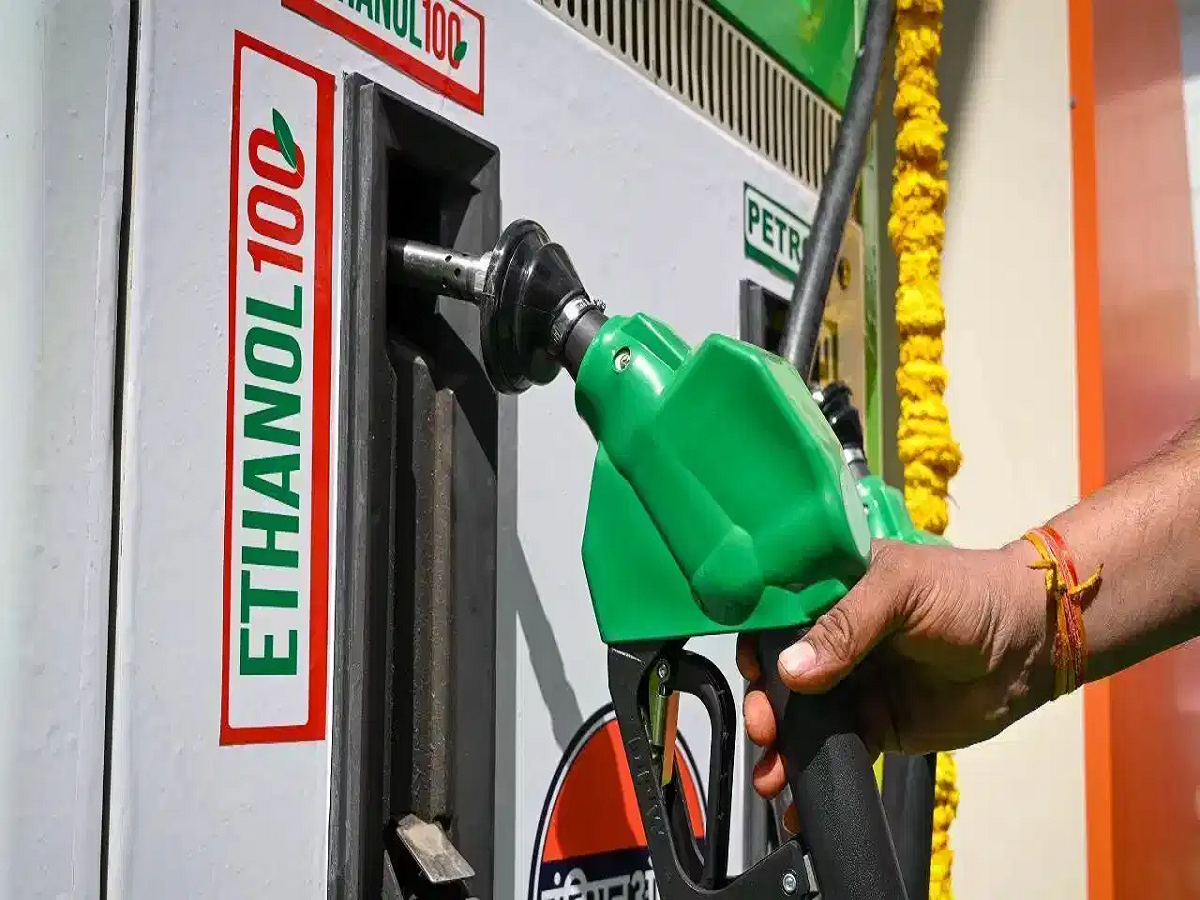
India is gradually moving towards alternative fuels to reduce its dependence on petrol and promote cleaner transportation. However, the government's push for ethanol-powered vehicles has raised an important question about fuel availability. The Supreme Court has now asked the central government how it plans to ensure an adequate supply of ethanol if vehicles capable of running entirely on ethanol are introduced on a large scale.
During a hearing on October 29, a bench comprising Justices M.M. Sundaresh and Prasanna B. Varale questioned the government about the availability and distribution of E100 fuel. Attorney General R. Venkataramani, representing the Centre, explained that introducing such a system would require substantial changes to existing production and supply infrastructure.
1. Government Approves Vehicles That Can Run on 100% Ethanol
On October 26, the Ministry of Road Transport and Highways announced amendments to the Central Motor Vehicles Rules, 1989. These changes provide regulatory approval for flex-fuel vehicles capable of operating on E100 fuel.
Flex-fuel vehicles are specially designed to operate using different combinations of petrol and ethanol. Unlike conventional petrol vehicles, they can accommodate fuels containing significantly higher proportions of ethanol.
For example:
-
E20 contains 20% ethanol and 80% petrol.
-
E85 contains 85% ethanol and 15% petrol.
-
E100 consists almost entirely of ethanol.
However, approving E100-compatible vehicles does not automatically guarantee that the fuel will be readily available across the country.
2. Government Has No Immediate Plan to Increase Ethanol Blending Beyond 20%
Another important aspect of the discussion concerns India's existing ethanol blending programme.
On October 27, Petroleum and Natural Gas Minister Hardeep Singh Puri stated that the government currently has no immediate plans to increase the ethanol blending limit in petrol beyond 20%.
This means that although vehicles capable of running on higher ethanol blends are receiving regulatory approval, the existing petrol blending policy remains unchanged for now.
The difference between approving flex-fuel technology and increasing the ethanol blending target is important. Both involve separate policy and infrastructure decisions.
3. Supreme Court Highlights the Importance of Farmers' Interests
During the hearing, the Supreme Court pointed out that the ethanol policy should not be evaluated only from the perspective of fuel production and availability.
The judges also emphasised the need to consider environmental benefits, public interest and the economic condition of farmers.
Justice M.M. Sundaresh observed that empowering farmers is an important aspect of the discussion and deserves greater attention.
The Attorney General assured the court that farmers' interests would also be addressed during the government's arguments.
Ethanol production can create an additional market for agricultural products such as sugarcane and maize. This could provide farmers with additional opportunities, although the overall benefits would depend on production costs, procurement arrangements and the availability of raw materials.
4. What Is the Dispute Over Ethanol Supply?
The Supreme Court proceedings are connected to the allocation of ethanol for the 2025-26 ethanol supply year.
The matter reached the apex court after an ethanol producer approached the judiciary over the allocation of ethanol to oil marketing companies.
Earlier, the Karnataka High Court had directed Bharat Petroleum, Hindustan Petroleum and Indian Oil Corporation to consider the producer's request for increased ethanol allocation.
The producer argued that ethanol plants established under government policies and operating through long-term agreements with oil companies should receive the benefits and priority provided under those arrangements.
An oil company subsequently challenged the High Court's directions, arguing that they could affect the national ethanol blending policy.
On June 30, the Supreme Court stayed the Karnataka High Court's order and directed the parties to maintain the status quo.
The dispute therefore involves questions about ethanol allocation, long-term purchase agreements and the implementation of India's national blending programme.
5. What Happens Next?
The Supreme Court has scheduled the next hearing for November. The government will have to address several important questions concerning ethanol production, fuel distribution, infrastructure requirements and the interests of farmers.
The development is significant because India is exploring alternative fuels to reduce its dependence on conventional petroleum products.
However, the success of 100% ethanol-powered vehicles will depend on more than just vehicle technology. A reliable supply chain, sufficient agricultural feedstock, suitable fuel stations and affordable production will also be necessary.
The key question remains whether India can develop the infrastructure needed to support E100 vehicles while ensuring that farmers, consumers and the environment benefit from the transition.