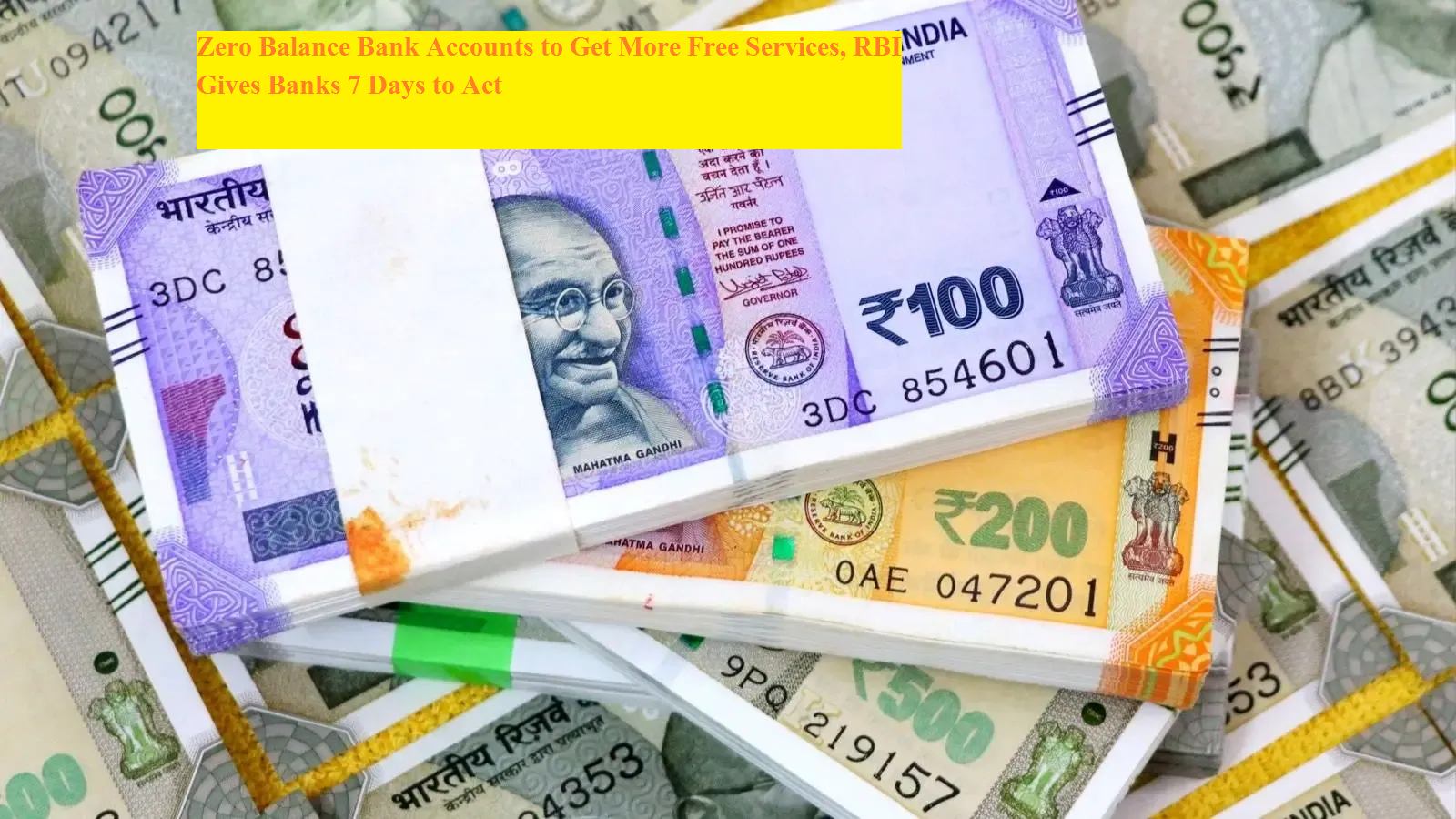
The Reserve Bank of India (RBI) has expanded the range of free facilities available for Basic Savings Bank Deposit (BSBD) accounts, commonly known as zero balance accounts. With this move, the central bank has made it clear that such accounts should not be treated as inferior or limited banking options.
Under the new directive, banks must provide services to BSBD account holders similar to those offered with regular savings accounts. The guidelines aim to strengthen financial inclusion and ensure that customers with zero balance accounts can access essential banking services without unnecessary restrictions.
The new rules are expected to come into effect from April 1 next year, giving banks time to align their systems and processes accordingly.
Savings Account Can Be Converted to BSBD Within 7 Days
According to the RBI’s instructions, if a customer submits a written or online request, banks must convert an existing savings account into a BSBD account within seven days. This step will make it easier for customers who want to shift to a zero balance account without closing their current account.
Reports suggest that banks have also been told to allow customers to request this conversion easily and without complications. Once converted, the account will continue to provide essential banking facilities without requiring a minimum balance.
Additionally, BSBD accounts must allow:
-
Cash deposits without any limit on the number of times in a month
-
Receiving funds through online transfers or cheques
-
Access to standard banking services similar to regular savings accounts
The central bank believes these changes will make basic banking more accessible and user-friendly.
Free Facilities That Customers Will Receive
Under the revised framework, BSBD account holders will be entitled to several free banking services, including:
-
An ATM card or ATM-cum-debit card without any annual charges
-
A cheque book with at least 25 pages per year
-
Free internet banking and mobile banking services
-
A passbook or monthly account statement at no cost
-
At least four free cash withdrawals every month
Importantly, digital payments such as PoS card swipes, NEFT, RTGS, UPI, and IMPS transfers will not be counted within the four free withdrawal limit. This means customers can continue to use digital payment services freely without worrying about additional charges.
Banks Cannot Impose Conditions
The RBI has clarified that these facilities must be provided only when customers request them, and banks cannot make them mandatory conditions for opening or operating a BSBD account.
Customers who already have BSBD accounts can also avail themselves of the new free services by submitting a request to their bank. While banks may offer additional features, they cannot force customers to maintain a minimum balance in order to access those services.
Another important aspect is that opening a BSBD account does not require any initial deposit, making it a truly zero balance banking option.
RBI Rejects Banks’ Suggestions
During consultations, some banks suggested introducing conditions based on a customer’s income or profile before allowing them to open BSBD accounts. However, the RBI rejected this proposal, stating that such conditions would defeat the purpose of providing affordable and accessible banking services to everyone.
Banks had also raised concerns about the potential misuse of these accounts, including risks related to money laundering. They proposed restricting internet and mobile banking services for BSBD accounts, but the central bank did not accept this demand.
However, the RBI agreed to allow certain safeguards for accounts held by minors, particularly regarding deposits and balance limits, to reduce financial risks.
A Big Step Toward Financial Inclusion
The latest decision is seen as a significant step toward improving financial inclusion in India. By ensuring that zero balance account holders receive essential banking services without discrimination, the RBI aims to bring more people into the formal banking system.
For millions of customers, especially those with limited income, these changes could make everyday banking simpler, more affordable, and more accessible.