Smartphones are no longer just getting faster cameras and bigger batteries. The next major upgrade could be something users cannot see at all: artificial intelligence running directly on the device.
For years, most AI-powered features depended heavily on cloud servers. Your phone would send information to a remote server, the AI would process it and the result would be sent back.
That model is gradually changing.
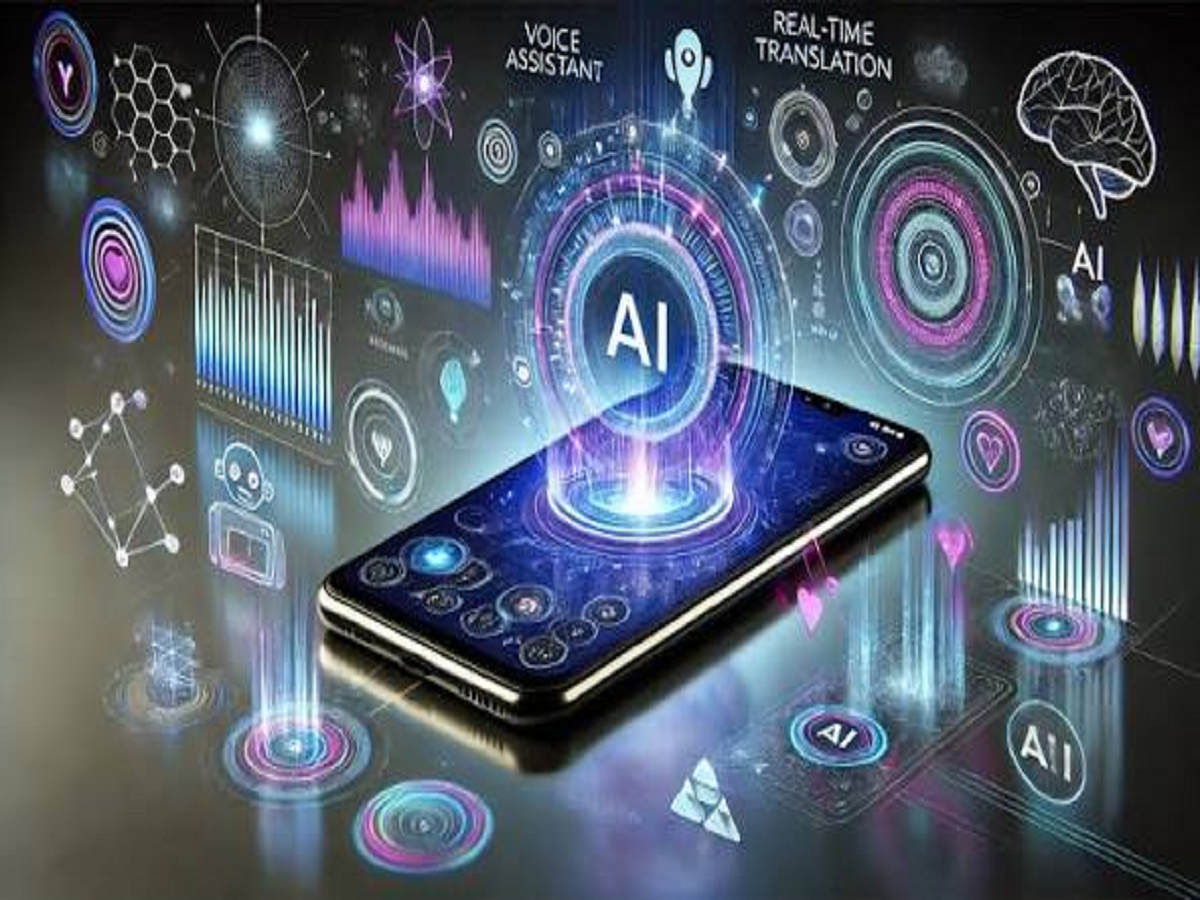
With more powerful smartphone processors and dedicated AI hardware, manufacturers are increasingly moving AI processing directly onto phones. This technology is commonly known as on-device AI.
What exactly is on-device AI?
On-device AI means that certain artificial intelligence tasks can be processed directly by your smartphone rather than being sent to a remote data centre.
Your phone can use its processor, GPU or dedicated neural-processing hardware to analyse information and generate a response.
For users, this could mean faster AI features and less dependence on a constant internet connection.
Your camera could become much smarter
One of the most visible applications could be smartphone cameras.
Instead of simply capturing an image, an AI-powered camera can understand what is happening inside the frame.
It can identify objects, recognise scenes, improve exposure and colours, remove unwanted elements and optimise photographs based on the subject.
Future phones could go even further, allowing users to point their camera at something and immediately receive useful information about what they are seeing.
AI assistants may become more personal
Traditional voice assistants generally wait for a command before responding.
AI-powered assistants are moving towards a more context-aware experience.
An assistant could potentially understand information already present on your device, such as your calendar, messages or documents, and provide more useful responses.
For example, instead of simply setting a reminder, an AI assistant could understand the context of a conversation and help organise related tasks.
The major challenge will be giving users meaningful control over what information the AI is allowed to access.
Your phone may not need the internet for everything
One of the biggest advantages of on-device AI is that some functions can work without an internet connection.
Translation, text summarisation, image recognition and certain writing tools can potentially be processed locally.
This could be particularly useful when travelling, in areas with poor connectivity or when users want to minimise data transmission.
However, more complex AI tasks may still require cloud computing because large models can demand significant processing power.
Privacy could become a major advantage
Sending personal information to the cloud always raises privacy questions.
If an AI feature can process sensitive information directly on your phone, that data may not need to leave the device for certain tasks.
This does not automatically make an AI system completely private. Apps still need appropriate permissions and security protections.
But local processing can reduce the amount of information that needs to be transmitted to external servers.
Battery life is the biggest challenge
There is a catch.
AI calculations can consume considerable processing power, and that can affect battery life.
Smartphone manufacturers therefore need to balance performance with efficiency.
Modern mobile chips increasingly include dedicated AI-processing hardware designed to handle these workloads more efficiently than relying entirely on the main processor.
This is one reason why the AI capabilities of a smartphone are becoming an increasingly important part of its hardware specifications.
The next smartphone upgrade may be about intelligence
For years, smartphone competition revolved around megapixels, refresh rates, charging speeds and processor benchmarks.
Those specifications will continue to matter, but AI could become the next major battleground.
The most interesting question may soon be less about how powerful your phone is and more about how intelligently it can use that power.
A smartphone that understands images, conversations, documents and your daily routines could eventually feel less like a collection of apps and more like a personal digital assistant.
The AI revolution may therefore not require a completely new type of device. It could simply make the phone already sitting in your pocket dramatically more capable.