TECH
Quantum Computing: The Revolutionary Technology That Could Transform the Future of the Internet
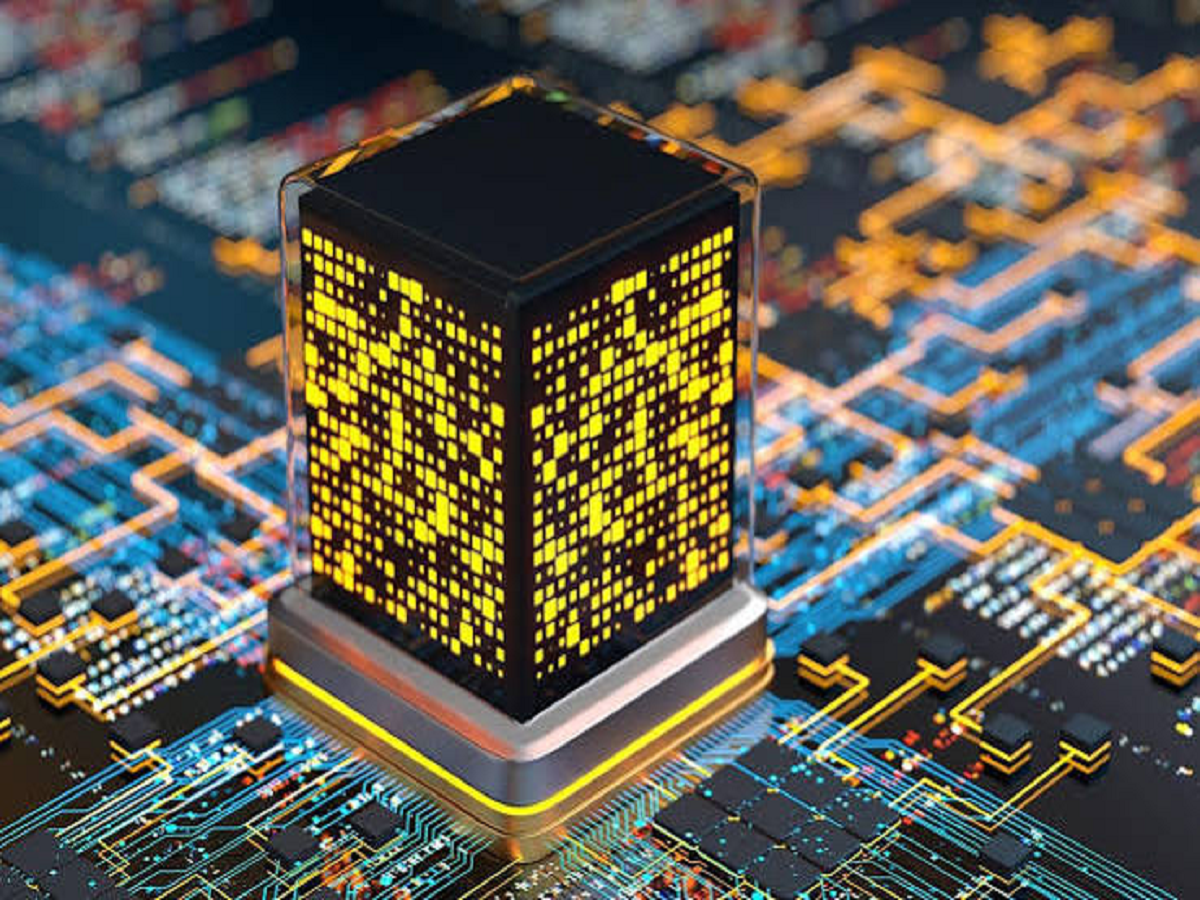
Imagine a computer capable of helping scientists discover new medicines, improving complex financial calculations and solving certain scientific problems that are extremely difficult for conventional computers. This is the promise of quantum computing, one of the most exciting areas of modern technology.
Unlike traditional computers, which process information using bits represented as 0s and 1s, quantum computers use quantum bits, commonly called qubits. By exploiting the principles of quantum physics, these systems could solve specific categories of problems in fundamentally different ways.
Although the technology is still developing, interest in quantum computing is growing as researchers and businesses explore its potential applications.
What Makes Quantum Computers Different?
Traditional computers perform calculations using bits that represent either 0 or 1. Quantum computers use qubits, which can exist in combinations of quantum states through a property known as superposition.
Another important concept is entanglement, a quantum relationship that can connect the states of multiple qubits. Quantum algorithms use these properties to approach certain computational problems differently from conventional algorithms.
However, quantum computers are not simply faster versions of ordinary computers. They are expected to offer advantages for particular tasks, while traditional computers will remain more suitable for most everyday activities, such as browsing the internet, editing documents and running standard business applications.
Five Areas Quantum Computing Could Transform
1. Healthcare and Drug Discovery
Developing a new medicine can involve analysing complex molecules and understanding how they interact. Quantum computers may eventually help researchers simulate certain molecular systems more accurately and investigate chemical processes that are difficult to model using conventional methods.
This could support drug discovery and materials research. However, practical benefits will depend on improvements in hardware, algorithms and error correction, and quantum computing is not expected to replace laboratory testing or clinical trials.
2. Banking and Financial Services
Financial institutions deal with complicated calculations involving risk, investment portfolios, market behaviour and fraud detection.
Quantum algorithms may eventually help with selected optimisation and simulation problems. Researchers are also exploring whether quantum methods could improve particular financial models.
Nevertheless, there is no guarantee that quantum computing will outperform conventional systems for every financial task. Many proposed applications still require extensive testing before they can deliver reliable commercial benefits.
3. Cybersecurity and Online Banking
One of the most significant implications of quantum computing concerns digital security.
Much of today's internet security relies on mathematical problems that are difficult for conventional computers to solve. A sufficiently powerful, fault-tolerant quantum computer could threaten widely used public-key cryptographic systems, including RSA and elliptic-curve cryptography.
This does not mean that today's online banking systems can suddenly be broken by existing quantum computers. Building a machine capable of carrying out such attacks remains a major technical challenge.
In preparation, technology companies and cybersecurity experts are developing and deploying post-quantum cryptography—encryption methods designed to resist attacks from both conventional and quantum computers.
4. Artificial Intelligence and Scientific Research
Artificial intelligence requires substantial computing resources to train models, process information and perform complex calculations.
Researchers are investigating whether quantum computing could eventually accelerate certain optimisation, sampling or scientific workloads associated with AI. Quantum systems may also contribute to research in physics, chemistry and advanced materials.
However, quantum computing is not currently a universal replacement for GPUs or conventional AI infrastructure. Any advantage will depend on the specific task, the algorithm and the maturity of the hardware.
5. Climate Research and New Materials
Scientists are exploring quantum computing for problems involving chemical reactions, batteries, catalysts and advanced materials.
Better simulations could help researchers investigate materials for energy storage, cleaner industrial processes and more efficient technologies. Quantum systems may also support selected scientific models relevant to environmental research.
These possibilities remain areas of active research, rather than guaranteed near-term solutions to climate change.
Is Quantum Computing Already a Reality?
Yes, quantum computers already exist, and research institutions and technology companies are experimenting with them. The challenge is making these machines reliable and useful for large, practical problems.
Qubits are extremely sensitive to environmental disturbances. Errors can occur during calculations, and maintaining stable quantum states is difficult. Researchers are working on improved hardware, error correction and methods for scaling systems to larger sizes.
In October 2026, Gartner's technology outlook continued to identify advanced computing as part of the wider technology landscape. Industry forecasts also point towards increasing commercial interest, although estimates of market size and timelines vary considerably. <Cite refs={["turn867193news7","turn867193search0"]}/>
The key question is no longer simply whether quantum computers can be built, but which real-world problems they will be able to solve more effectively than existing technologies.
What Should Businesses Do to Prepare?
Businesses do not necessarily need to purchase quantum computers today. However, organisations that rely on sensitive information should begin assessing their long-term cybersecurity risks.
A practical starting point is to identify where encryption is used, understand which systems depend on public-key cryptography and discuss migration plans with technology and security teams. Organisations should also evaluate their vendors' readiness for post-quantum security standards.
For students and professionals, learning the fundamentals of quantum computing, cryptography and computer science can provide a useful foundation for understanding this emerging field.
The Future of Quantum Computing
Quantum computing could become an important tool for solving selected problems in science, medicine, engineering and cybersecurity. Its progress may also influence how organisations protect sensitive data and plan their long-term technology investments.
However, the technology should not be confused with science fiction. Major engineering challenges remain, and useful applications will emerge gradually rather than transforming every industry overnight.
The real revolution may come when quantum computers work alongside conventional computers and AI systems, with each technology handling the tasks for which it is best suited. That combination could open new possibilities for research and innovation in the years ahead.