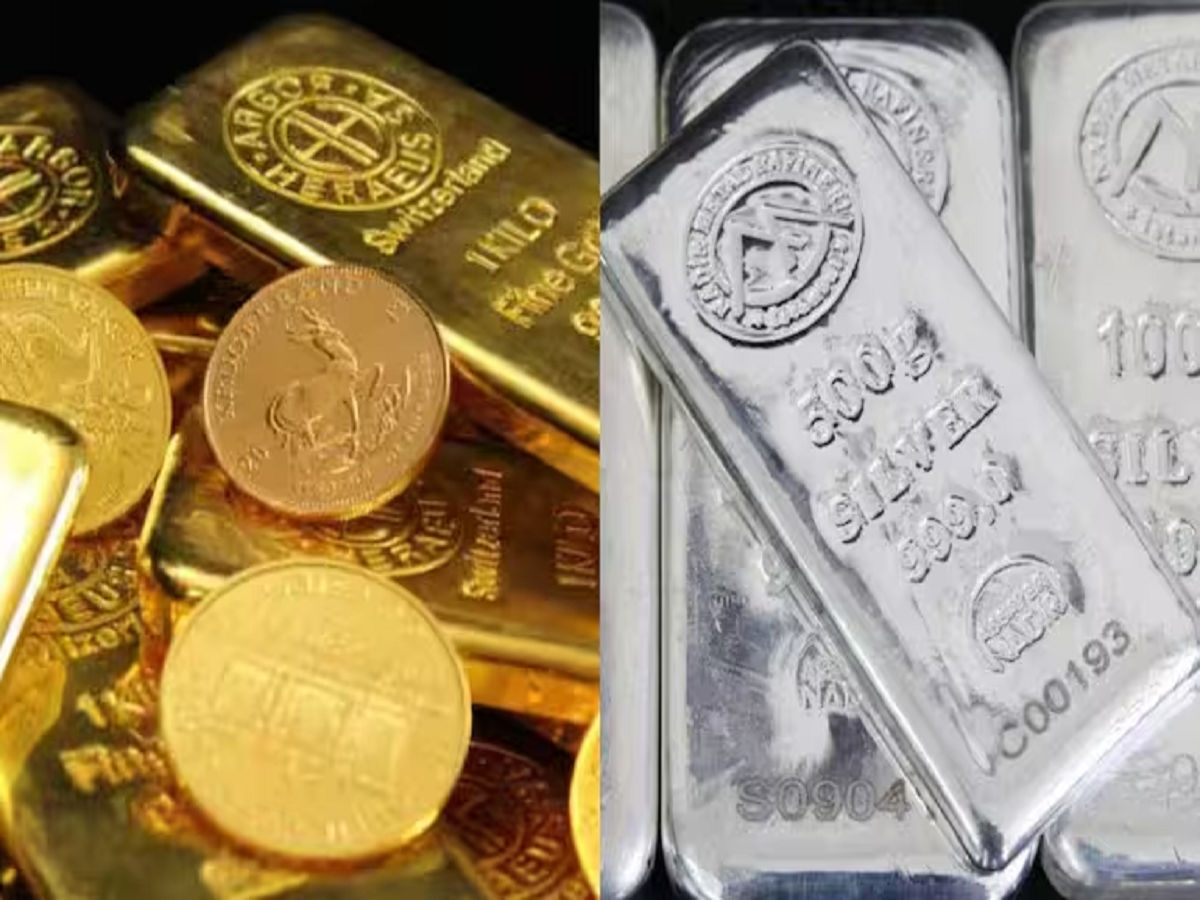
Gold and silver prices slipped sharply on February 17 across global and Indian markets, leaving investors puzzled. The decline came even as analysts maintain that the long-term fundamentals of both precious metals remain strong. The sudden drop has raised an important question in commodity circles: if the outlook is positive, why are prices falling now?
Sharp Decline in Global and Domestic Prices
Internationally, spot gold fell about 1.5% to roughly $4,918.65 per ounce, after briefly sliding more than 2% during the trading session. U.S. gold futures for April delivery also dropped around 2.2% to about $4,937 per ounce, reflecting cautious sentiment among traders.
In India, the downturn was mirrored on the Multi Commodity Exchange of India, where both gold and silver futures traded lower. By 3:30 PM, gold futures were down about 1.14% to nearly ₹1,53,000 per 10 grams. Silver futures declined even more sharply, falling approximately 2.78% to around ₹2,33,010 per kilogram.
What’s Driving the Fall in Precious Metals?
Market experts point to several macroeconomic and geopolitical factors behind the recent weakness:
1. Stronger U.S. Dollar
A strengthening dollar makes gold more expensive for buyers using other currencies, which typically reduces demand and pressures prices downward.
2. Cooling Geopolitical Tensions
Precious metals often act as safe-haven assets during global uncertainty. Signs of easing geopolitical stress can lead investors to shift funds toward riskier assets like equities, weakening demand for gold and silver.
3. Monetary Policy Uncertainty
Future decisions by the Federal Reserve remain unclear. With expectations that Jerome Powell may be replaced by Kevin Warsh as chair in May, investors are unsure how interest-rate policy might change. Higher interest rates tend to weigh on gold because the metal does not yield interest, making bonds and deposits more attractive alternatives.
Why Prices Had Risen Earlier
The recent fall follows a strong rally over the past year and a quarter. Several factors had supported precious metals during that period:
-
Global uncertainty linked to policies associated with Donald Trump boosted safe-haven demand.
-
Periods of dollar weakness made gold cheaper for international buyers.
-
Earlier expectations of rate cuts by the Federal Reserve improved the appeal of non-yielding assets like gold.
-
Central banks in multiple countries increased their gold reserves, strengthening long-term demand.
-
Rising geopolitical tensions encouraged investors to diversify into metals as a hedge against volatility.
Expert Outlook: Short-Term Volatility, Long-Term Strength
According to commodity analysts, the long-term structure for gold still appears constructive. They suggest that sustained upward momentum could return if U.S. monetary policy turns more accommodative in the future.
Silver, meanwhile, is believed to be in what analysts describe as an “accumulation phase,” meaning investors may gradually build positions before a possible breakout. Market watchers note that late February and early March could be crucial for price direction. A decisive close above key resistance levels could signal the start of a fresh rally, though short-term fluctuations are still likely.
What Investors Should Watch Next
For traders and investors, the near-term direction of gold and silver will largely depend on three variables:
-
Movement of the U.S. dollar index
-
Signals from Federal Reserve policy statements
-
Global political and economic developments
If interest rates remain high and the dollar stays strong, prices may remain under pressure. However, any shift toward rate cuts or renewed global uncertainty could quickly revive demand for precious metals.
Bottom Line
The recent slide in gold and silver prices does not necessarily signal a weakening long-term outlook. Instead, it reflects short-term macroeconomic pressures and market uncertainty. While volatility may persist in the near term, analysts broadly agree that underlying fundamentals still support the metals over a longer investment horizon.