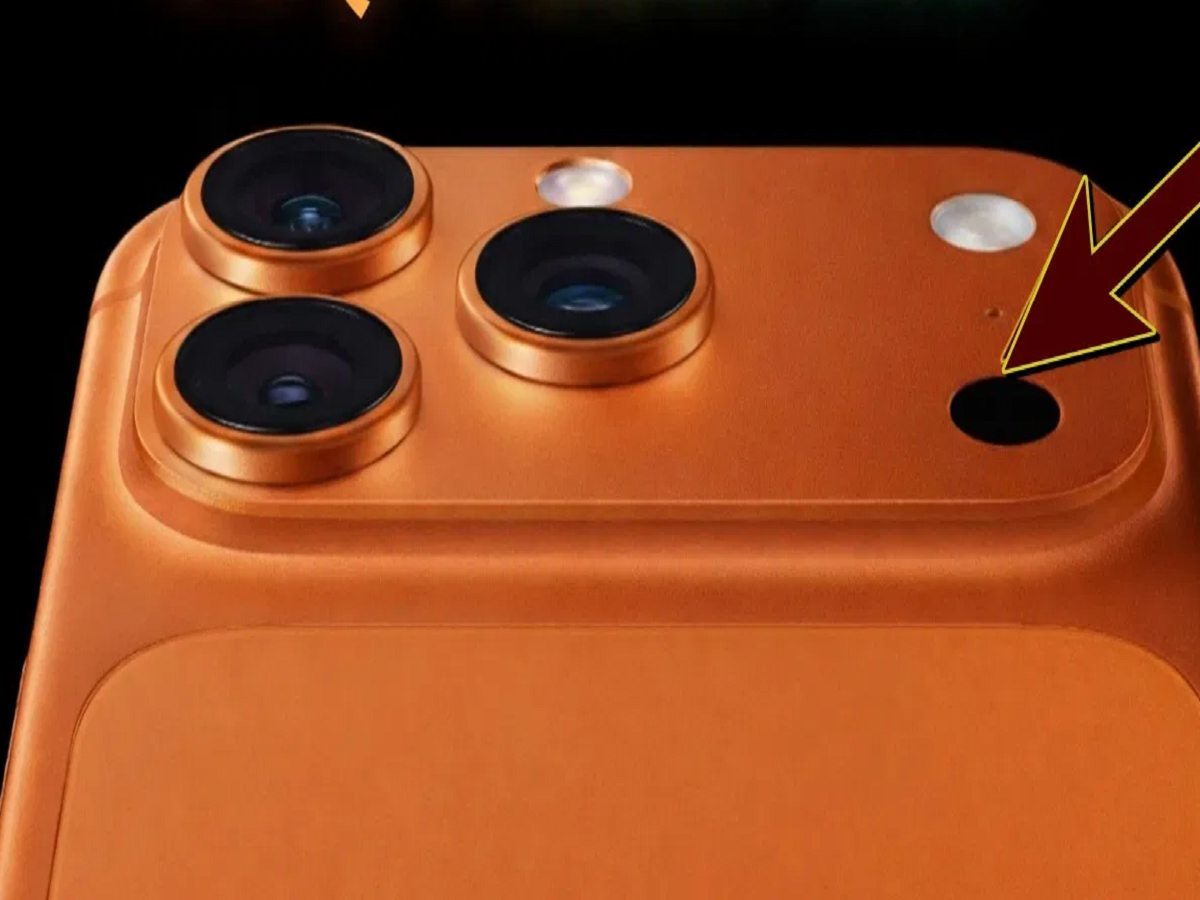
Have you ever noticed a small black dot next to the camera on some iPhones and wondered what it does? Even many long-time iPhone users are unaware of its purpose. This tiny dot is not a design element—it plays a powerful role in how certain iPhones work.
Before going further, it’s important to note that this black dot is not present on all iPhones. It appears only on Pro models starting from the iPhone 12 Pro and later. Standard and non-Pro iPhone models do not include this feature.
What exactly is this black dot?
The black dot found near the camera module on Pro iPhones houses a LiDAR sensor. LiDAR stands for Light Detection and Ranging—a technology used to measure distances and understand depth.
This sensor works quietly in the background and cannot be manually switched on or off.
What does the LiDAR sensor do?
The LiDAR sensor significantly enhances the phone’s capabilities by:
-
Improving portrait photography, especially in low light
-
Making autofocus faster and more accurate
-
Powering Augmented Reality (AR) apps with precise depth detection
-
Helping measure distance, objects, and people using supported apps
-
Enhancing night mode photography and 3D depth mapping
In simple terms, it helps the iPhone “understand” its surroundings in three dimensions.
How does the LiDAR sensor work?
The LiDAR system consists of two main parts:
-
A light emitter
-
A receiver
The emitter uses a special laser called a Vertical Cavity Surface Emitting Laser (VCSEL). This laser sends out invisible near-infrared light, which hits nearby objects and reflects back to the receiver.
By calculating how long the light takes to return, the phone’s software determines the exact distance of objects from the camera. This data is then used to improve focus, depth sensing, and AR experiences.
The black coating on the sensor acts as a protective filter—it blocks visible light while allowing near-infrared light to pass through, which is essential for accurate LiDAR performance.
Why only Pro iPhones have it
LiDAR technology adds cost and complexity, which is why Apple has limited it to Pro models. These devices are designed for users who want advanced photography, videography, and professional-grade features.