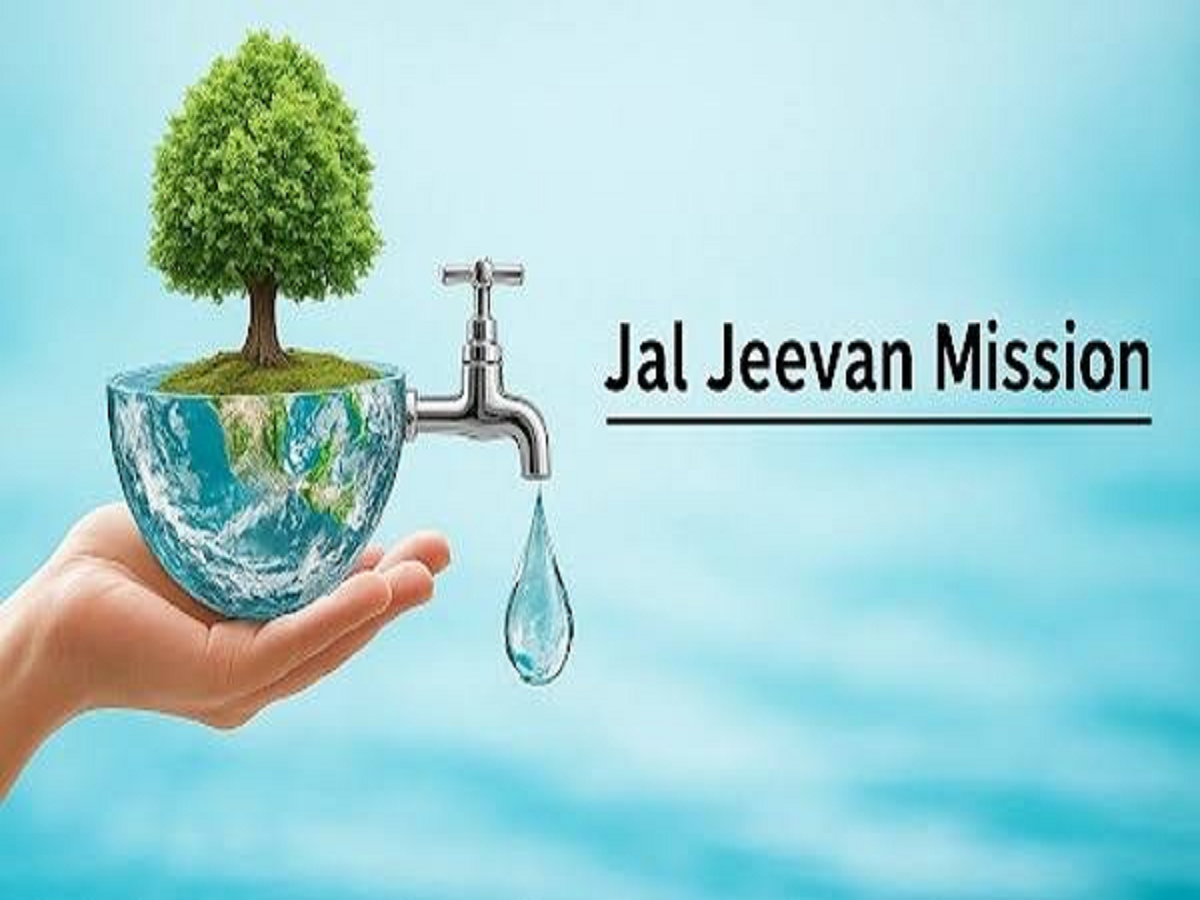
For millions of rural households, access to a reliable tap-water connection is not just about convenience but also about having a dependable source of safe drinking water. The government has now released ₹6,154.96 crore to states during the financial year 2026-27 to accelerate work under Jal Jeevan Mission 2.0.
The development is important for households that already have tap connections but continue to face problems such as irregular water supply, as well as villages where piped water infrastructure is still being developed.
What is Jal Jeevan Mission 2.0?
Jal Jeevan Mission 2.0 is the expanded version of the government's rural drinking-water programme. The Union Cabinet approved the extension of the mission until December 2028, with a stronger focus on providing reliable, adequate and safe drinking water services to rural households.
The mission has a total approved outlay of ₹8.69 lakh crore, including ₹3.59 lakh crore in central assistance.
Where has the latest money gone?
The Centre said it has reimbursed ₹5,289.09 crore as its central share to 10 states during the current financial year. Another ₹865.87 crore has been released through the SNA SPARSH system across 13 states.
The funding is intended to support the continued development and maintenance of rural drinking-water infrastructure.
A tap connection alone is not enough
One of the key changes in the government's approach is the focus on reliable water service, rather than simply installing a tap.
A household may have a tap connection, but if water does not arrive regularly or the quality is poor, the purpose of the infrastructure is not fully achieved. Jal Jeevan Mission 2.0 therefore places greater emphasis on sustainability and dependable water services.
What does this mean for rural families?
For families in villages covered by the programme, continued investment could mean better water infrastructure and more reliable household water supplies.
It can also reduce the need for families to depend on distant water sources, particularly in areas where women and children traditionally spend considerable time collecting water.
However, the actual improvement will depend on how projects are implemented locally, including the availability and sustainability of water sources.
Why is this important during summer and drought periods?
Water availability can become a major challenge when groundwater levels fall or local sources dry up. Simply laying pipelines cannot solve the problem if there is insufficient water available to supply them.
This is why the long-term success of the programme depends not only on infrastructure but also on water-source sustainability, local management and regular maintenance.
What should villagers do if their tap has no regular supply?
If a household has a Jal Jeevan Mission connection but is not receiving regular water, residents should first approach their Gram Panchayat or local water-supply authority.
People should also avoid paying unofficial agents for getting a government-funded connection or for supposedly speeding up work. Any payment requirement should be verified through the relevant local authority.
With the Centre continuing to release funds under Jal Jeevan Mission 2.0, the focus is increasingly shifting from simply connecting rural homes to ensuring that those connections actually provide safe and dependable drinking water.