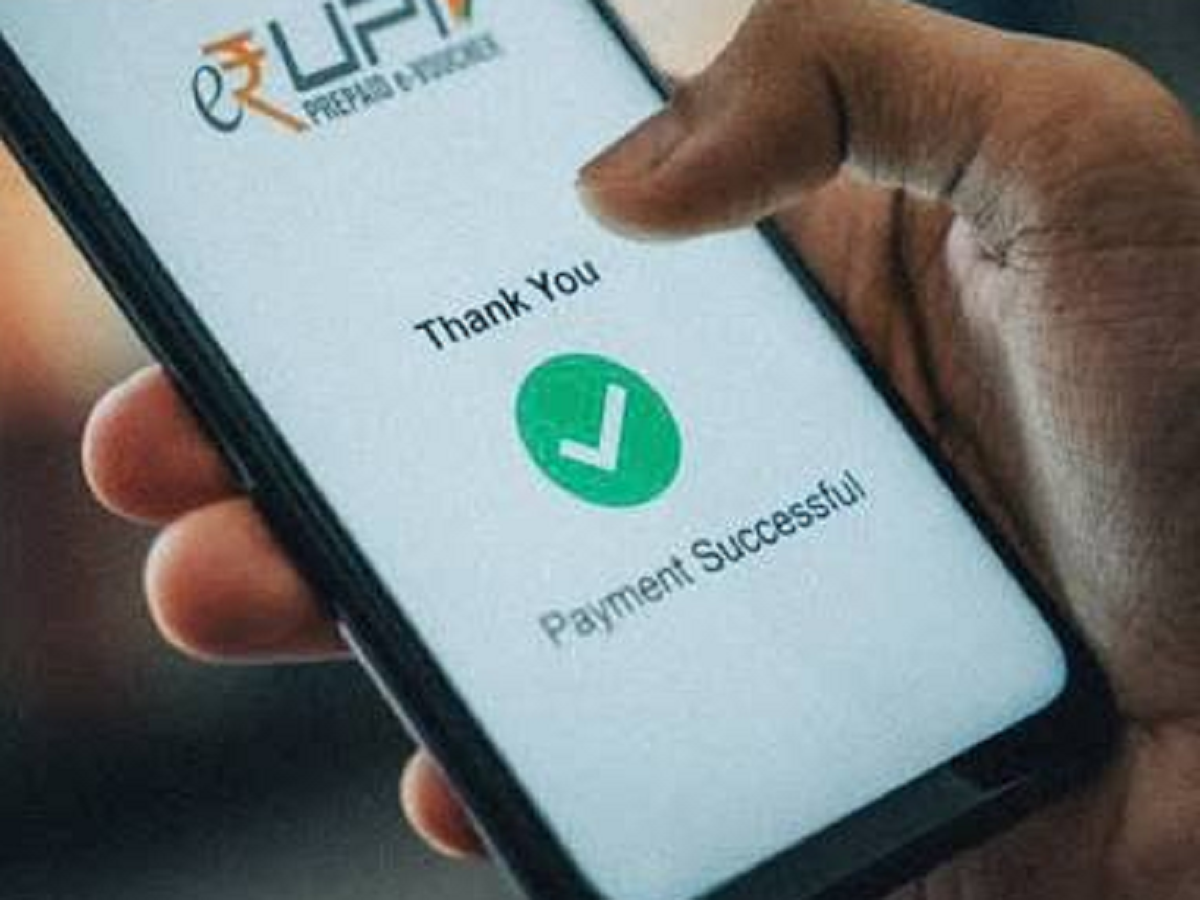
Millions of Indians use UPI every day for everything from buying groceries to paying restaurant bills and transferring money to family members. A recent government clarification about the UPI payment framework has therefore attracted considerable attention.
The important point for ordinary users is that UPI payments between individuals will remain completely free. Customers also will not be charged MDR for merchant payments up to ₹2,000. The new framework mainly affects certain larger merchant transactions.
Will you have to pay for sending money through UPI?
No.
Person-to-person UPI transactions will continue to remain free, regardless of the amount transferred.
So, if you send ₹5,000 to a friend or transfer ₹50,000 to a family member using UPI, the government framework does not introduce an MDR charge on that transaction.
This means regular users do not need to worry about suddenly being charged for transferring money to another person.
What happens when you pay a shop?
Merchant transactions are treated differently.
UPI payments to merchants of up to ₹2,000 will continue to remain free of MDR. The government says approximately 96% of merchant transactions will remain unaffected by the new framework.
For certain merchant transactions above ₹2,000, an MDR of 0.4% may apply within the payment ecosystem.
However, this is an important distinction: MDR is not a customer charge.
The government has specifically clarified that merchants should not pass the MDR cost on to customers.
What is MDR?
MDR stands for Merchant Discount Rate.
It is a fee associated with processing certain merchant payments and is distributed among participants in the payment ecosystem, including banks, payment service providers and UPI application providers.
It is not a government tax.
Therefore, if a shopkeeper tells you that the government has introduced a mandatory "UPI tax" on your payment, that is not an accurate description of the new framework.
Small shopkeepers are protected
The framework also provides protection to small merchants.
Small merchants, including street vendors and neighbourhood shops receiving up to ₹1 lakh per month through UPI QR codes under the specified small-merchant category, will continue to receive zero-MDR treatment.
This is intended to ensure that small businesses do not face additional payment costs simply because they accept digital payments.
What about payments above ₹2,000?
Certain merchant transactions above ₹2,000 can attract MDR.
For most specified merchant transactions, the rate is 0.4%, with a maximum MDR of ₹300 for transactions of ₹75,000 and above.
There are also special rates for certain sectors. For example, specified essential sectors such as railways, telecommunications, insurance, fuel and agricultural inputs can attract a flat MDR of ₹5 for transactions above ₹2,000. Capital-market-related payments have a separate rate of 0.02%, subject to a ₹300 cap.
Does this mean your UPI app can charge you?
The government has clarified that individuals will continue to have free UPI usage and that UPI application providers cannot impose platform fees or hidden charges under this framework.
Banks have also been advised to ensure that merchants do not pass MDR charges on to customers.
So, if you are making a normal UPI payment, you should not assume that a new MDR automatically means you have to pay an additional amount.
Why has the government introduced this framework?
UPI has become one of India's most widely used digital payment systems. Maintaining the infrastructure behind millions of daily transactions involves banks, payment providers and technology companies.
The new framework is intended to create a limited revenue mechanism for larger merchant transactions while keeping everyday person-to-person payments and most small-value merchant payments free.
The government says the objective is to support the long-term sustainability and expansion of the UPI ecosystem while protecting individuals and small businesses.
What should UPI users remember?
For everyday users, the key points are simple:
-
Sending money to another person through UPI remains free.
-
Merchant payments up to ₹2,000 remain free of MDR.
-
Around 96% of merchant transactions are expected to remain unaffected.
-
MDR is not a government tax.
-
Customers should not be charged MDR separately by merchants.
-
Small merchants continue to receive protection under the zero-MDR framework.
-
Never share your UPI PIN or OTP with anyone claiming they need it to process a refund or remove a UPI charge.
So, the next time you hear that "UPI has become chargeable," don't panic. The new framework does not mean that ordinary users will suddenly have to pay a fee every time they scan a QR code or send money to someone.
Important: UPI transaction limits and applicable payment rules can vary by transaction type, bank and payment provider. Always check your bank or UPI application's official information if you see an unexpected charge.