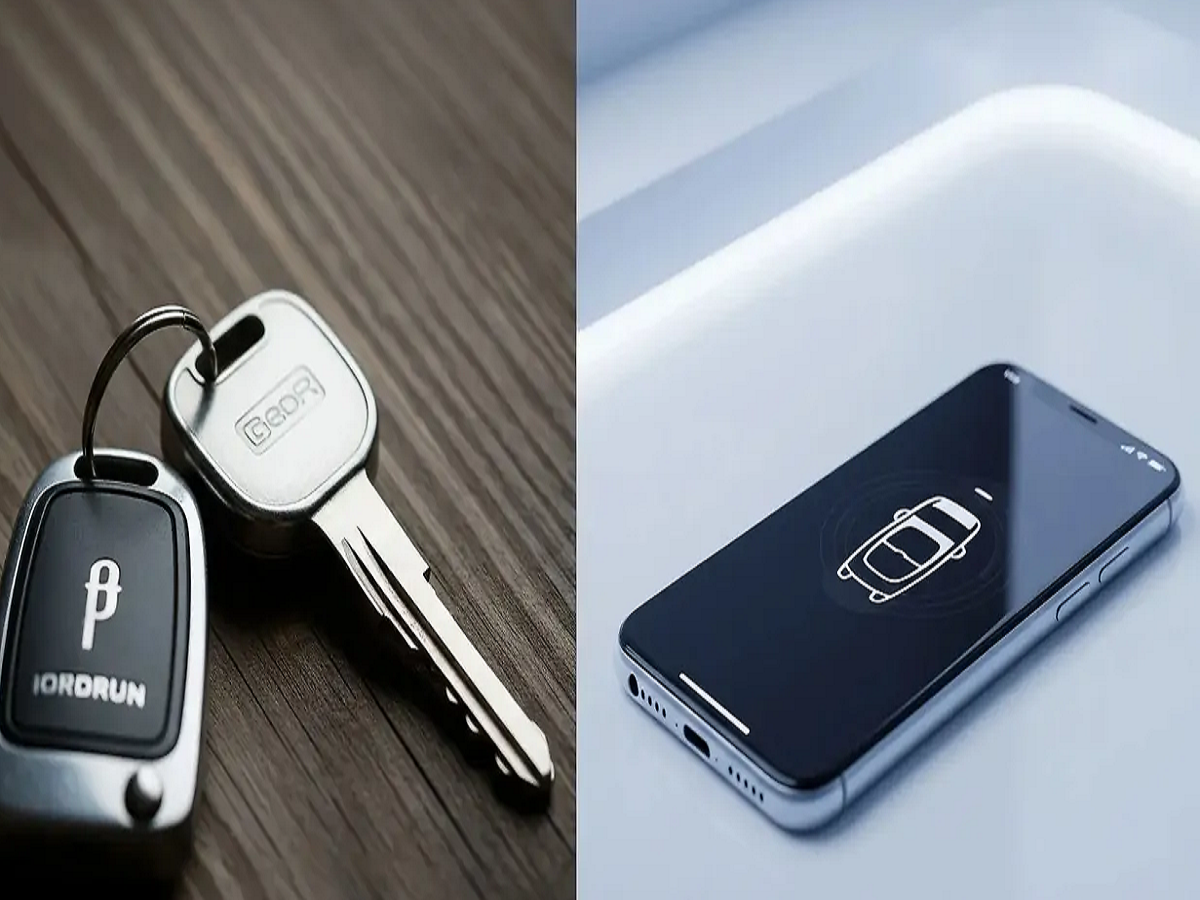
Car keys are changing. Many modern cars now offer digital-key technology that allows drivers to use a smartphone, smartwatch or another compatible device instead of carrying a traditional physical key.
The technology combines wireless communication, encryption and smartphone authentication to turn a mobile device into a secure vehicle key.
For drivers, this could mean one less thing to carry — and potentially a much more convenient way to share access to a car.
What is a digital car key?
A digital car key is a virtual credential stored on a compatible smartphone or wearable device.
Instead of inserting a physical key or pressing a button on a conventional remote, the vehicle communicates wirelessly with your phone to determine whether you have authorised access.
Depending on the car and technology being used, the phone may allow you to:
-
Unlock the vehicle
-
Lock the vehicle
-
Start the engine
-
Share access with another person
-
Use the car without taking the phone out of your pocket
The exact features depend on the manufacturer and vehicle.
How does the car know that your phone is nearby?
Digital car keys can use technologies such as Bluetooth, NFC and Ultra-Wideband (UWB).
NFC can allow you to hold your phone near a specific point on the vehicle to unlock or start it.
Bluetooth can enable communication between the phone and car over a longer distance.
UWB is particularly interesting because it can determine the relative position of compatible devices more precisely. This can allow the vehicle to recognise when an authorised phone is approaching and potentially unlock automatically.
Can someone simply copy your digital key?
Digital car keys are designed with security features intended to prevent simple copying.
The credential is generally protected by cryptographic technology and the security mechanisms of the phone itself.
In many implementations, you must also unlock or authenticate your phone using a PIN, fingerprint or facial recognition before certain actions can be completed.
This provides an additional layer of protection compared with simply having a physical object.
What happens if your phone battery dies?
This depends on the vehicle and digital-key system.
Some systems support a limited form of NFC-based access even when the phone's battery is extremely low, allowing the phone to function for a period using the device's reserve power.
However, this capability is not universal.
If you depend entirely on your smartphone as your car key, it is still sensible to understand your vehicle manufacturer's emergency-access procedure and keep the physical key or backup method available when appropriate.
Can you give your car key to someone remotely?
This is one of the most useful features.
Some digital-key systems allow an owner to share a virtual key with another person.
For example, you could potentially give a family member access to the car without physically handing them your key.
Depending on the system, you may be able to control the type or duration of access.
You could give someone temporary access rather than providing permanent permission.
What if you sell the car?
Digital keys are linked to the vehicle and authorised users, so access should be removed when ownership changes.
If you sell your car, make sure your digital key is deleted from the vehicle and that any shared keys or authorised users are removed.
Simply deleting the car from your phone may not always be enough, so follow the manufacturer's official procedure.
Is a digital car key safer than a physical key?
It can offer significant security advantages, but it is not automatically safer in every situation.
A smartphone has multiple security layers, including device authentication and encrypted credentials. At the same time, losing an unlocked phone or compromising the associated account can create risks.
The best protection comes from using a strong device PIN, keeping biometric authentication enabled and installing software updates promptly.
What happens if someone steals your phone?
If your phone is protected with a strong PIN or biometric authentication, accessing the digital key may be considerably harder.
You should also have a way to remotely lock or erase the device if it is lost.
If your phone is stolen, contact the vehicle manufacturer or follow the digital-key service's instructions to revoke the credential if necessary.
Will every car support this technology?
No.
Digital-key support depends on the vehicle manufacturer, model, trim level, smartphone and sometimes the region in which the vehicle is sold.
Even two cars from the same manufacturer may offer different digital-key capabilities.
Before buying a car specifically for this feature, check the exact model and variant rather than assuming that every version supports smartphone-based keys.
The future of car keys may look very different
The smartphone has already replaced many everyday objects — cameras, wallets, boarding passes and physical documents.
The car key could be next.
As digital-key technology becomes more widespread, unlocking a vehicle may eventually become as simple as walking towards it with your phone in your pocket.
For now, however, digital keys should be treated as a useful convenience rather than a reason to completely forget about backup access. Technology can make getting into your car easier, but knowing what to do when your phone is lost, damaged or out of battery is just as important.