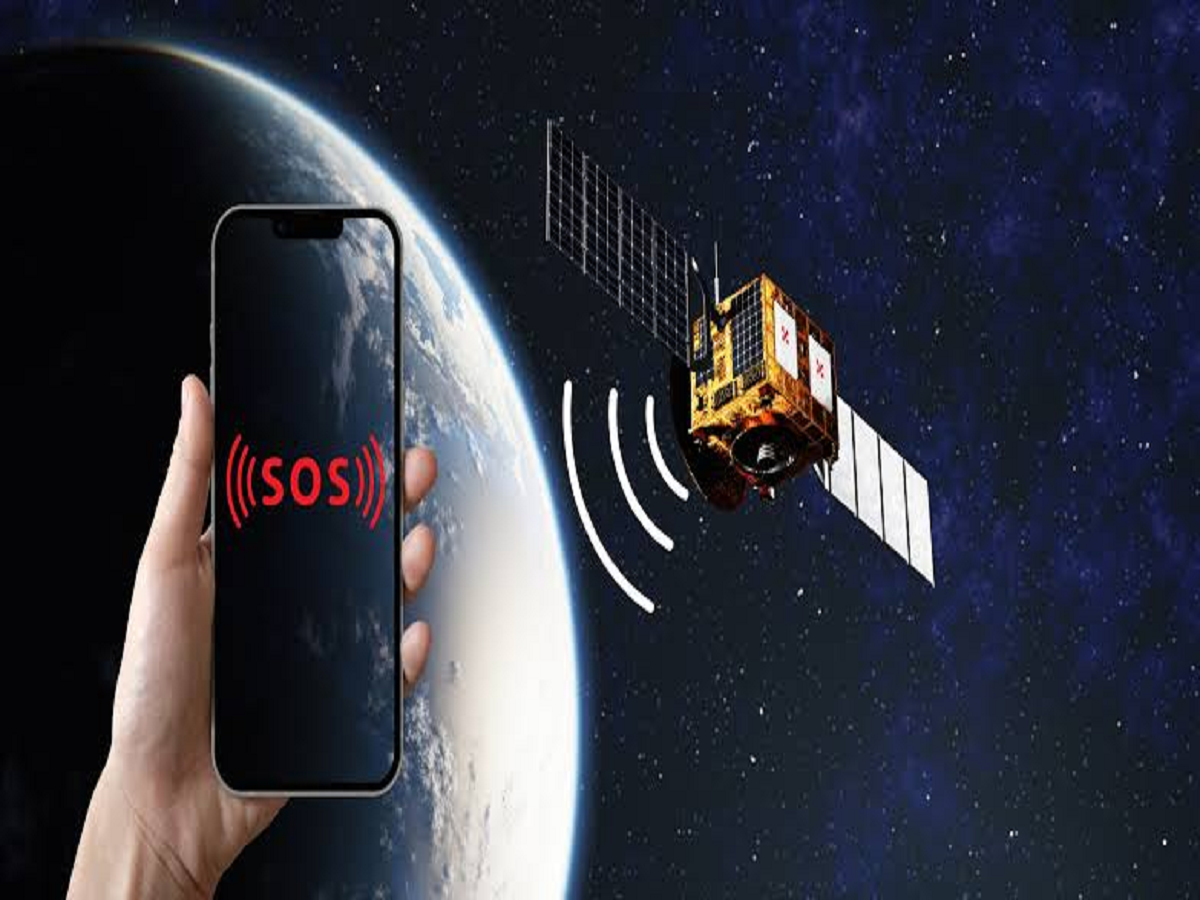
Imagine travelling through a remote mountain road, desert or rural area where your phone suddenly shows "No Service." Traditionally, the only solution has been to wait until you return to an area covered by a mobile tower.
That could change dramatically.
A new generation of satellite-to-phone technology is being developed to connect ordinary smartphones directly to satellites, without requiring a traditional satellite phone or a special antenna.
The technology could eventually make mobile connectivity available in places where building conventional towers is difficult or too expensive.
How does satellite-to-phone connectivity work?
Traditional mobile networks depend on towers installed on the ground.
Your phone communicates with a nearby tower, which connects it to the wider network.
Satellite-to-phone technology changes this arrangement. Instead of connecting to a nearby terrestrial tower, a compatible phone can communicate with a satellite passing overhead.
The satellite then connects the signal to the telecom network.
In simple terms:
Phone → Satellite → Telecom network
This could allow people to stay connected even when there is no conventional mobile tower nearby.
Do you need a satellite phone?
That's what makes the technology particularly interesting.
Traditional satellite communication generally requires specialised equipment with a large antenna and a clear view of the sky.
New direct-to-device systems are being designed to work with smartphones that people already carry.
The technology is being developed to use existing mobile communication standards and spectrum arrangements, although compatibility depends on the specific service, smartphone, operator and country.
What can you do without a mobile tower?
The capabilities are expanding.
Early satellite-to-phone services have focused on relatively simple communication such as text messaging.
As the technology develops, providers are working toward supporting additional services, potentially including voice calls and data connectivity.
This means that a future smartphone may be able to send a message even when it has completely lost terrestrial network coverage.
Why is this important in India?
India has a huge geographical area containing mountains, forests, deserts, islands and sparsely populated regions.
Building mobile towers everywhere is not always economically or geographically practical.
Satellite connectivity could therefore complement terrestrial networks by providing coverage in locations where traditional infrastructure is limited.
It could also become particularly useful during natural disasters when mobile towers or electricity infrastructure are damaged.
Satellites could become a backup during emergencies
One of the most important applications isn't convenience — it is emergency communication.
Imagine a major earthquake, flood or cyclone damaging local communication infrastructure.
People in affected areas could potentially use satellite connectivity to contact emergency services or family members even when nearby mobile towers are unavailable.
For hikers, trekkers and people travelling through remote regions, the ability to send an emergency message could also be extremely valuable.
Does satellite internet mean unlimited high-speed internet everywhere?
Not yet.
This is an important distinction.
Connecting a smartphone directly to a satellite is technically much more challenging than connecting a phone to a nearby tower.
Early services are likely to have limitations involving speed, latency, availability and the amount of data that can be transmitted.
Text messages require relatively little bandwidth. Streaming high-resolution video requires vastly more.
Therefore, the first generation of satellite-to-phone services is expected to focus on essential connectivity rather than replacing your normal 4G or 5G connection.
Why are satellites becoming so important?
Launching satellites has historically been extremely expensive.
The development of reusable rockets, smaller satellites and mass satellite production has changed the economics of space technology.
Large constellations of satellites can now provide coverage across huge geographical areas.
This has opened the door to new applications beyond traditional satellite television and specialised communications.
What happens inside your phone?
You don't necessarily need to understand the technical process to use the service.
When terrestrial coverage disappears, a compatible phone could identify an available satellite service and establish a connection.
The user experience may eventually resemble ordinary mobile connectivity, although the phone may need to be outdoors or have a relatively unobstructed view of the sky.
Buildings, mountains and other physical obstacles can affect the connection.
Will satellite connectivity replace mobile towers?
Probably not.
Terrestrial networks are far more efficient for densely populated areas.
A mobile tower can simultaneously handle large numbers of users at high speeds, making it ideal for cities.
Satellites are more useful for covering enormous geographical areas where relatively few users are spread across large distances.
The two technologies are therefore more likely to complement each other.
The future could be a phone that almost never loses connectivity
The most interesting possibility is not that smartphones will stop using mobile towers.
Instead, phones could automatically switch between different forms of connectivity depending on what is available.
You could be connected through:
5G → 4G → Wi-Fi → Satellite
without necessarily changing devices.
That would make "No Service" a much less common problem.
Satellite-to-phone technology is still developing, and availability will depend on operators, regulations, compatible devices and commercial rollout. But the direction is clear: the boundary between mobile networks and satellite networks is gradually disappearing.