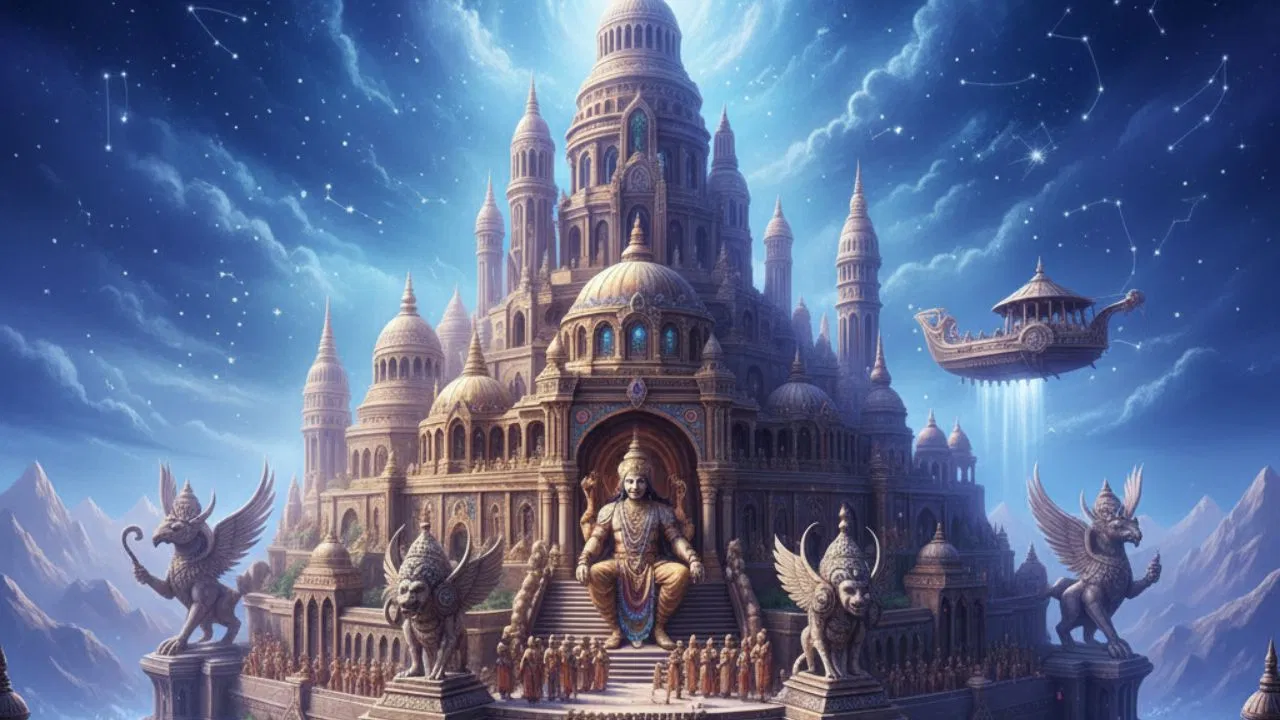
Hindu scriptures describe Lanka as a city of unmatched splendor, often called Sone ki Lanka (Golden Lanka). Its beauty and wealth were said to surpass even the imagination, making it a symbol of power, illusion, penance, and pride. However, the story of Golden Lanka is not just about grandeur—it is also a warning about greed and arrogance. The very acts through which Ravana gained Lanka eventually became the reason for his downfall.
How was Golden Lanka built?
According to the Ramayana, Golden Lanka was built by Vishwakarma, the divine architect of the gods. The city was originally constructed for Lord Shiva. It is said that Vishwakarma used pure gold to build the palaces, gates, roads, and mansions of Lanka. The entire city shimmered like the sun, with walls and rooftops glowing with divine brilliance.
Kubera, the first ruler of Lanka
The first ruler of Lanka was Kubera, the god of wealth and a devotee of Lord Shiva. Lanka served as Kubera’s capital, from where he managed the treasury of the gods. Under his rule, Lanka became a center of prosperity, balance, and divine order.
However, Kubera’s half-brother Ravana, the son of sage Pulastya, grew increasingly jealous of this immense wealth and power. Greed and ambition took over his mind, and he began plotting to take Lanka for himself.
Ravana’s penance and Brahma’s boon
To fulfill his desire, Ravana performed intense and terrifying penance to please Lord Brahma. Legends say he meditated for years and even sacrificed his own heads one by one in extreme devotion. Impressed by Ravana’s austerity, Brahma granted him a boon.
Ravana asked for invincibility from gods, demons, and celestial beings—but he deliberately excluded humans, considering them insignificant. This single act of arrogance later became the cause of his destruction.
Ravana captures Golden Lanka
Empowered by Brahma’s boon, Ravana attacked Lanka, drove Kubera out, and declared himself king. He also seized Pushpak Vimana, the divine flying chariot belonging to Kubera.
Under Ravana’s rule, Lanka reached the height of its material glory. The Ramayana describes the city as having:
-
Palaces made of gold
-
Roads paved with gold dust
-
Buildings studded with diamonds, pearls, and rubies
-
Beautiful lakes, gardens, and pleasure groves
-
The famous Ashoka Vatika, where Sita was held captive
When Hanuman entered Lanka in search of Sita, even he was momentarily stunned by its magnificence. However, he quickly reminded himself of Lord Rama’s mission and did not let illusion overpower devotion.
The fall of Golden Lanka
As Lanka’s wealth increased, so did Ravana’s arrogance and unrighteousness. His greatest mistake was abducting Mata Sita, which crossed all moral and divine limits.
Lord Rama then marched to Lanka with the Vanara army. After a fierce war, Ravana was slain, and dharma was restored. With Ravana’s death, the glory of Golden Lanka came to an end. Scriptures say the divine splendor of the city was destroyed after the war.
Today’s Sri Lanka is believed by many to be located where ancient Lanka once stood, though the Golden Lanka itself now exists only in scriptures and legends.
What does the story of Golden Lanka teach us?
The story of Golden Lanka carries a powerful message:
-
Wealth without righteousness leads to destruction
-
Arrogance blinds even the most learned
-
Penance and power cannot protect those who abandon dharma