BUSINESS
LPG Cylinder Running Low? Try These 2 Simple Tricks to Check the Gas Level Before It Runs Out
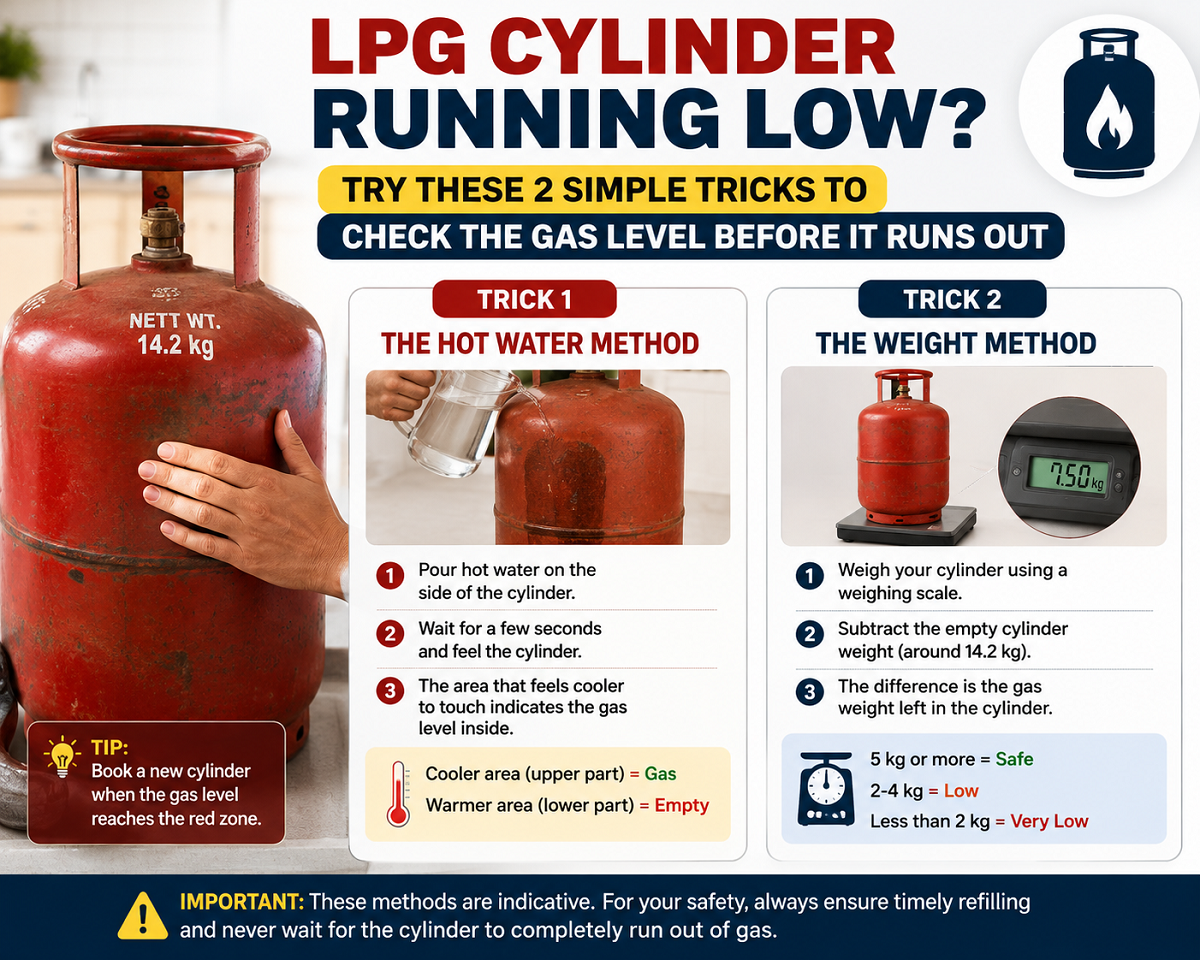
Running out of LPG in the middle of cooking is a common problem, especially for households that rely on a single gas cylinder. Since it's difficult to know how much LPG is left inside a sealed cylinder, many people don't realize it's almost empty until the flame suddenly goes out.
Fortunately, there are a couple of easy methods that can help you estimate the remaining gas without using any special equipment. These simple techniques rely on temperature differences on the cylinder's surface and can give you a rough idea of the LPG level before the cylinder is completely exhausted.
Why It's Difficult to Know the Remaining LPG Level
Unlike transparent containers, LPG cylinders are made of metal, making it impossible to see how much gas remains inside.
As a result, users often have no indication that the cylinder is nearing empty until the gas supply stops unexpectedly. This can interrupt cooking and, in some areas, lead to a wait of several days for a replacement cylinder.
Knowing how to estimate the remaining gas can help you plan a refill in advance and avoid unnecessary inconvenience.
Method 1: Check the LPG Level Using Warm Water
One of the easiest ways to estimate the gas level is by using warm water.
Follow These Steps:
-
Fill a glass with warm (not boiling) water.
-
Slowly pour the water from the top of the LPG cylinder down to the bottom.
-
Wait for around 10 seconds.
-
Gently touch the cylinder's surface with your hand.
How to Read the Results
The portion of the cylinder that feels cooler usually indicates where liquid LPG is still present inside.
This happens because the liquid gas absorbs heat from the metal cylinder, making that section noticeably cooler than the rest of the surface.
The area that feels warm generally indicates that there is little or no liquid LPG behind that section.
While this method does not provide an exact measurement, it offers a practical estimate of the remaining gas level.
Method 2: Use a Wet Cotton Cloth
Another simple technique involves using a damp cotton cloth.
Steps to Follow
-
Take a clean cotton cloth and wet it thoroughly.
-
Wrap the damp cloth around the LPG cylinder from top to bottom.
-
Leave it in place for one to two minutes.
-
Remove the cloth and observe the cylinder's surface.
Understanding the Result
The section that dries quickly is generally the part where the cylinder is empty, as the warmer metal causes moisture to evaporate faster.
The portion that remains wet and cool usually corresponds to the area containing liquid LPG.
Like the warm water method, this technique provides an approximate indication rather than an exact reading.
You Can Also Check the Cylinder's Weight
Another practical way to estimate the remaining gas is by weighing the cylinder.
Every domestic LPG cylinder has its tare weight (empty cylinder weight) stamped on the metal body. By comparing the current weight with the tare weight, you can estimate how much LPG is still inside.
This method is generally more accurate than temperature-based techniques if a weighing scale is available.
Watch the Flame Color
The burner flame can also provide clues about the gas supply.
A healthy LPG flame is typically bright blue. If the flame consistently turns yellow, orange, or red, it may indicate that the cylinder is nearly empty or there could be another issue such as blocked burner ports or incomplete combustion.
If the flame color changes, it's a good idea to inspect the stove and monitor the remaining LPG before assuming the cylinder is empty.
A Few Safety Tips
When checking your LPG cylinder, always keep safety in mind:
-
Use warm water only—never pour boiling water on the cylinder.
-
Do not use open flames or any heating device to test the gas level.
-
Ensure the cylinder remains upright while performing these checks.
-
If you notice the smell of gas or suspect a leak, avoid testing the cylinder and immediately follow standard LPG safety procedures.
These Methods Offer Only an Estimate
The warm water and wet cloth techniques are useful household hacks for estimating the LPG level, but they are not precision measurement methods. They simply help identify approximately where the liquid gas ends inside the cylinder, allowing you to arrange a refill before your cooking is interrupted.
Using these simple checks along with monitoring your cylinder's weight can help you avoid unexpected gas shortages and make kitchen planning much more convenient.