TECH
India’s 5G Revolution: Over 5.5 Lakh Base Stations and Cheaper Data Transform Digital Connectivity
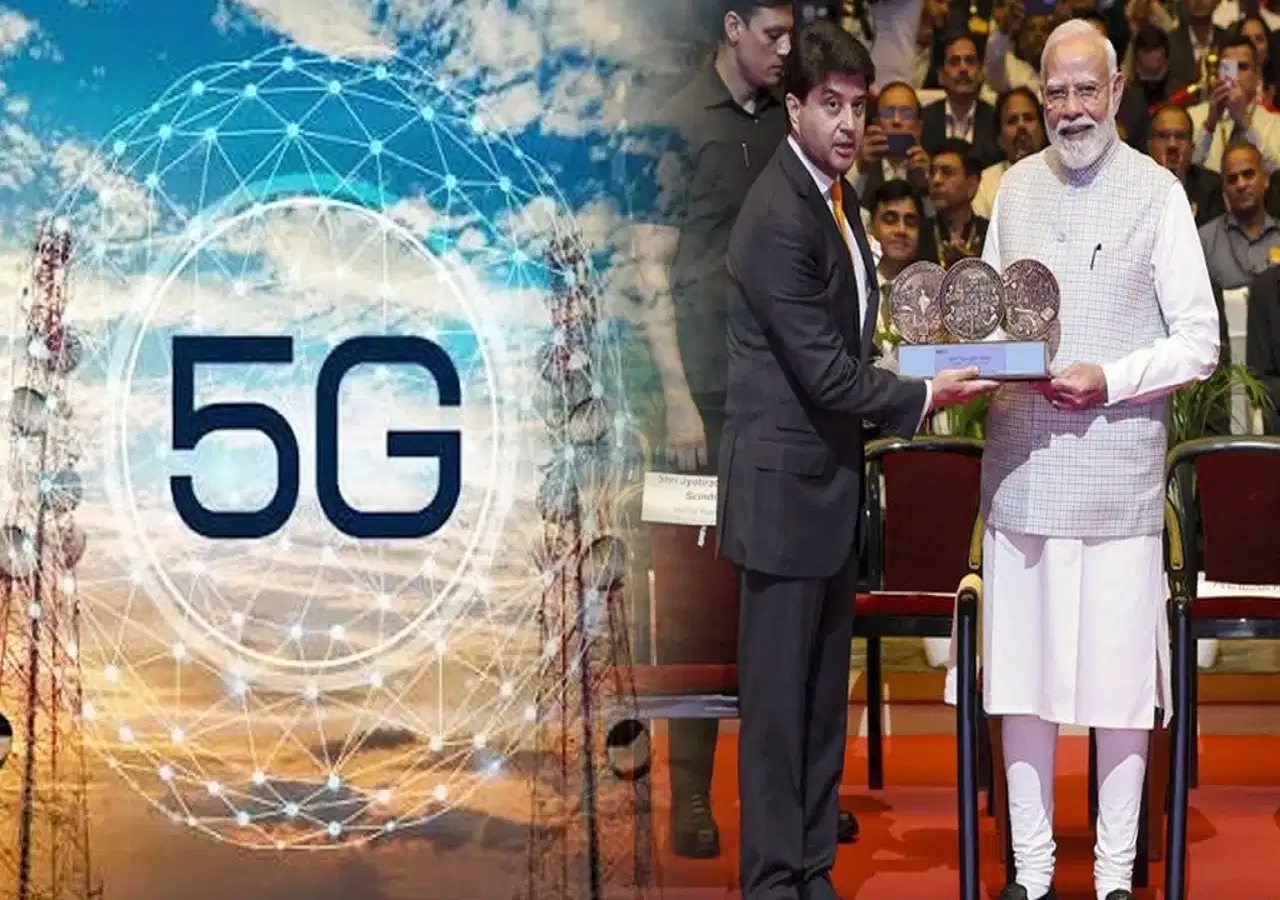
India's telecom sector has undergone a major transformation over the past decade, with mobile internet and digital services becoming increasingly accessible to millions of people. The expansion of 5G networks, affordable data plans and growing digital infrastructure has created new opportunities for businesses, students, entrepreneurs and consumers across the country.
At the 10th edition of the India Mobile Congress (IMC) 2026, held at Yashobhoomi in New Delhi, Prime Minister Narendra Modi highlighted the country's progress in telecommunications and the growing reach of high-speed connectivity.
The four-day event, themed “Scale Without Boundaries,” brings together technology companies, policymakers, startups, investors and industry experts to discuss the future of digital communication and emerging technologies.
5G Connectivity Expands Across India
According to the figures cited at the event, more than 5.5 lakh, or 550,000, 5G base stations are operational across India. The Prime Minister also highlighted that 5G connectivity has reached every district in the country.
This expansion represents an important step in bringing high-speed mobile internet beyond major metropolitan areas. Improved connectivity can support digital services in smaller cities, towns and rural communities, although actual network quality and coverage can vary from one location to another.
Faster mobile networks can also help businesses adopt cloud-based applications, enable smoother video communication and improve access to online education and digital services.
Mobile Data Has Become More Affordable
The falling cost of mobile data has played an important role in India's digital growth.
Union Communications Minister Jyotiraditya Scindia highlighted the significant reduction in data prices, citing a comparison between the approximately ₹268 per GB reported for 2014 and around ₹8 per GB today.
More affordable data allows people to use online services without spending a large proportion of their income on connectivity. It also supports the growth of digital payments, online entertainment, e-commerce and remote learning.
However, affordable data alone does not eliminate every barrier to digital access. Smartphone affordability, digital literacy, reliable electricity and network quality remain important factors.
How Is 5G Changing Everyday Life?
The impact of 5G extends beyond faster downloads on smartphones. Its combination of high data capacity, potentially lower latency and support for connected devices can enable new applications across several industries.
Some important areas include:
Education: Students can access online classes, digital learning platforms and interactive educational content more easily where reliable connectivity is available.
Healthcare: Better connectivity can support video consultations, remote monitoring and the transfer of medical information between healthcare providers.
Business: Companies can use connected devices, cloud applications and real-time data to improve productivity and communication.
Agriculture: Connected sensors and digital platforms can help farmers access weather information, market prices and technology-assisted farming services.
Digital payments: Reliable mobile internet supports the use of payment applications and other digital financial services.
The extent of these benefits depends on the availability of suitable devices, applications and supporting infrastructure.
India Mobile Congress 2026 Looks Beyond Smartphones
The India Mobile Congress is expanding its focus beyond conventional telecom networks. According to the event details provided, four additional areas are receiving attention: smart mobility, stadium experiences, industrial robotics and transport technology.
These fields demonstrate how connectivity can become part of a much wider technology ecosystem.
Smart mobility can use connected systems to improve transport management. Industrial robotics can support automated manufacturing processes, while connected stadium technologies can enhance event experiences. Transport technology can also benefit from real-time information sharing and intelligent infrastructure.
The event provides a platform for industry participants to discuss new products, investment opportunities, technical challenges and potential partnerships.
Startups and Global Technology Companies Take Centre Stage
The 2026 edition is expected to bring together participants from across the global technology ecosystem. Figures cited by the organisers include more than 150,000 attendees from over 100 countries, more than 500 partners and exhibitors, and nearly 600 startups.
Startups can use such events to demonstrate new products, connect with investors and explore partnerships with established companies.
For India, the development of domestic technology capabilities is also important. Greater investment in telecom equipment, software, research and manufacturing can help strengthen the country's role in the global digital economy.
What Challenges Still Remain?
Despite the expansion of 5G infrastructure, achieving meaningful digital inclusion requires more than installing base stations.
Network performance can vary because of terrain, building design, congestion, backhaul capacity and the distance between users and network equipment. Some locations may have nominal 5G coverage but still experience inconsistent speeds.
There is also a need to improve digital literacy, protect users against online fraud and strengthen cybersecurity as more services move online.
Ensuring that rural communities and economically disadvantaged households can access suitable devices and reliable connectivity remains essential for reducing the digital divide.
The Road Ahead for India's Digital Economy
The expansion of 5G networks provides a foundation for further development in artificial intelligence, connected devices, automation and other emerging technologies.
However, the long-term impact will depend on how effectively these technologies are translated into useful and affordable services for citizens and businesses.
India's telecom growth has created opportunities for digital innovation, but the next stage will require continued investment, better network quality, stronger cybersecurity and wider access to digital skills.
The larger goal is not simply to provide faster internet. It is to ensure that reliable digital connectivity enables more people to learn, work, conduct business and participate in India's growing digital economy.