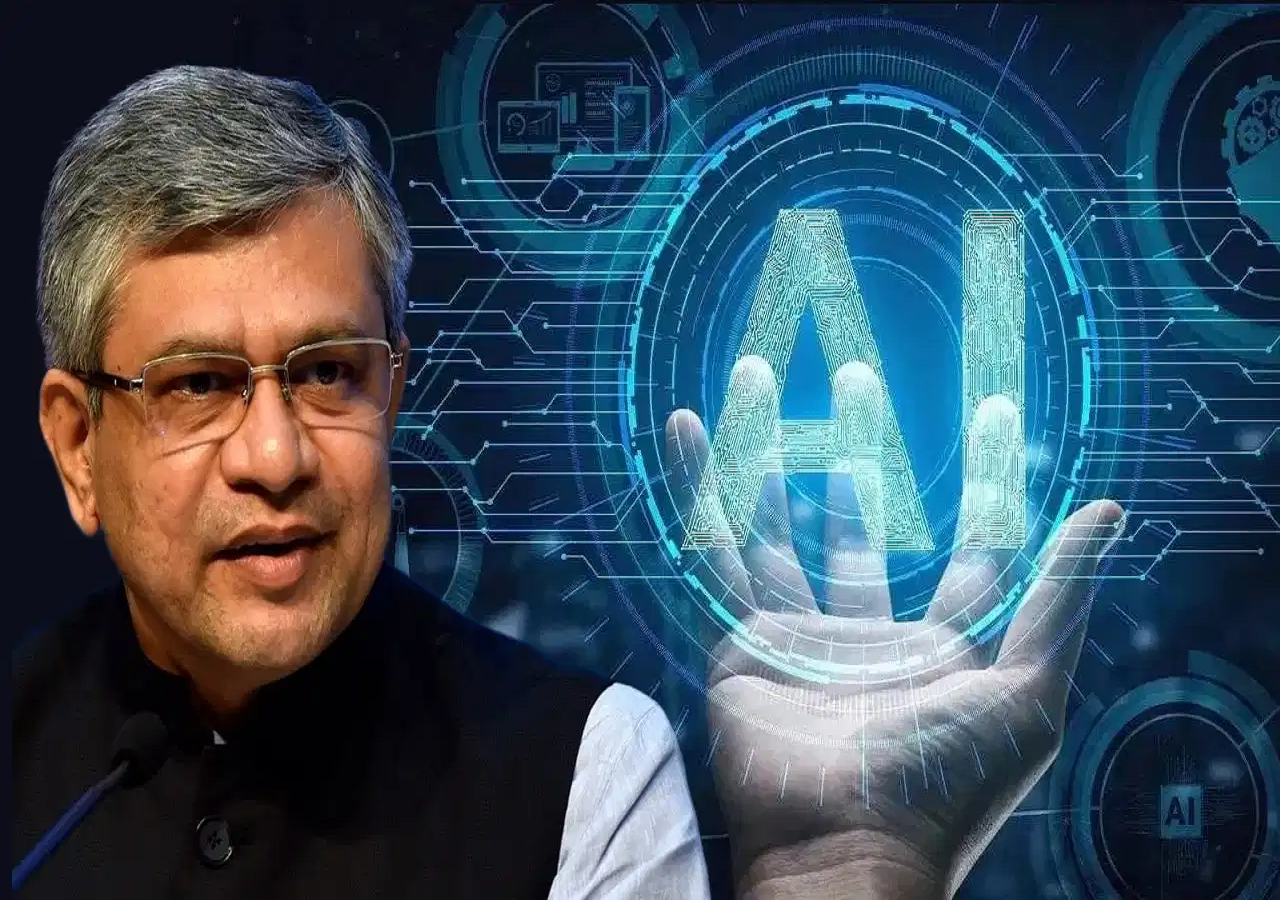
Artificial intelligence is transforming how people work, communicate and access information. From generating images and videos to assisting businesses with complex tasks, AI is creating new opportunities across industries. However, its rapid development has also raised concerns about misinformation, deepfakes, privacy and the misuse of digital content.
Against this backdrop, the Indian government is preparing to seek public and expert feedback on the regulation of artificial intelligence. According to the supplied report, Union Minister Ashwini Vaishnaw announced plans to release a consultation paper within the following month to examine how AI should be governed in India.
The proposed exercise is expected to consider the safe use of AI, the growing threat of deepfakes, the development of AI-related skills and the need to keep human welfare at the centre of technological progress.
Why Is India Considering AI Regulation?
AI tools are becoming increasingly accessible, allowing users to generate realistic images, clone voices, produce videos and create written content within seconds. While these capabilities can support education, entertainment, research and business, they can also be misused.
The challenge for policymakers is to encourage innovation while addressing risks that affect individuals and society.
A consultation paper can help the government gather views from technology companies, researchers, civil society organisations, industry experts and ordinary citizens before deciding on possible regulatory measures.
Importantly, a consultation paper is a step towards gathering feedback and developing policy. It does not, by itself, mean that a new set of binding AI rules has already come into force.
Deepfakes Have Become a Major Concern
One of the key issues highlighted in the report is the growing sophistication of deepfakes.
Deepfakes are synthetic images, videos or audio recordings created or altered using AI to make a person appear to say or do something that never happened. As these tools improve, fabricated content can become increasingly difficult for ordinary viewers to identify.
Potential misuse includes impersonating public figures, creating fraudulent videos, spreading false claims and producing misleading recordings of individuals without their consent.
Such content can also be used in financial scams. For example, a fraudster could imitate a relative's voice or create a fake video call to persuade someone to transfer money.
These risks make it important to improve public awareness, develop reliable detection methods and establish clear processes for reporting harmful synthetic content.
How Could AI Regulations Affect Technology Companies?
Depending on the measures eventually proposed and adopted, AI regulation could influence how technology companies develop, deploy and distribute their products.
Possible areas of discussion include transparency about AI-generated content, safeguards against impersonation, accountability for harmful applications and mechanisms for addressing complaints.
However, the specific obligations that companies may face cannot be determined until the government publishes its proposals and any subsequent rules.
Effective regulation would also need to consider differences between AI applications. A tool used for medical research, for instance, may require different safeguards from a consumer application that generates entertainment videos.
Why Is Human Safety a Priority?
The government's reported approach places human welfare at the centre of the discussion.
AI can improve productivity and help people access information, but its use also raises questions about privacy, discrimination, accountability and the reliability of automated decisions.
For example, AI-generated information may contain errors, while automated systems can produce unfair outcomes if they rely on biased data. People may also struggle to determine who is responsible when an AI-powered service causes harm.
A regulatory framework could examine how to address these issues while allowing useful innovations to develop.
AI Skills Could Become Increasingly Important
Another area highlighted in the report is the need to equip people with AI-related skills.
As businesses adopt AI tools, employees may need to learn how to use them effectively, evaluate their outputs and recognise their limitations. Students and professionals could also benefit from understanding data privacy, digital security and responsible AI use.
AI literacy is not limited to learning how to operate a chatbot. It also involves checking facts, protecting confidential information and understanding when human judgement is necessary.
Expanding access to relevant training could help workers and smaller businesses participate in the changing digital economy.
What Can Ordinary Users Do to Stay Safe?
Even as policymakers examine possible regulations, individuals can take practical steps to reduce the risks associated with AI-generated content.
-
Verify surprising claims: Check important news against multiple credible sources before sharing it.
-
Be cautious with urgent requests for money: Confirm a person's identity through a separate communication channel, even if their voice or video appears genuine.
-
Protect personal information: Avoid uploading confidential documents, financial details or sensitive photographs to unfamiliar AI platforms.
-
Check the original source: Look for the original recording, statement or publication instead of relying on a viral clip.
-
Report impersonation: Use the relevant platform's reporting tools if someone creates deceptive content using your identity.
No single detection tool can reliably identify every deepfake. Verification, context and responsible online behaviour remain important.
What Happens Next?
According to the supplied report, the proposed consultation paper is intended to invite feedback on AI safety, deepfakes, skill development and the human impact of emerging technologies.
The consultation process could help identify areas where existing laws and safeguards may need to be strengthened. The final approach will depend on the proposals, feedback received and any measures subsequently adopted by the government.
The Bottom Line
India's AI regulation debate reflects a wider global challenge: how to benefit from rapidly advancing technology while protecting people from its misuse.
Addressing deepfakes, improving AI literacy and establishing appropriate safeguards could become important parts of that effort. At the same time, regulation will need to account for innovation, practical implementation and the different risks associated with different AI applications.
For citizens and businesses, understanding AI's capabilities and limitations is becoming just as important as learning how to use the technology itself.