NATIONAL
India Achieves Nuclear Milestone: Kalpakkam Reactor Goes Critical, PM Narendra Modi Calls It Historic
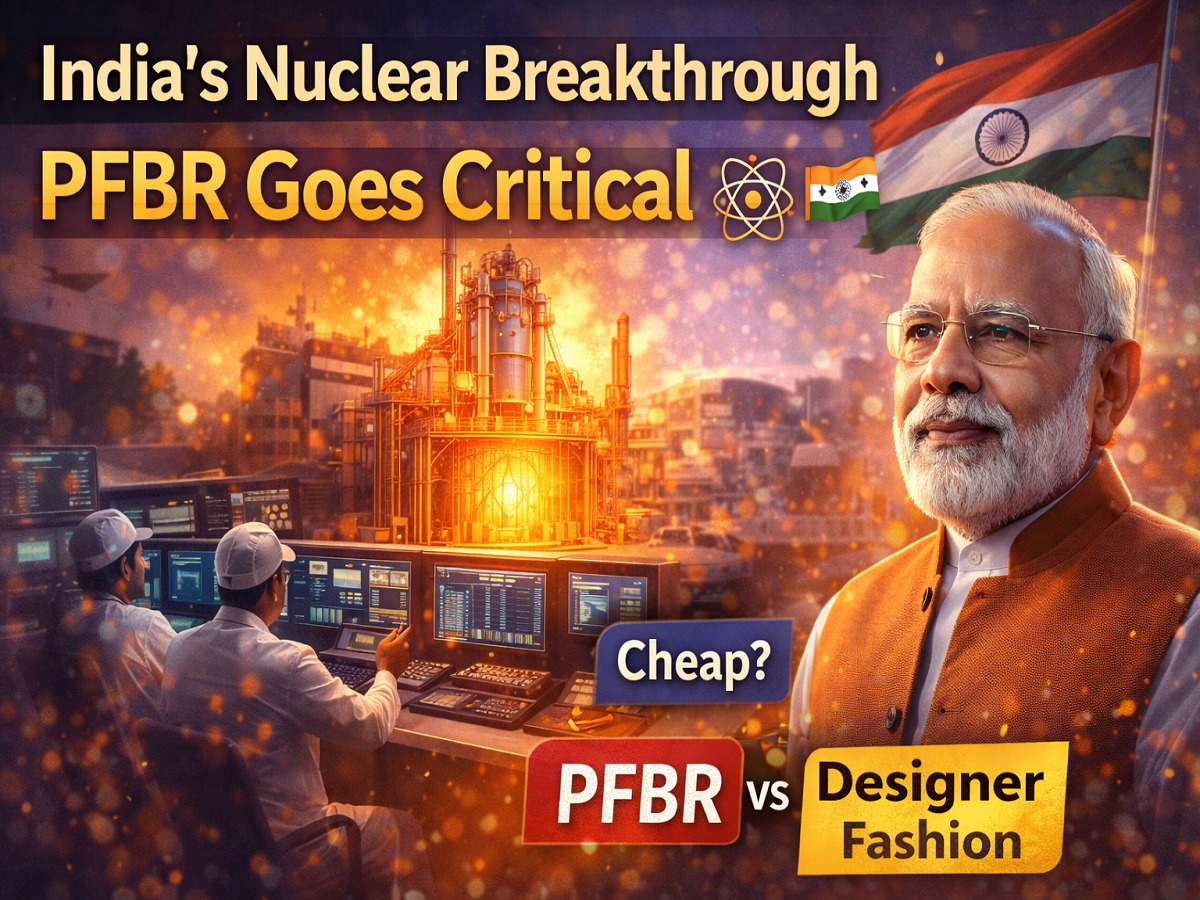
India has taken a major leap in its nuclear energy journey with a significant scientific breakthrough at Kalpakkam in Tamil Nadu. The country’s Prototype Fast Breeder Reactor (PFBR) has successfully achieved criticality, marking a key milestone in India’s long-term energy strategy.
Prime Minister Narendra Modi described the achievement as a proud and defining moment for the nation, highlighting India’s growing technological strength and push toward self-reliance.
What Is ‘Criticality’ and Why It Matters
In nuclear science, criticality refers to the stage where a nuclear reactor achieves a self-sustaining chain reaction. This is a crucial step before a reactor can begin generating electricity.
With this achievement, the 500 MW fast breeder reactor at Kalpakkam has entered a phase where it can eventually move toward power production.
This milestone is not just technical—it is a gateway to India’s future energy independence.
PM Modi’s Message on the Achievement
Reacting to the development, Prime Minister Narendra Modi praised the scientists and engineers behind the project. He stated that:
- The achievement marks a critical step in India’s nuclear program
- It strengthens the second stage of India’s three-stage nuclear strategy
- It reflects India’s engineering excellence and innovation capabilities
He also called it a moment of national pride, emphasizing the importance of indigenous technology.
What Makes Fast Breeder Reactors Special
Unlike conventional nuclear reactors, fast breeder reactors (FBRs) have a unique advantage—they can produce more fuel than they consume.
Key Benefits:
- Generate additional nuclear fuel
- Reduce dependence on imported uranium
- Improve long-term energy sustainability
This makes FBR technology highly valuable for countries like India with limited uranium but abundant thorium reserves.
Role in India’s Three-Stage Nuclear Program
India’s nuclear energy strategy is built on a three-stage model:
- Stage 1: Uranium-based reactors
- Stage 2: Fast breeder reactors (like the Kalpakkam PFBR)
- Stage 3: Thorium-based energy systems
The Kalpakkam reactor plays a crucial role in bridging Stage 2 and Stage 3, paving the way for large-scale thorium utilization in the future.
India’s Position on the Global Stage
Once fully operational, India will become one of the very few countries in the world with a commercial fast breeder reactor.
Currently, only a handful of nations—like Russia—have achieved this level of technological capability.
This advancement strengthens India’s position in the global nuclear energy landscape.
A Big Step Toward Energy Independence
This success is a major boost to India’s goal of becoming energy self-reliant. The reactor will:
- Increase clean electricity production
- Ensure better fuel efficiency
- Support sustainable energy development
It also aligns with India’s long-term vision of reducing dependence on fossil fuels and shifting toward cleaner energy sources.
The successful criticality of the Kalpakkam fast breeder reactor marks a turning point in India’s nuclear journey. It not only demonstrates scientific excellence but also sets the stage for a more secure and sustainable energy future.
As India moves forward, this achievement will play a vital role in shaping the country’s global standing in advanced nuclear technology.