ENTERTAINMENT
Independence Day Special: Why Bollywood Took 27 Years to Bring Operation Safed Sagar to Screen
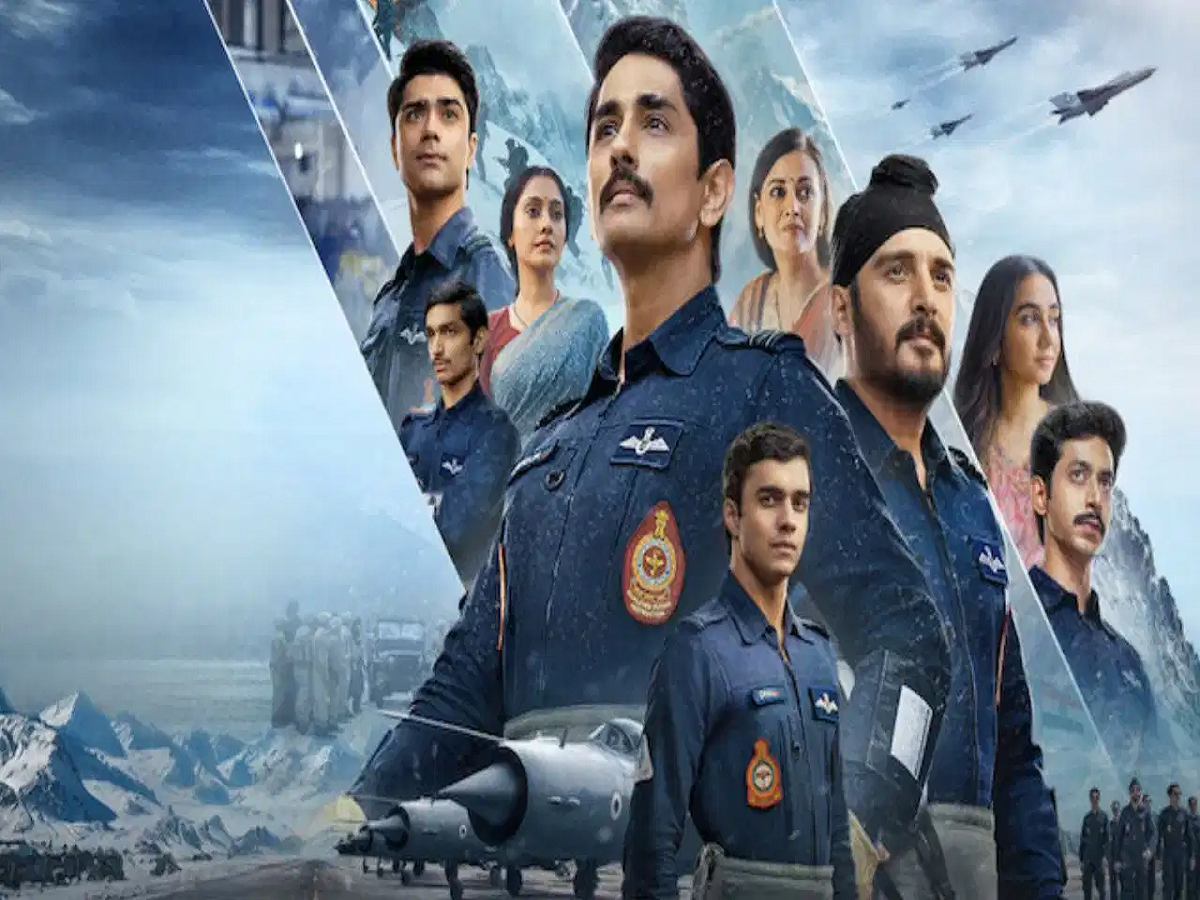
As India celebrates Independence Day, stories of courage and sacrifice are once again taking centre stage. One such story is Operation Safed Sagar, the Indian Air Force's crucial aerial campaign during the 1999 Kargil War, which has now been brought to audiences through a Netflix series.
Despite numerous films being made around the Kargil conflict over the years, a detailed screen adaptation focusing on this important Air Force operation took nearly three decades to arrive.
Actors Siddharth and Jimmy Shergill, who feature in the series, have explained why telling such a story wasn't as straightforward as making a conventional war film.
According to them, advances in visual-effects technology, access to information, the sensitivity involved in portraying real military personnel and the responsibility of remaining historically authentic all played important roles.
Jimmy Shergill Says Technology Changed Everything
Jimmy Shergill pointed towards advances in filmmaking technology and visual effects as one of the biggest reasons why complex Air Force stories can now be recreated more convincingly.
Air combat presents a very different filmmaking challenge compared with conventional ground-based action. Recreating fighter aircraft, aerial manoeuvres, combat sequences and dogfights realistically requires sophisticated visual effects and substantial resources.
Such technology was far more limited when Operation Safed Sagar took place in 1999.
Another challenge was access to information. Military operations naturally involve sensitive and sometimes classified details, and much of what happened during an active conflict may not immediately be available in the public domain.
Over time, more information and first-hand accounts can become available, making it possible for filmmakers to reconstruct events with greater accuracy.
Real War Stories Come With Greater Responsibility
Technology alone doesn't explain the long gap.
Siddharth highlighted another challenge: the responsibility involved in portraying real people.
A fictional character allows filmmakers considerable creative freedom. But when an actor portrays a soldier who actually fought—and perhaps died—for the country, the situation is entirely different.
Families, colleagues, veterans and people directly associated with the operation may watch the portrayal. Even small inaccuracies or unnecessary dramatization can affect how a real person's legacy is remembered.
This means filmmakers need to spend significant time researching events, understanding military protocols and speaking with people connected to the story.
Siddharth Draws a Parallel With Rang De Basanti
Siddharth also referred to his earlier film Rang De Basanti while explaining how cinema can introduce historical figures and events to younger audiences.
People may learn about revolutionaries such as Bhagat Singh, Sukhdev and Chandrashekhar Azad through textbooks, but cinema can give those historical names a human face and emotional context.
He believes military stories can have a similar impact when told responsibly.
According to Siddharth's account, former Air Chief Marshal B.S. Dhanoa, who was closely associated with the Kargil-era operations, emphasised the importance of telling the story truthfully rather than exaggerating events merely to create cinematic spectacle.
The objective, according to the actors, was to create something that could inspire young viewers while remaining respectful towards those who actually served.
Playing Squadron Leader Ajay Ahuja Was an Emotional Responsibility
Siddharth portrays Squadron Leader Ajay Ahuja, who was awarded the Vir Chakra posthumously, in the series.
For the actor, playing a real-life military officer came with an additional emotional responsibility.
Interactions with Ajay Ahuja's wife, Alka Ahuja, reportedly helped Siddharth better understand the man behind the uniform and approach the character with greater sensitivity.
For an actor portraying a martyr, appreciation from general audiences is only one measure of success. How the officer's family responds to the portrayal can carry far greater significance.
Why Air Force Stories Are Becoming More Common Now
Several factors have come together to make ambitious military aviation projects more practical today.
Modern VFX can recreate aerial combat more convincingly, while larger production budgets make technically demanding sequences possible. OTT platforms have also created space for longer narratives that don't have to compress complex military operations into a conventional two- or three-hour movie.
Audience preferences have evolved as well. Many viewers increasingly seek stories inspired by real events and want greater detail about the people and circumstances behind them.
Together, these developments have created opportunities for filmmakers to explore Air Force missions that would once have been extremely difficult or expensive to recreate.
Operation Safed Sagar Was a Crucial Chapter of the Kargil War
Operation Safed Sagar represented the Indian Air Force's aerial contribution during the 1999 Kargil conflict.
Bringing such an operation to the screen involves much more than showing fighter jets and explosions. It requires explaining the people involved, operational challenges, military decision-making and the human cost of combat.
The series also focuses on personnel associated with the Golden Arrows squadron, attempting to bring audiences closer to the experiences of those who participated in the conflict.
Technology Finally Meets the Stories Waiting to Be Told
The long wait for projects centred on Indian Air Force operations doesn't necessarily reflect a lack of compelling stories.
For years, filmmakers faced a combination of technological limitations, high production costs, restricted information and the enormous responsibility of portraying real military personnel accurately.
Today, advanced visual effects, streaming platforms, bigger budgets and greater access to historical accounts have changed that equation.
But technology can only provide the tools. For films and series based on real military heroes, accuracy and sensitivity remain just as important as spectacular aerial sequences.
That may ultimately explain why Operation Safed Sagar took so long to reach the screen—and why more stories about India's Air Force could now find their way to audiences.