TECH
How a Simple Chain Can Stop a Train: The Technology Behind Indian Railways' Emergency Braking System
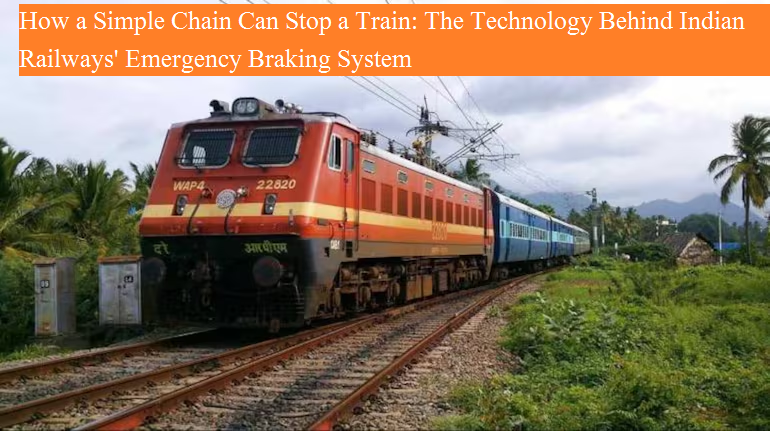
If you've ever traveled by train in India, you’ve likely noticed a red-colored chain hanging in every coach. This is not a random fixture—it's part of a life-saving mechanism known as the Alarm Chain Pulling (ACP) system. Despite its simplicity, pulling this chain can halt an entire train in motion. But how exactly does that work? Let’s uncover the science behind this emergency brake.
What Happens When the Chain Is Pulled?
The red emergency chain is directly linked to a mechanical valve that is part of the train’s air brake system. Most Indian trains today use air brake technology, where compressed air flows continuously through a pipeline that runs across all coaches.
Under normal conditions, the high air pressure keeps the brakes in the 'released' position, allowing the train to move smoothly. When a passenger pulls the emergency chain:
-
A valve opens and releases the compressed air.
-
This drop in air pressure is immediately registered as an emergency signal.
-
The brakes are automatically activated due to loss of pressure.
-
As a result, the train gradually comes to a complete halt.
This entire mechanism works without any electronic intervention, relying purely on mechanical and pneumatic systems.
How the Train Driver Gets Alerted
Modern and upgraded trains are equipped with control panels that alert the loco pilot (train driver) the moment the chain is pulled. The panel flashes an alarm or light signal, indicating the exact coach where the chain was activated. Once the train stops, the guard or train staff physically checks the specific compartment to verify the reason for the emergency stop.
Why Is This System So Important?
The emergency chain is meant strictly for genuine emergencies, such as:
-
Sudden health issues of passengers
-
Fire or smoke inside the coach
-
Suspicious activity or physical danger
-
Accidents or derailment risks
However, misusing this feature is a punishable offense. Pulling the chain without a valid reason can result in a fine of up to ₹1,000 or even imprisonment under Section 141 of the Indian Railways Act. Authorities strictly monitor misuse, especially in crowded or sensitive routes.
Railway Tech Is Evolving
The Indian Railways is actively upgrading its safety and monitoring systems:
-
CCTV cameras are being installed in more trains to record activities and identify misuse.
-
Electronic alarm systems are replacing traditional mechanisms for better accuracy.
-
Sensor-based brake cylinders are being implemented, which can pinpoint the exact coach and time of chain pulling in real-time.
These advancements aim to enhance passenger safety and minimize unauthorized usage of the emergency brake system.
In Conclusion
While the red emergency chain might seem like a simple tool, it's a key part of a highly sophisticated safety mechanism rooted in pneumatic engineering. As Indian Railways continues to modernize its infrastructure, the fusion of mechanical reliability with smart technology ensures better emergency response and passenger accountability.
So the next time you're on a train, remember: that red chain is more powerful than it looks—and should only be used when it's truly needed.