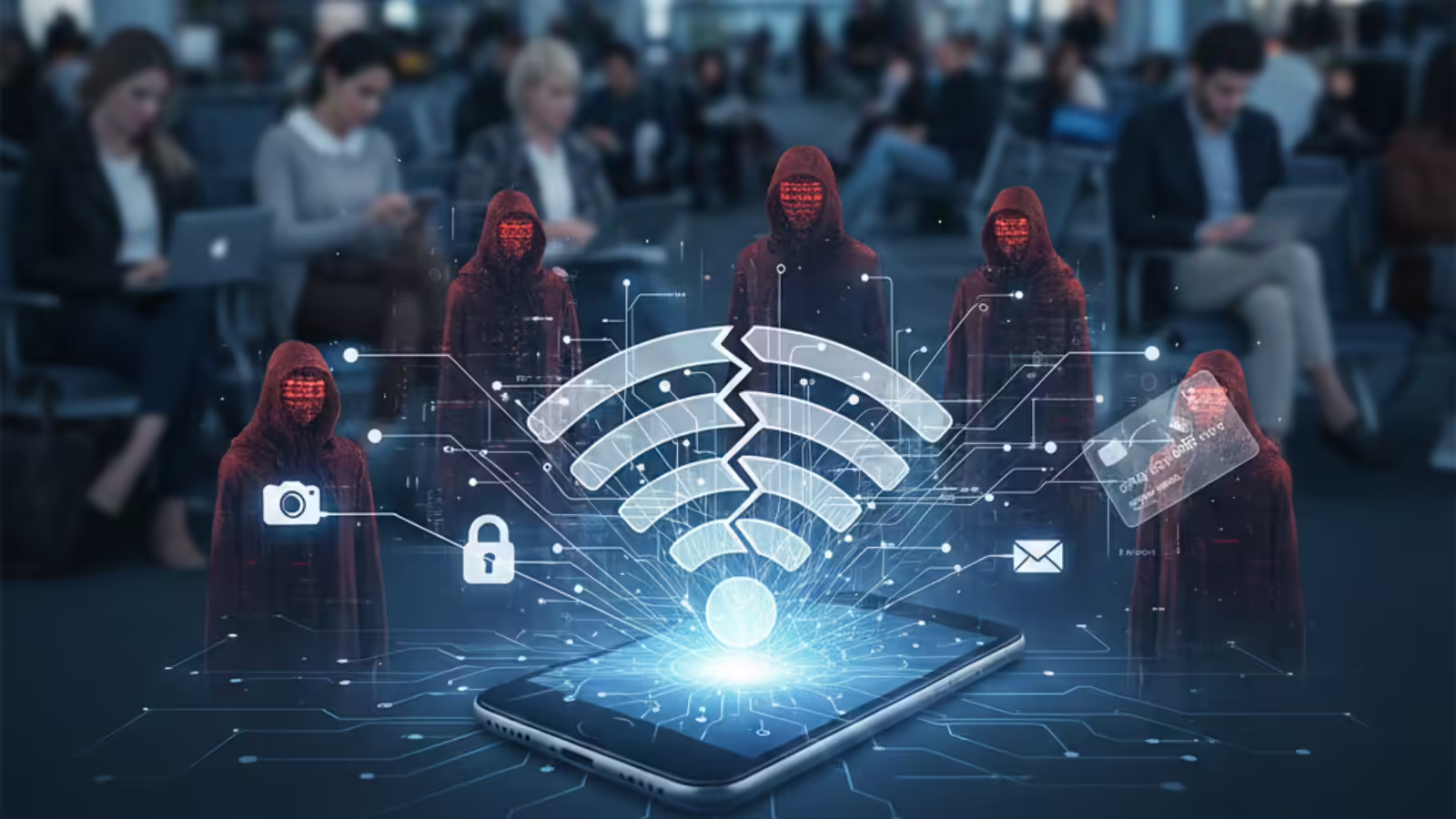
From railway stations and airports to cafés and shopping malls, “Free Wi-Fi” signs have become impossible to miss. The temptation of complimentary internet access is so strong that many people connect instantly, without a second thought. While public Wi-Fi offers convenience, it also exposes users to serious cyber risks. In the world of cybercrime, public networks are often described as a hacker’s favorite trap.
How hackers set the trap
Cybercriminal frequently create fake Wi-Fi networks that mimic legitimate ones. For instance, a hacker may set up a network with the same name as a popular café or public place. When users unknowingly connect to this fake network, all their online activity passes through the hacker’s system. This method, known as a man-in-the-middle attack, allows hackers to silently monitor and steal sensitive information without the user’s knowledge.
Biggest risk to banking and passwords
Using public Wi-Fi for banking transactions or online shopping is one of the most dangerous mistakes. Entering UPI PINs, credit or debit card details, or net-banking passwords on unsecured networks gives hackers easy access to this information. In many cases, criminals use the stolen credentials later to drain bank accounts, leaving users unaware until the damage is already done.
Phone spying and malware threats
The danger doesn’t stop at data theft. Hackers can also inject malicious software into smartphones through unsafe Wi-Fi networks. Once infected, a device can be remotely controlled—allowing attackers to access the phone’s camera, microphone, and location. This puts not just financial data, but also personal privacy, at serious risk.
How to stay safe on public Wi-Fi
To reduce the risk, users should take a few essential precautions. Turning off the auto-connect feature for Wi-Fi is a critical first step. If public internet access is unavoidable, only visit websites that begin with “https,” as they offer encrypted connections. Using a reliable VPN can further protect data by encrypting all online activity, making it harder for hackers to intercept information.
Stay alert, stay secure
In the digital age, personal cybersecurity is largely the user’s responsibility. What appears to be a free service can come with a heavy hidden cost. Staying cautious and informed is the best defense against cyber threats—and the only way to safeguard your money, data, and privacy.