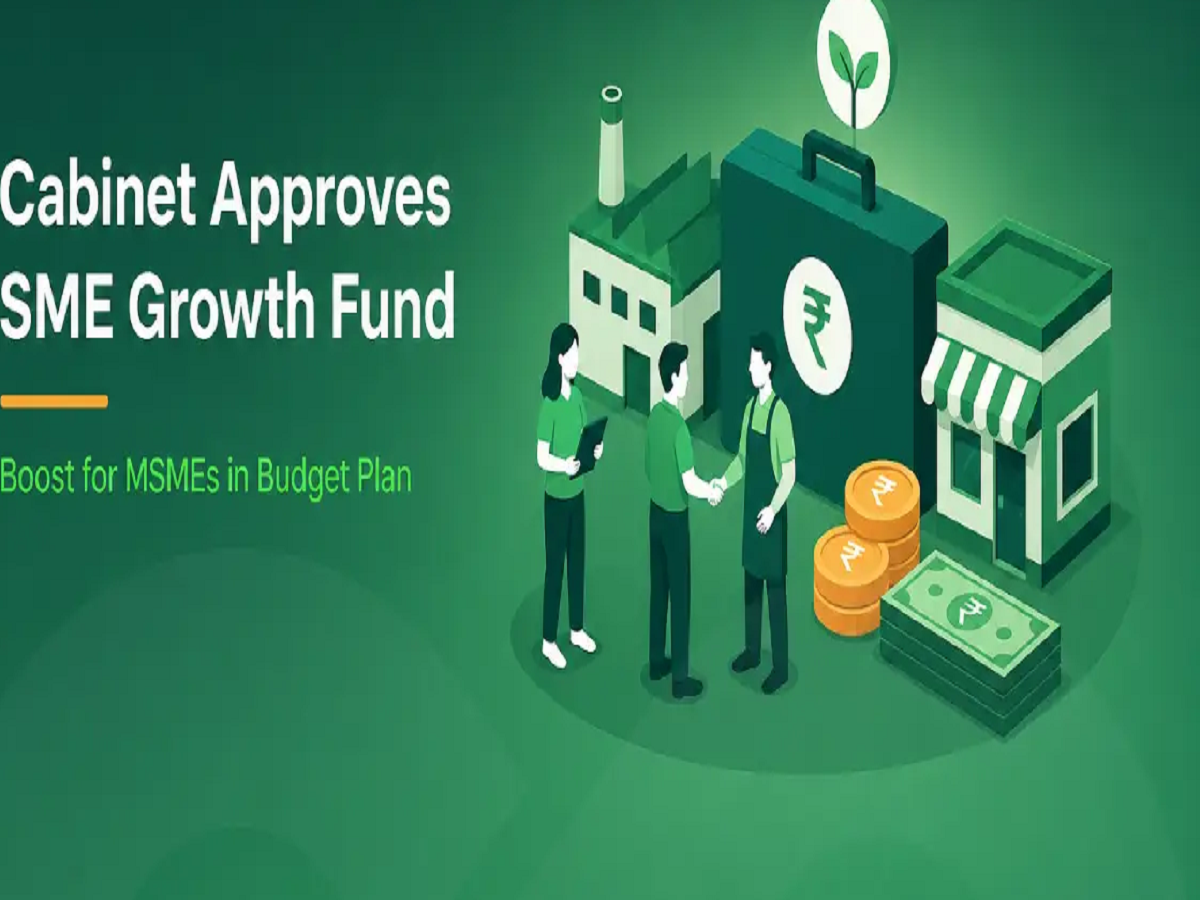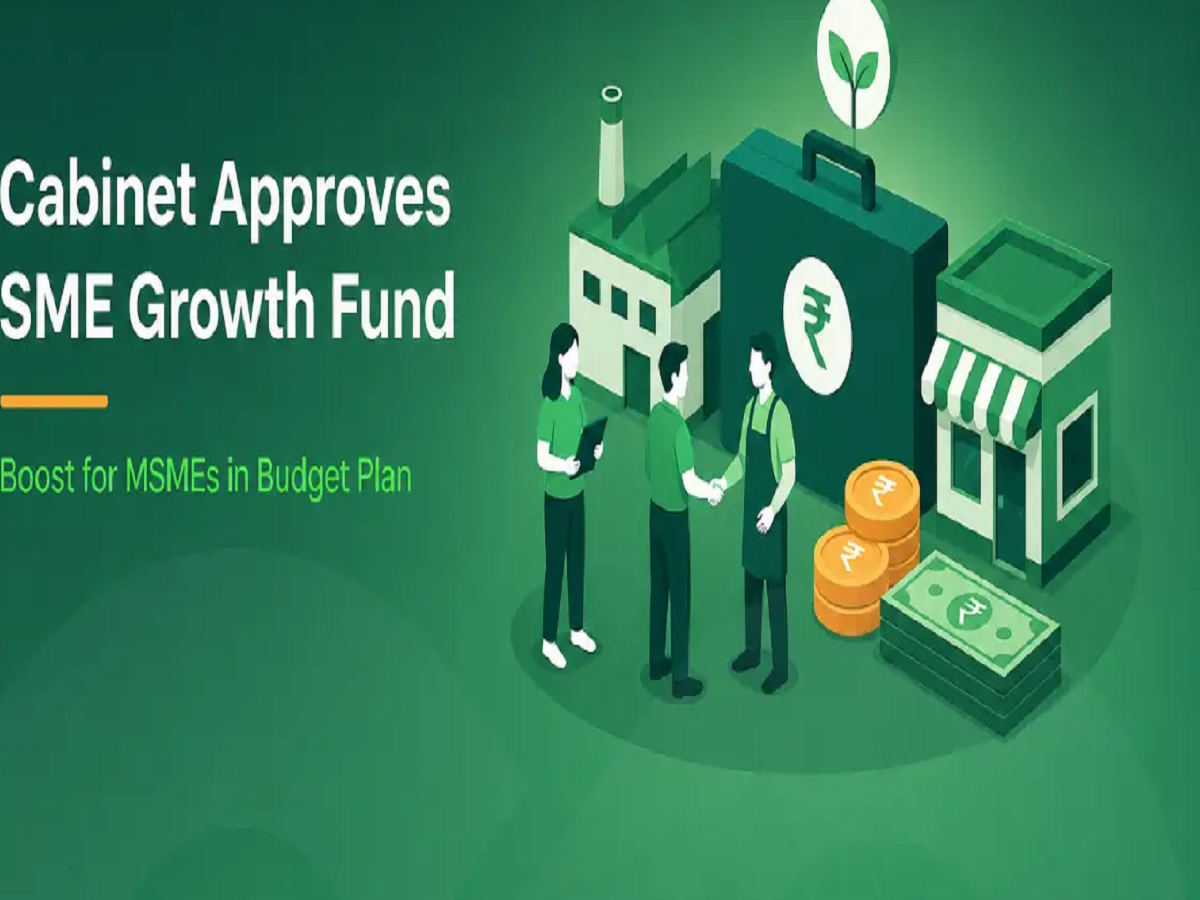
India's small and medium enterprises (SMEs) could receive fresh support to expand their operations, invest in technology and enter international markets. On October 6, 2026, the Union Cabinet approved a government commitment of ₹10,000 crore towards establishing the SME Growth Fund, an initiative designed to help promising Indian businesses scale up and become more competitive. <Cite refs={["turn325463view0"]} />
The announcement is part of the government's broader efforts to strengthen the country's business ecosystem, encourage innovation and create employment opportunities. Unlike conventional lending, the proposed fund focuses on providing growth capital through equity investments.
What Is the SME Growth Fund?
The SME Growth Fund is designed to address a financing gap faced by businesses that have moved beyond their early stages but still require substantial capital to expand.
Many small businesses struggle to secure the funding needed to increase production, modernise equipment, adopt new technology or enter new markets. Traditional bank loans can help meet some financial needs, but businesses may also require long-term investment that does not depend entirely on borrowing.
The government has committed ₹10,000 crore to an Alternative Investment Fund established under the SME Growth Fund framework. The initiative is intended to provide equity capital to high-potential SMEs with viable business models and the capacity to grow. <Cite refs={["turn325463view0"]} />
Which Businesses Could Benefit?
The fund is expected to focus significantly on manufacturing-oriented small and medium enterprises. Businesses operating in services, technology, innovation-driven industries and strategic supply chains are also within its broader scope.
The government has highlighted several areas where the funding could help businesses grow:
-
Manufacturing companies looking to increase production capacity.
-
Businesses seeking to adopt advanced machinery and technology.
-
SMEs planning to expand into international markets.
-
Enterprises looking to become part of global supply chains.
-
Growing companies considering strategic investments or acquisitions.
The initiative also envisages support for businesses operating in industrial clusters in Tier-II and Tier-III cities. This could help strengthen local industries and encourage economic activity beyond major metropolitan centres. <Cite refs={["turn325463view0"]} />
How Is Equity Funding Different from a Business Loan?
One important feature of the initiative is its focus on equity investment rather than conventional lending.
A business loan generally has to be repaid with interest according to agreed terms. Equity funding, on the other hand, involves an investor acquiring an ownership stake in a company in exchange for capital.
For an eligible business, equity investment can provide funds for expansion without creating the same fixed repayment obligations as a loan. However, the business owner may have to share ownership and some of the future financial gains with investors.
Equity funding also involves scrutiny of a company's financial performance, business model, growth prospects and management. Therefore, the fund should not be understood as a direct cash grant available to every small business.
Will Small Businesses Automatically Receive Money?
No. The government's ₹10,000 crore commitment does not mean every SME will receive funding or that businesses can claim a fixed amount simply by registering as an MSME.
The fund is intended to invest in businesses with strong growth potential, demonstrated viability and the ability to scale. Companies will need to satisfy the applicable investment criteria and assessment process.
Business owners should wait for detailed operational guidelines, eligibility conditions, application procedures and information about participating investment managers before making decisions based on the announcement.
Why Is the Government Focusing on SMEs?
Small and medium enterprises play an important role in manufacturing, exports, employment and innovation. Yet businesses that have already established themselves can face difficulties when they attempt to expand significantly.
A company may have a proven product and steady customer demand but still lack the capital required to build a larger factory, automate production or compete with international players.
The SME Growth Fund is intended to address this challenge by providing long-term growth capital. If investments reach businesses capable of expanding successfully, the initiative could support higher production, technology adoption, stronger supply chains and additional employment. These outcomes will depend on how the fund is implemented and how effectively the investments perform. <Cite refs={["turn325463view0"]} />
What Should Entrepreneurs Do Next?
Business owners interested in the initiative can begin by reviewing their financial position and expansion plans. Useful preparations include maintaining updated financial statements, documenting business performance, preparing realistic growth projections and identifying the amount of capital required.
Companies should also distinguish between funding received through loans, grants and equity investments, as each has different financial and ownership implications.
The next important step will be the publication of detailed implementation information explaining how businesses can seek investment under the fund.
A New Funding Opportunity for Growing Indian Businesses
The ₹10,000 crore SME Growth Fund marks a significant policy move towards supporting businesses that need capital to move to the next stage of growth. Its focus on manufacturing, technology adoption, international expansion and industrial clusters could make it relevant to a broad range of established enterprises.
However, the announcement is a government funding commitment, not a guarantee of financial assistance for every applicant. The actual impact will depend on the eligibility rules, investment decisions and ability of supported businesses to convert funding into sustainable growth.
For entrepreneurs planning to scale their businesses, the initiative is worth watching as further implementation details become available.