INTERNATIONAL
Dangerous conspiracy: After Pakistan, China is now preparing to surround India in collaboration with these countries
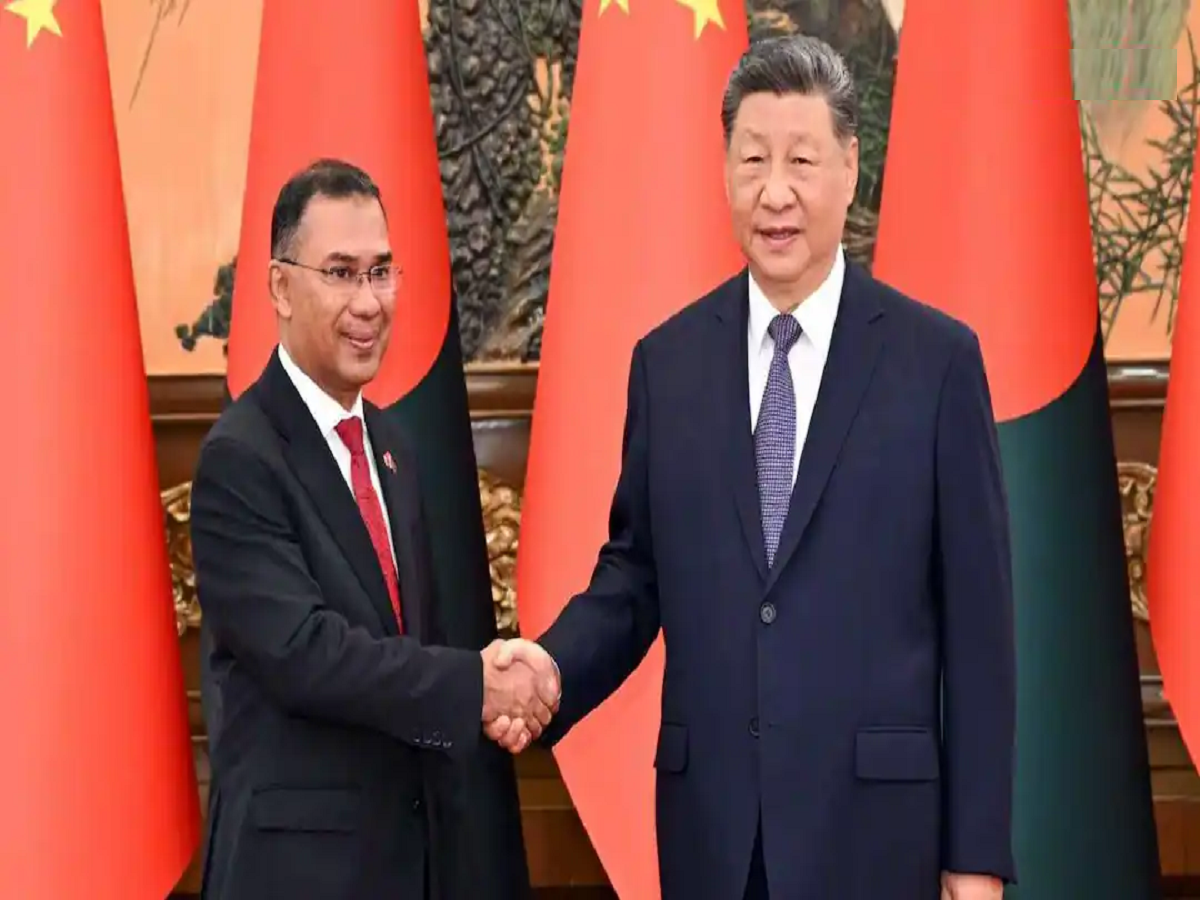
China Bangladesh Myanmar Corridor: The proposed corridor will begin in Kunming, the capital of China's Yunnan province, and continue to Mandalay, Myanmar. The route will then split into two sections.
China has reactivated its decades-old connectivity initiative, but this time it has completely excluded India. Beijing is now preparing to build the China-Myanmar-Bangladesh Economic Corridor (CMBC). Through this corridor, China aims to gain direct access to the Bay of Bengal, although this route will currently pass through one of the world's most active war zones.
The plan was made during the Bangladesh PM's visit to China.
The issue of the China-Myanmar-Bangladesh Economic Corridor was raised during Bangladesh Prime Minister Tariq Rahman's four-day visit to Beijing, which began on June 22. According to the Chinese Foreign Ministry, after meeting Xi Jinping, the CMBC was discussed with the aim of promoting regional connectivity. Yao Wen, China's ambassador to Bangladesh, said, "We proposed the Bangladesh-China-India-Myanmar Economic Corridor about 15 years ago and it gained momentum. But then, we did not achieve the success we had hoped for."
When asked if India could join, the Chinese ambassador replied that the corridor is open to other countries if they wish. He added that the corridor's sole purpose is to promote connectivity and regional economic cooperation.
What will be the route of the new corridor?
This proposed corridor will begin in Kunming, the capital of China's Yunnan Province, and extend to Mandalay, Myanmar. The route will then split into two sections. One will lead to Yangon, Myanmar, and the other will lead to the Kyaukphyu deep-sea port in Myanmar's Rakhine State. China plans to extend this route beyond Rakhine to connect Chittagong and Cox's Bazar in Bangladesh. This will provide China with direct road access to Chittagong and Mongla Port on the Bay of Bengal.
This new corridor (CMBC) is essentially a modified version of China's earlier plan. The Bangladesh-China-India-Myanmar (BCIM) corridor was proposed in the 1990s, aiming to connect Kunming with Kolkata via Mandalay and Dhaka. India's concerns about China's Belt and Road Initiative (BRI) and the deterioration in relations between the two countries led to the BCIM project being shelved. In 2019, China removed it from the official BRI corridor list. Due to insecurity concerns, the project planned to be built on this route has been shelved.
The biggest challenge for the new corridor
The biggest obstacle to this 1,700-kilometer corridor is the internal situation in Myanmar. The route passes through Myanmar's Rakhine State, which is currently engulfed in a fierce civil war. According to a 2026 report by the United Nations Security Council, Myanmar's military junta now controls only about a fifth of the country. Approximately 42 percent of the country is occupied by rebel forces and ethnic armed groups, while fierce fighting continues in the remaining areas. According to a 2021 memorandum of understanding between Myanmar and China, the construction timeline for the Mandalay-Kyaukphyu railway has not yet been finalized.
Bangladesh's stance on the new corridor
Bangladesh Foreign Minister Khalilur Rahman stated on June 27 that Bangladesh is currently examining the proposal and no final decision has been made. Bangladesh has stipulated that any land link through Myanmar will only be possible after complete peace is restored in Rakhine State.
What does this mean for India?
This effort by China is being seen as part of a strategy to encircle India on both the eastern and western fronts. China has already built the China-Pakistan Economic Corridor (CPEC) through Pakistan to reach the Arabian Sea and Gwadar Port. India strongly opposes the CPEC corridor because it passes through Gilgit-Baltistan, a part of Pakistan-occupied Kashmir (PoK).
China is now expanding its influence in the Bay of Bengal through Myanmar and Bangladesh on India's eastern flank. This move is a major attempt by China to bypass India's maritime sphere of influence and strengthen Beijing's presence in the Indian Ocean region.
PC: ABPNews