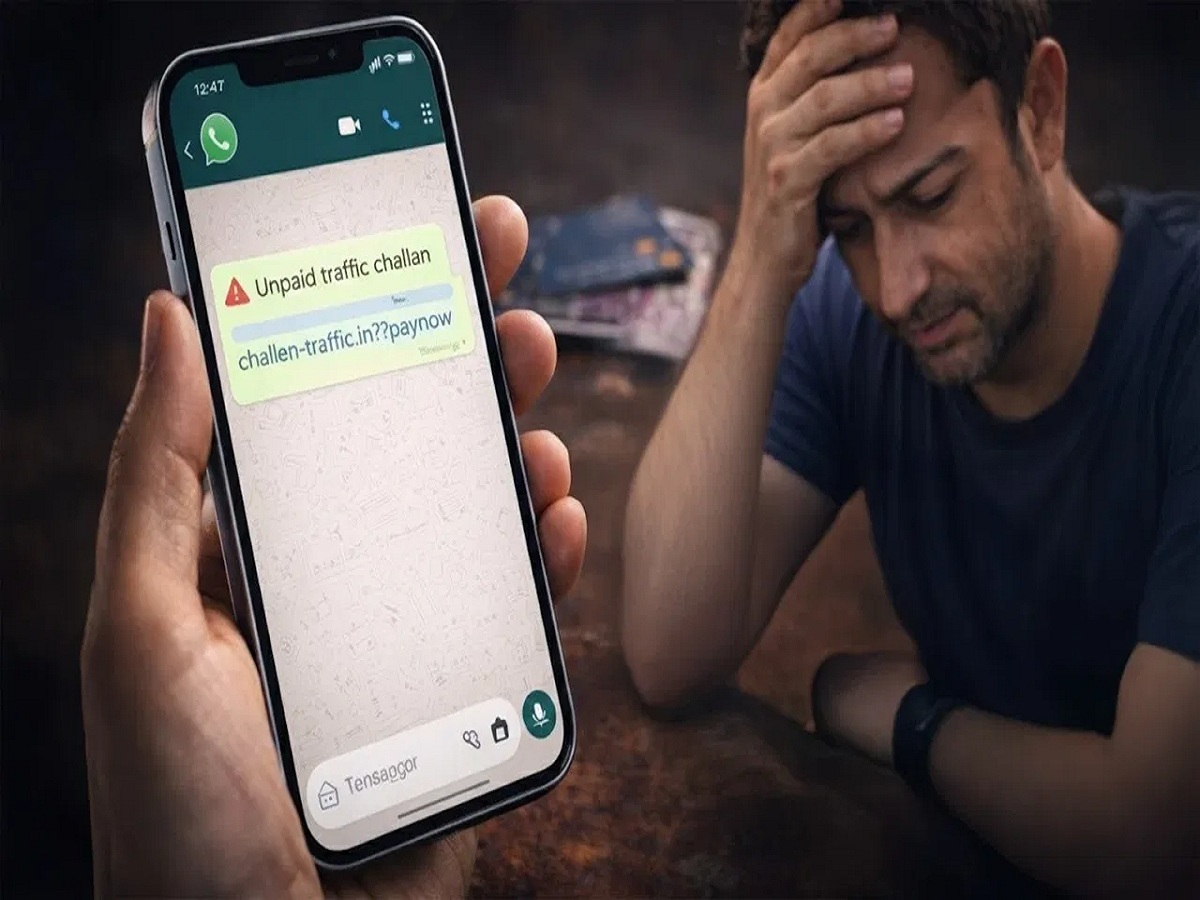
Online Fraud: A man received a link on WhatsApp to pay a traffic challan. He made the mistake of clicking on the link. What happened next? How did this person fall into the trap of fraudsters? Let's explain the whole matter.
Fraudsters lay such a trap that even educated people fall into it easily and lose thousands or lakhs of rupees in a single moment. A person living in Delhi received a fake link on WhatsApp to pay a traffic challan. Without thinking twice, this person clicked on the unknown link. This small carelessness proved very costly for this person because due to this small mistake, this person had to lose Rs 4 lakh. Let us tell you how the fraudsters trapped this person.
How did the fraudsters set the trap?
According to a Times of India report, police said the man received a WhatsApp message from an unknown number claiming a pending traffic challan of ₹1,000. The message purported to be from NextGen mParivahan and appeared official, mentioning the Transport Department. It also used the tone and language of government alerts, making it appear genuine.
The message contained a link that allowed them to check their challan details and pay the fine. Believing it to be genuine, the person clicked on the link and downloaded the app, but after installing the app, no challan details were visible. At the time, the person did not suspect anything was amiss.
The trouble began a little later in the afternoon. Around 2:59 p.m., an email alert was received stating that the Amazon e-wallet password had been changed. Within minutes, the email ID associated with the account was also changed without permission. Soon after, SMS alerts began to arrive from various banks regarding high-value credit card transactions.
It has become impossible to get money, how to understand?
In total, five transactions were made using his saved credit card details, none of which he approved. Police say the fraudsters used the card information to purchase e-gift cards from an online shopping platform. These gift cards were digitally delivered to the scammer's email address, making it nearly impossible to recover the money.
By the time the man realized what had happened, he had already lost approximately ₹4.05 lakh. He then filed a complaint with the National Cybercrime Reporting Portal, and the police registered a case of fraud under the Indian Penal Code.