A single careless click proved extremely expensive for a Delhi resident after he fell victim to an online scam. The man received a WhatsApp message containing a link to pay a pending traffic challan. Trusting the message, he clicked the link—and ended up losing nearly ₹4 lakh.
How the Scam Was Carried Out
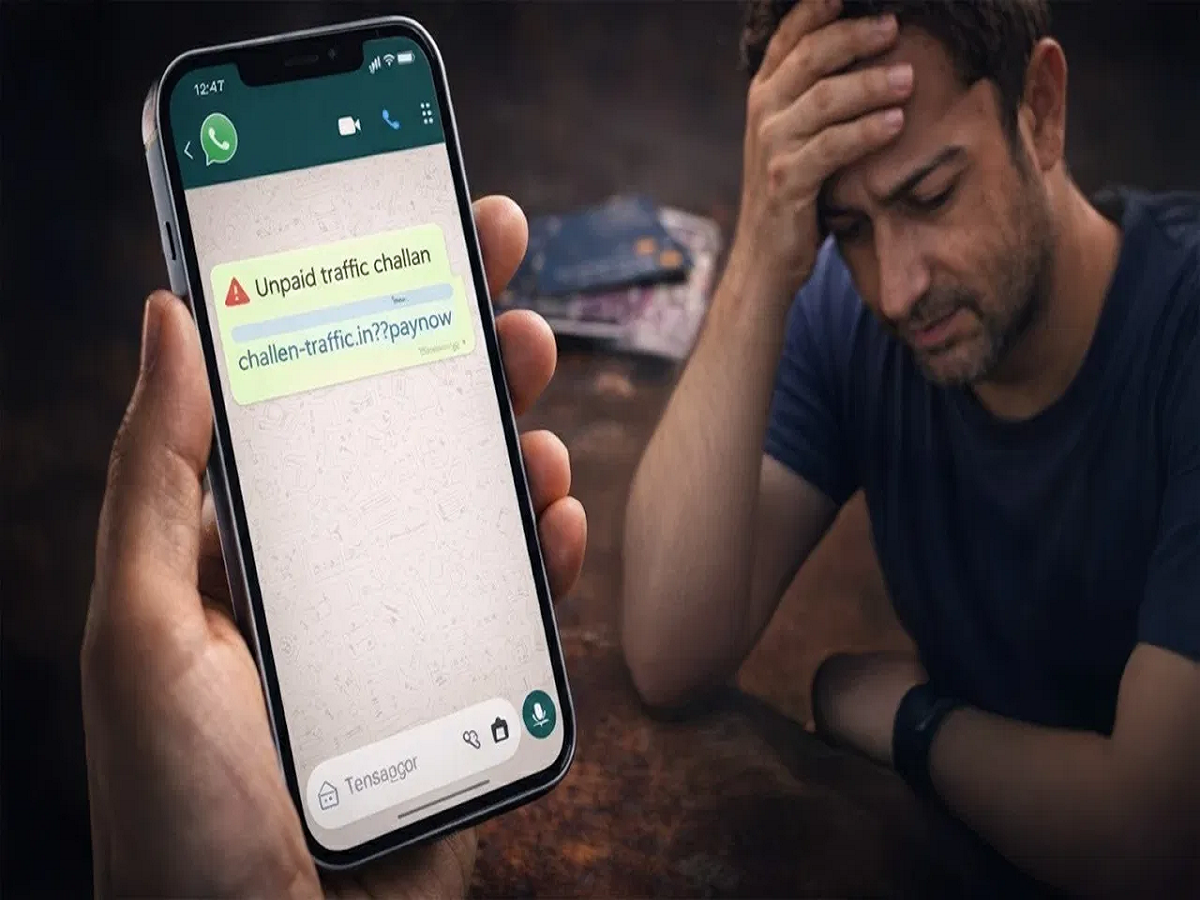
According to a report, the victim received a WhatsApp message from an unknown number claiming that a ₹1,000 traffic challan was pending against his vehicle. The message appeared authentic, using the name “NextGen mParivahan” and mentioning the Transport Department. Its official tone and format made it look like a genuine government notification.
The message included a link to check challan details and make the payment. Without verifying its authenticity, the man clicked the link and downloaded the app suggested in the message. However, after installation, no challan details were visible—something he initially ignored.
Fraud Uncovered Hours Later
The real shock came later in the afternoon. At around 2:59 pm, the man received an email alert stating that the password to his Amazon e-wallet had been changed. Shortly after, the registered email ID was also altered without his consent.
Within minutes, multiple SMS alerts from banks began arriving, informing him of high-value credit card transactions that he had not authorized.
Money Almost Impossible to Recover
Police investigation revealed that the fraudsters had accessed his saved credit card details and used them to purchase e-gift cards from an online shopping platform. These gift cards were instantly delivered digitally to the scammers’ email IDs, making recovery nearly impossible.
By the time the victim understood what had happened, five unauthorized transactions had already been completed, causing a total loss of approximately ₹4.05 lakh.
The man has since lodged a complaint on the National Cyber Crime Reporting Portal, and police have registered a case of fraud. Authorities have once again urged people to avoid clicking on unknown links, even if they appear to come from government departments.