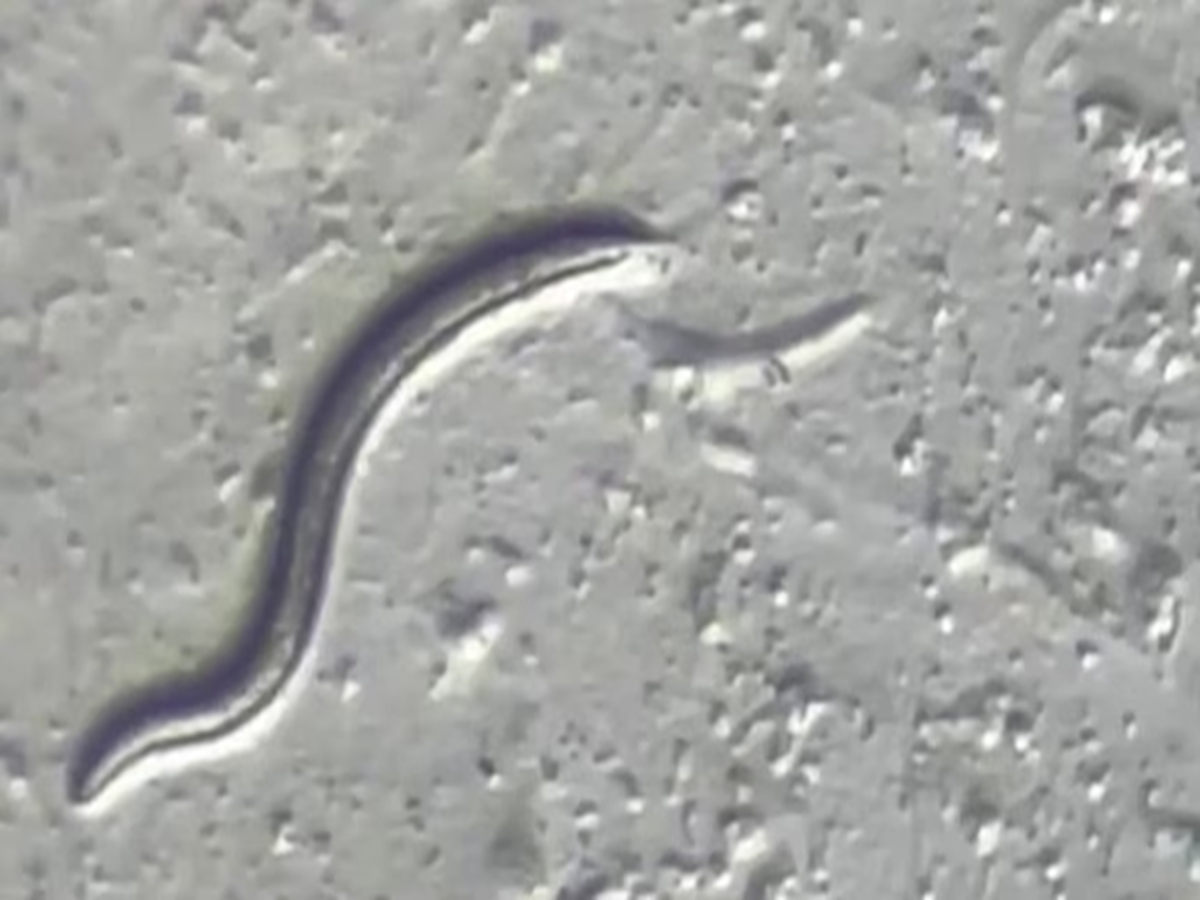
It sounds like the opening scene of a science fiction movie, but it's based on a remarkable scientific discovery. Researchers studying ancient frozen ground in Siberia revived a microscopic worm that had remained dormant for an astonishing 46,000 years.
The tiny creature had been trapped in permafrost—ground that stays frozen year-round—since long before humans built the first civilizations. When scientists thawed it under carefully controlled laboratory conditions, the worm resumed normal biological activity, surprising researchers around the world.
Frozen for Thousands of Years
The worm was discovered in a deep layer of Siberian permafrost, buried beneath sediment that had remained undisturbed for tens of thousands of years.
Using radiocarbon dating on nearby plant material, researchers estimated that the soil surrounding the worm was approximately 46,000 years old. That means the tiny animal likely entered a dormant state during the late Ice Age.
How Did It Survive?
The secret lies in a remarkable biological ability called cryptobiosis.
During cryptobiosis, an organism slows its metabolism to nearly zero, allowing it to survive extreme conditions such as freezing, dehydration, or lack of oxygen. In this suspended state, the worm wasn't truly "alive" in the usual sense—but it wasn't dead either.
Once the ice melted and conditions became favorable, it resumed normal life processes.
A Scientific Milestone
The revived organism belongs to a type of microscopic roundworm known as a nematode. While some modern nematodes are known to survive harsh environments, surviving for tens of thousands of years in frozen ground is extraordinary.
The discovery suggests that certain organisms can remain dormant for far longer than scientists previously thought possible.
What Could This Mean for Science?
The findings could have implications far beyond biology.
Researchers believe studying these survival mechanisms may help scientists:
- Better understand how cells survive extreme conditions.
- Improve long-term preservation of biological materials.
- Advance medical research related to organ storage.
- Learn more about the limits of life on Earth.
- Guide the search for life on icy worlds beyond our planet.
Not a "Jurassic Park" Scenario
Despite dramatic headlines, the discovery doesn't mean ancient animals are about to be revived from the Ice Age.
The worm is a tiny microscopic organism with natural survival abilities. Reviving a mammoth, dinosaur, or other large extinct animal presents entirely different scientific challenges and remains far beyond current capabilities.
A Reminder of Nature's Resilience
Earth is full of life forms capable of surviving conditions that would destroy most organisms. From bacteria living near volcanic vents to microscopic animals surviving the vacuum of space, nature continues to reveal abilities that seem almost unbelievable.
The ancient Siberian worm is another example of how life can endure in ways scientists are only beginning to understand.