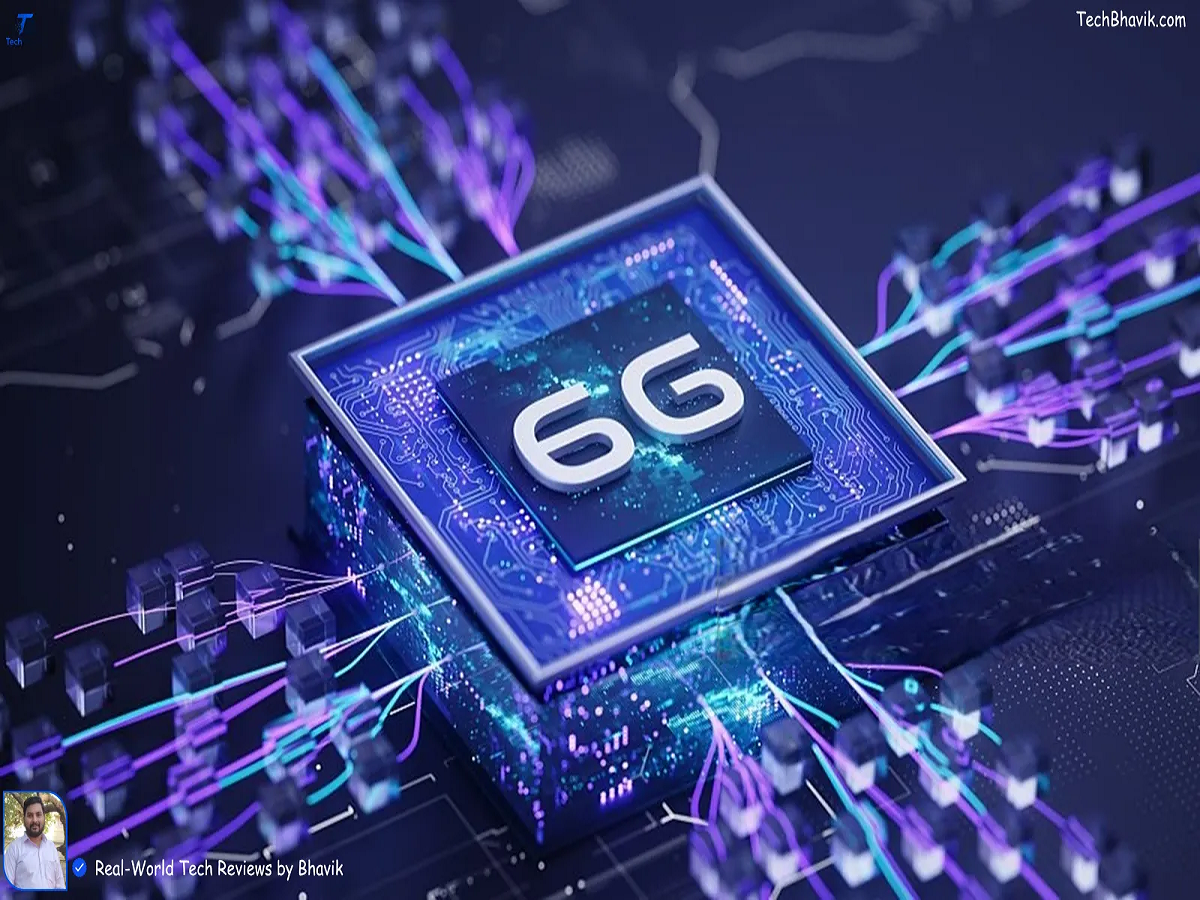
The next big change in smartphones may not simply be about faster internet or better cameras. Artificial intelligence is increasingly becoming part of the network itself, while technologies such as satellite connectivity, edge computing and 6G are moving closer to the mainstream.
The India Mobile Congress 2026, being held from October 7 to 10 in New Delhi, is putting several of these technologies in the spotlight, with AI, 6G, cybersecurity, satellite communications, semiconductors and next-generation telecom infrastructure among the major themes.
1. Your network could become smarter with AI
Today, network problems often require engineers and operators to identify and fix them. Future networks are expected to use AI to detect unusual behaviour, predict congestion and automatically optimise network performance.
This could eventually mean fewer connectivity disruptions and better performance during periods of heavy traffic.
2. 6G is already being planned
While 5G is still expanding across India, the technology industry is already working on the next generation.
6G is expected to go beyond simply offering higher download speeds. The technology could support extremely low-latency communication, connected devices, immersive applications and new forms of machine-to-machine communication.
For ordinary users, however, 6G is still a future technology rather than something they need to upgrade to immediately.
3. Satellite connectivity could fill coverage gaps
One of the most interesting developments is the growing focus on satellite-based communication.
Instead of depending entirely on conventional mobile towers, future smartphones and connected devices could potentially communicate through satellite networks in areas where terrestrial connectivity is weak or unavailable.
This could be particularly useful for remote locations, disaster response and emergency communication.
4. AI could start working directly inside your phone
AI is increasingly moving from cloud servers into smartphones.
Modern devices can already perform tasks such as image processing, translation, voice recognition and text generation locally. As mobile processors become more powerful, more AI functions could happen directly on the device.
The biggest advantage is potentially faster responses and improved privacy because some information does not have to leave the phone.
5. Cybersecurity is becoming more important
As phones and networks become smarter, cyber threats are becoming smarter too.
India's cybersecurity agencies have warned about the growing risks from AI-assisted attacks, including automated reconnaissance, vulnerability exploitation, credential theft and highly convincing phishing or impersonation attempts.
For users, this means basic security habits are becoming more important than ever. Strong passwords, two-factor authentication, software updates and caution with unexpected links can make a major difference.
6. Edge computing could make apps respond faster
Instead of sending every request to a distant data centre, edge computing processes certain information closer to the user.
This can reduce latency, which is particularly important for applications such as gaming, autonomous systems, industrial automation and real-time AI services.
In simple terms, the technology aims to bring computing power closer to where the data is being generated.
7. Smartphones may become more dependent on powerful chips
The AI boom is also changing the semiconductor industry.
Modern AI applications require enormous computing resources, increasing demand for advanced processors and memory technologies. The competition for components is already having an impact on consumer electronics, including smartphones.
This could influence the prices and specifications of future devices.
8. Networks could become almost self-managing
Another major idea being discussed is the development of autonomous or zero-touch networks.
Such systems could automatically detect problems, optimise resources and make certain network decisions without requiring constant human intervention.
If successfully implemented at scale, this could make telecom networks more efficient and potentially more reliable.
9. Your phone could communicate with more than just mobile towers
The future connectivity ecosystem is likely to be much broader than today's traditional cellular networks.
Smartphones and connected devices could increasingly interact with terrestrial 5G/6G networks, Wi-Fi, satellites, edge systems and other connected infrastructure.
This convergence could make connectivity more seamless, particularly as people move between different environments.
10. The biggest change may happen behind the scenes
For consumers, the most important technological changes may not always be visible.
You may not immediately notice an AI-powered network optimising traffic or an edge server processing an application closer to you. But these technologies could gradually make phones, apps and connected devices faster, more intelligent and more responsive.
The technology industry is therefore moving toward a future where connectivity is no longer simply about getting a stronger signal. The bigger goal is to create networks that can understand demand, respond automatically and work alongside AI.
And while 6G may still be some distance away, the technologies that will eventually support that future are already being developed today.