BUSINESS
The UK National Health Service Set to Roll Out Single Blood Test Capable of Detecting 50+ Types of Cancer
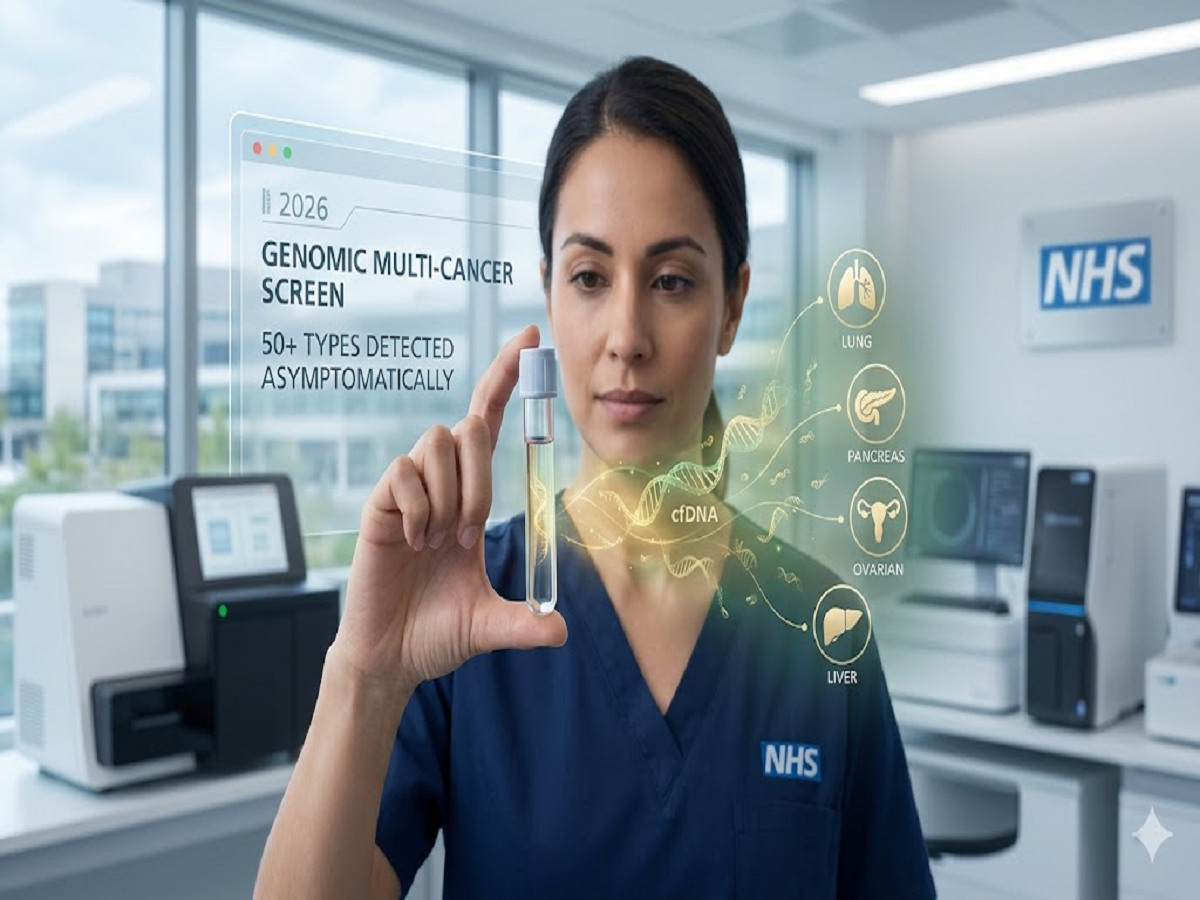
Medical diagnostics are on the verge of a historic shift as the United Kingdom’s National Health Service (NHS) prepares to implement a revolutionary single-blood-test screening method across standard clinical environments.
Following the conclusion of an expansive clinical trial involving over 140,000 participants, the technology—commonly referred to as a liquid biopsy—has demonstrated the ability to identify more than 50 distinct types of cancer long before a patient exhibits any physical symptoms.
By detecting asymptomatic malignancies, healthcare systems aim to catch the disease at Stage 1 or Stage 2, drastically improving long-term patient survival rates and shifting oncological medicine from a reactive framework to a preemptive one.
1. How It Works: Hunting for Cellular "Fingerprints"
Traditional cancer screenings are highly localized, invasive, or dependent on visual abnormalities (such as mammograms, colonoscopies, or physical tissue biopsies). A liquid biopsy, by contrast, operates on a microscopic and genetic level via a standard blood draw.
When cancer cells grow and replicate, a small percentage of them naturally die and rupture. As they break down, they release fragmented pieces of their genetic material directly into the human circulatory system. This material is known as cfDNA (cell-free DNA) or ctDNA (circulating tumor DNA).
Using next-generation genomic sequencing and advanced machine-learning algorithms, the test scans the blood sample to isolate these floating tumor DNA fragments. It analyzes specific chemical modifications—known as methylation patterns—on the DNA. Because different organs exhibit unique genetic markers, the algorithm cannot only flag the presence of cancer but can also pinpoint exactly which tissue or organ the malignancy originated from with pinpoint accuracy.
2. Moving the Diagnostic Timeline Forward
The primary value of liquid biopsy technology lies in its ability to completely rewrite the early-detection timeline. For many of the deadliest aggressive cancers—such as pancreatic, ovarian, and lung cancers—there are currently no routine, effective screening methods available to the general public. Consequently, patients are often diagnosed only after the tumor has metastasized to surrounding organs.
Conventional Diagnostics vs. Multi-Cancer Early Detection (MCED)
| Diagnostic Attribute | Legacy Screening Methods | Next-Gen Liquid Biopsy (MCED) |
| Detection Window | Typically after physical symptoms or visible structural masses appear. | Asymptomatic stage; flags microscopic genetic markers. |
| Scope of Analysis | One test targeted at one specific organ system (e.g., PSA for prostate). | Multi-cancer tracking; scans for 50+ variants simultaneously. |
| Patient Experience | Can range from radioactive imaging to invasive, surgical tissue extractions. | Non-invasive; requires a standard blood sample drawn in under 10 minutes. |
| Primary Limitation | High operational costs per individual organ screening program. | Requires high computational power and specialized genomic sequencing infrastructure. |
3. The Blueprint for Global Healthcare Integration
The success of the UK clinical trials marks the transition of genomic cancer tracking out of isolated private laboratories and into public healthcare networks.
The structural rollout strategy focuses heavily on optimizing resource allocation:
-
High-Risk Population Triaging: Initial phases are being structured to prioritize individuals aged 50 to 77 who do not have a historical cancer diagnosis but exhibit elevated statistical risks due to lifestyle factors or genetic predispositions.
-
Streamlining Secondary Care: If a patient's blood sample returns a positive signal for a specific tumor type, they bypass generalized diagnostic queues and are routed directly to specialized secondary imaging (such as targeted CT scans or MRIs) focused on the exact organ flagged by the genomic model. This eliminates months of stressful diagnostic uncertainty.
4. Addressing the Dual Challenges of False Positives and False Negatives
Despite the immense clinical promise, global medical authorities are proceeding with meticulous care regarding widespread population screening. The primary hurdle isn't the technology's sensitivity, but managing the psychological and operational impact of its results.
The Clinical Balance: If a test is overly sensitive, it risks generating a false positive—unnecessarily alerting a patient to a malignancy that their immune system might naturally clear, leading to intense psychological anxiety and unnecessary medical interventions. Conversely, a false negative could provide a false sense of security, causing a patient to ignore genuine physical symptoms later on.
Current trial data shows that the test possesses an exceptionally low false-positive rate (less than 1%), meaning that when the test flags a cancer signal, there is a very high probability that a malignancy is genuinely developing. However, the test is inherently less sensitive in tracking ultra-early Stage 1 localized tumors compared to larger Stage 3 masses, making it a critical supplement to existing screening infrastructure rather than an outright replacement for traditional mammograms or cervical smears.
5. The Road Ahead for Preventative Oncology
As the data from the 140,000-person trial continues to integrate into public health guidelines, international regulatory bodies are actively reviewing the framework for broader global adoption.
While the cost per test remains a factor for widespread deployment, health economists point out that the financial burden of managing late-stage oncology far outweighs the cost of preventative, early-stage genetic screenings. The era of catching cancer before it even begins to show its face has officially arrived.