BUSINESS
The Era of "Aadhaar-Only" PAN Applications Ends: Navigating India's Massive New Tax Framework
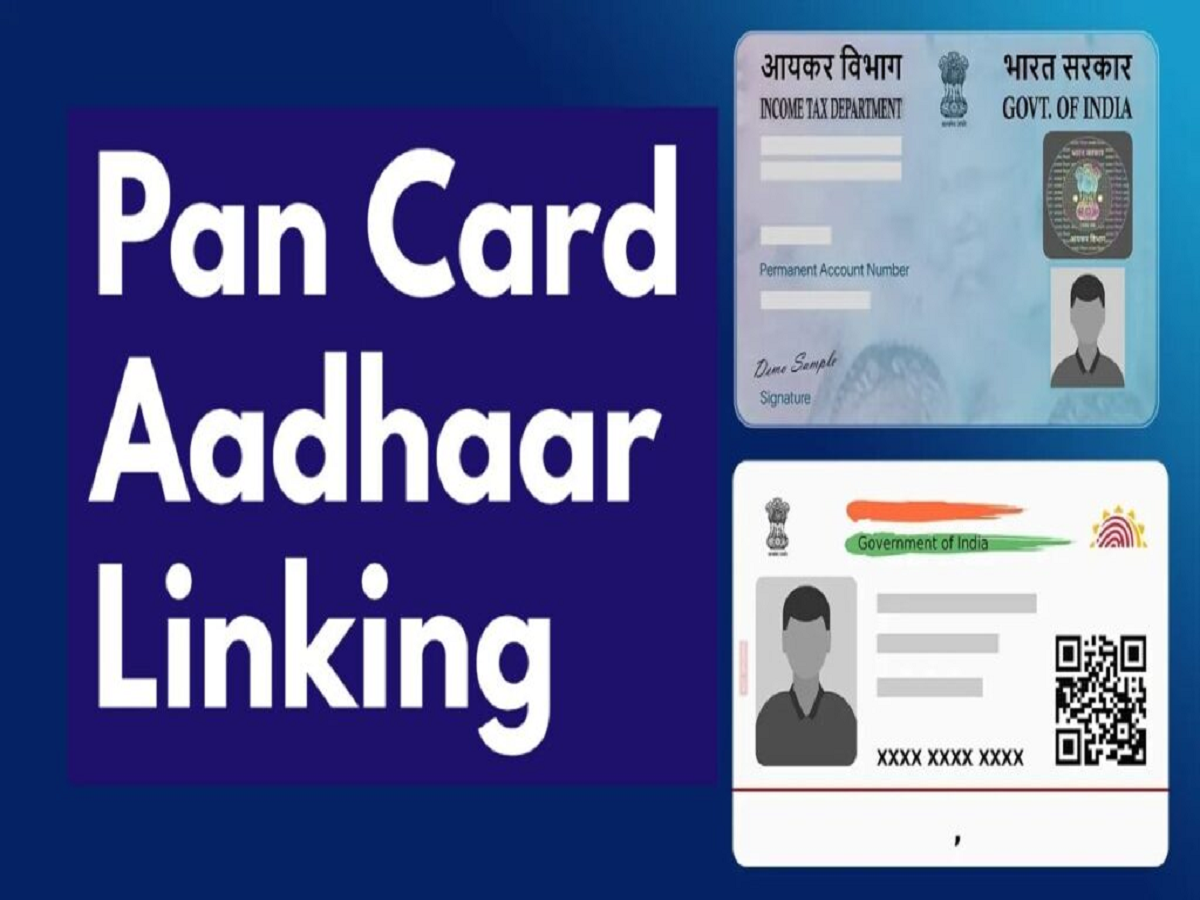
Major changes have officially reshaped how citizens interact with foundational documents. Under the newly enacted Income Tax Act 2025 and Income Tax Rules 2026, the central government has initiated a structural overhaul affecting PAN cards, Aadhaar linkages, and financial tracking limits.
If you are planning to apply for a new PAN, update your current identity profile, or make a high-value transaction, the simplified processes of the past have transitioned into a stricter, automated verification regime.
1. The Death of the "Aadhaar-Only" Instant PAN
For nearly a decade, millions of taxpayers utilized a single-document shortcut: generating or updating a PAN card instantly using nothing but an Aadhaar card via OTP validation.
That transition period is over. While an Aadhaar card remains mandatory for identity and address verification, it is no longer accepted as a standalone document for a complete application.
-
The Mandatory Addition: Every single fresh application or update request must now be accompanied by an independent, verifiable Proof of Date of Birth (DoB).
-
Strict Data-Matching Rules: The historical leniency for minor typos, spacing variables, or mismatched initials between records has been permanently phased out. The verification engine is now entirely automated; if your name, gender, or date of birth displays even a single character variant compared to your Aadhaar record, the database will instantly reject the application.
Permitted Supporting Documents for Fresh Applications
To ensure compliance when filing under the updated guidelines, you must produce a valid physical or digital copy of one of the following alongside your Aadhaar card:
-
Government-issued Birth Certificate
-
Class 10 (Matriculation / SSLC) passing certificate or marksheet
-
Valid Indian Passport
-
Valid Driving License
-
Elector’s Photo Identity Card (Voter ID)
2. Farewell Form 49A: Say Hello to the New Forms
To streamline documentation and differentiate between distinct taxpayer statuses, the legacy application sheets have been completely phased out. Using outdated paperwork will result in an immediate rejection.
| Old Form Name | New Form Designation (2026 Framework) | Intended Applicant Category |
| Form 49A | Form F093 | Individual Indian Citizens |
| Form 49A | Form F094 | Non-Individual Indian Entities (Companies, LLPs) |
| Form 49AA | Form F095 | Individual Foreign Citizens / Non-Residents |
| Form 49AA | Form F096 | Non-Individual Foreign Entities |
| Correction Sheet | Form PAN CR-01 | Change/Correction in PAN Data (Individuals) |
Critical Application Changes: Physical forms now feature a larger standard photo dimension ($4.5\text{ cm} \times 3.5\text{ cm}$). Furthermore, formatting has been simplified: applicants are no longer required to sign at both the top and bottom of the pages—only a single signature within the designated box at the bottom right is required.
3. High-Value Financial Thresholds Face Major Adjustments
While compliance requirements have tightened, the government has simultaneously adjusted the transaction thresholds where mandatory quoting of a PAN card is legally required. This shift focuses on automated tracking of major capital movements rather than minor daily cash handling.
-
Cash Deposits & Withdrawals: PAN quoting is now triggered if aggregate cash transactions reach ₹10 Lakh or more across a single financial year, replacing the older, rigid limit of ₹50,000 per day.
-
Immovable Property: Financial transactions involving real estate require mandatory tracking only if the property valuation or sale amount exceeds ₹20 Lakh (previously capped at ₹10 Lakh).
-
Motor Vehicles: The baseline for mandatory documentation has risen to vehicles priced above ₹5 Lakh, completely exempting entry-level motorcycles and smaller commuter cars which previously required paperwork.
-
Hospitality and Events: Direct payments to hotels, convention centers, or large-scale event vendors now face a disclosure trigger point of ₹1 Lakh, doubled from the historical ₹50,000 limit.
4. The Active Cost of a Dead Document
If your existing documents are not actively linked, your financial mobility faces swift restrictions. Under Section 139AA, failing to map your identifiers results in your card becoming inoperative.
An inoperative status does not just delay administrative tasks—it has direct consequences on personal capital:
-
Tax Filing Blockades: You cannot process or file Income Tax Returns (ITR). Any pending refunds are automatically withheld.
-
Aggressive Penalties: Financial operations conducted with an inoperative profile are hit with significantly higher Tax Deducted at Source (TDS) rates.
-
Reactivation Protocol: Restoring a dead profile requires accessing the official Income Tax e-filing portal, rendering a standardized ₹1,000 late fee, and awaiting a processing window that can take anywhere between 7 to 30 days for database synchronization via biometric or OTP verification.