AUTO
Tata Sierra vs Renault Duster: Which SUV Packs More Power? Engine, Size, and Feature Comparison
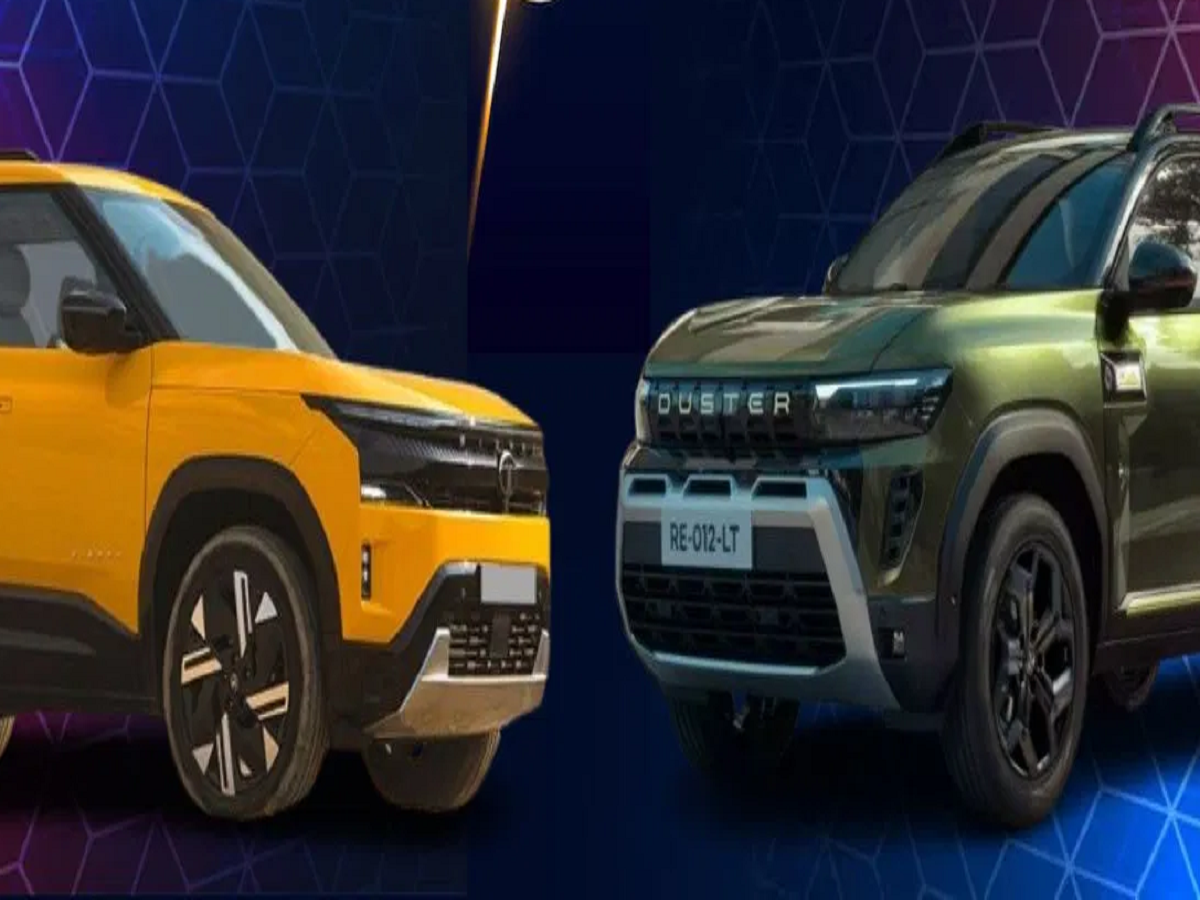
The midsize SUV segment in India is witnessing renewed competition with Tata Motors reintroducing the Sierra and Renault launching the new-generation Duster. Both SUVs aim to appeal to buyers looking for performance, off-road capability, and modern tech. Here’s a detailed comparison between the two.
Size and Off-Road Capability
Tata Sierra
-
Built on the ARGOS platform, supports petrol, diesel, and electric powertrains
-
Ground clearance: 205 mm
-
Water wading: Up to 450 mm
-
Approach angle: 26.5° | Ramp-over angle: 23.1° | Departure angle: 31.6°
-
Turning circle: 10.6 meters
Renault Duster
-
Built on the RGMB platform, with 90% India-specific parts
-
Ground clearance: 212 mm
-
Approach angle: 26.9° | Departure angle: 34.7°
-
Roof load: Supports up to 50 kg
Verdict: The Duster offers slightly higher ground clearance and a better departure angle, making it marginally more off-road capable.
Technology, Features, and Safety
Tata Sierra
-
TiDAL 2.0 electrical architecture for fast data transfer, 5G connectivity, OTA updates
-
Infotainment: 12.29-inch touchscreen | Instrument cluster: 10.23-inch digital
-
Safety: Six airbags standard, Level-2 ADAS with up to 22 safety features on top variants
-
Comfort: Ambient lighting, cooled glove box, 60:40 split rear seats, two 65W USB-C ports
Renault Duster
-
ADAS: 17-feature package
-
Comfort: 6-way power driver seat, ventilated front seats, electric tailgate, electric sunroof
-
Convenience: Built-in Google Assistant, 360° camera
Verdict: Both SUVs are feature-rich. Sierra focuses on advanced connectivity and infotainment, while Duster emphasizes convenience and driver-assistance features.
Engine Options and Performance
Tata Sierra
-
1.5L Revotron naturally aspirated petrol
-
1.5L TGDi Hyperion turbo petrol: 160 PS, 255 Nm torque
-
1.5L Cryojet diesel: 118 PS, 280 Nm torque
-
Transmissions: 6-speed manual, 7-speed DCT, 6-speed torque converter
Renault Duster
-
TCe 160 turbo petrol: 163 PS, 280 Nm torque, 6-speed DCT
-
Hybrid E-Tech 160: Combines 1.8L petrol engine, 1.4 kWh battery, 2 motors, 8-speed DHT (claimed 80% city driving in electric mode)
-
TCe 100 petrol: 100 PS, 160 Nm, 6-speed manual
Verdict:
-
For raw petrol performance, Duster TCe 160 (163 PS) slightly edges out Sierra TGDi (160 PS) in power, but torque is comparable.
-
Diesel lovers may prefer the Sierra Cryojet for its 280 Nm torque.
-
The Duster hybrid is unique for city-driving efficiency, though full power specs aren’t revealed yet.