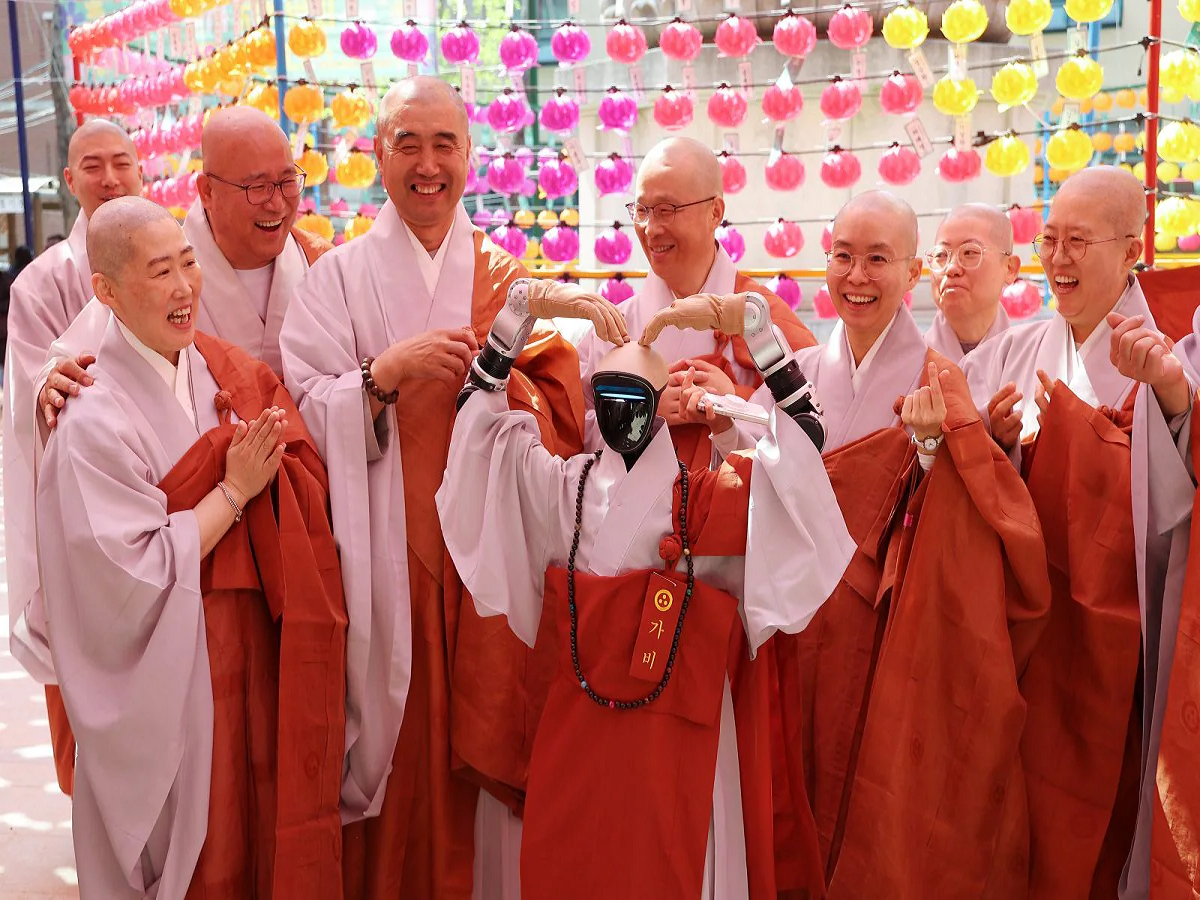
In a fusion of ancient tradition and futuristic technology, a humanoid robot has officially entered the monkhood in South Korea. The landmark ceremony, held at the historic Jogyesa Temple in Seoul, has sent images of the mechanical monastic viral across the globe, sparking a fascination with the intersection of faith and artificial intelligence.
Who is Gabi?
The robot, named Gabi, was formally ordained by the Jogye Order, the largest Buddhist denomination in South Korea. During the traditional initiation, the humanoid underwent the same symbolic rituals as its human counterparts:
-
Traditional Attire: Gabi was draped in the gray robes characteristic of the sect.
-
Symbolic Adornment: Prayer beads were placed around its neck to signify its spiritual commitment.
-
Formal Induction: The ceremony marked Gabi’s official entry into the monastic community, a first for a humanoid of its kind.
The Mission: Bridging the Generational Gap
While the sight of a robot monk may seem like a tech demo, the Jogye Order insists the initiative has a deeper social purpose. As South Korea sees a surge of interest in Buddhism among the youth, religious leaders are looking for innovative ways to remain relevant.
-
Engaging the Youth: By introducing Gabi, the temple aims to create a familiar entry point for a tech-savvy younger generation.
-
Religion vs. Technology: The move is designed to start a dialogue on how modern advancements can coexist with—and perhaps even support—spiritual traditions.
-
Cultural Connection: The goal is to bring more people through temple doors by demonstrating that ancient wisdom can embrace the future.
A Viral Sensation
The image of a metallic monk deep in prayer has resonated far beyond the temple walls. Social media discussions under tags like #SouthKoreaRobotMonk are debating whether a machine can truly embody spiritual principles, but for the Jogye Order, Gabi represents a successful bridge between the sacred past and the digital future.