BUSINESS
Ration Card Holders Alert: Government Introduces Digital Food Subsidy Payments in Selected Union Territories
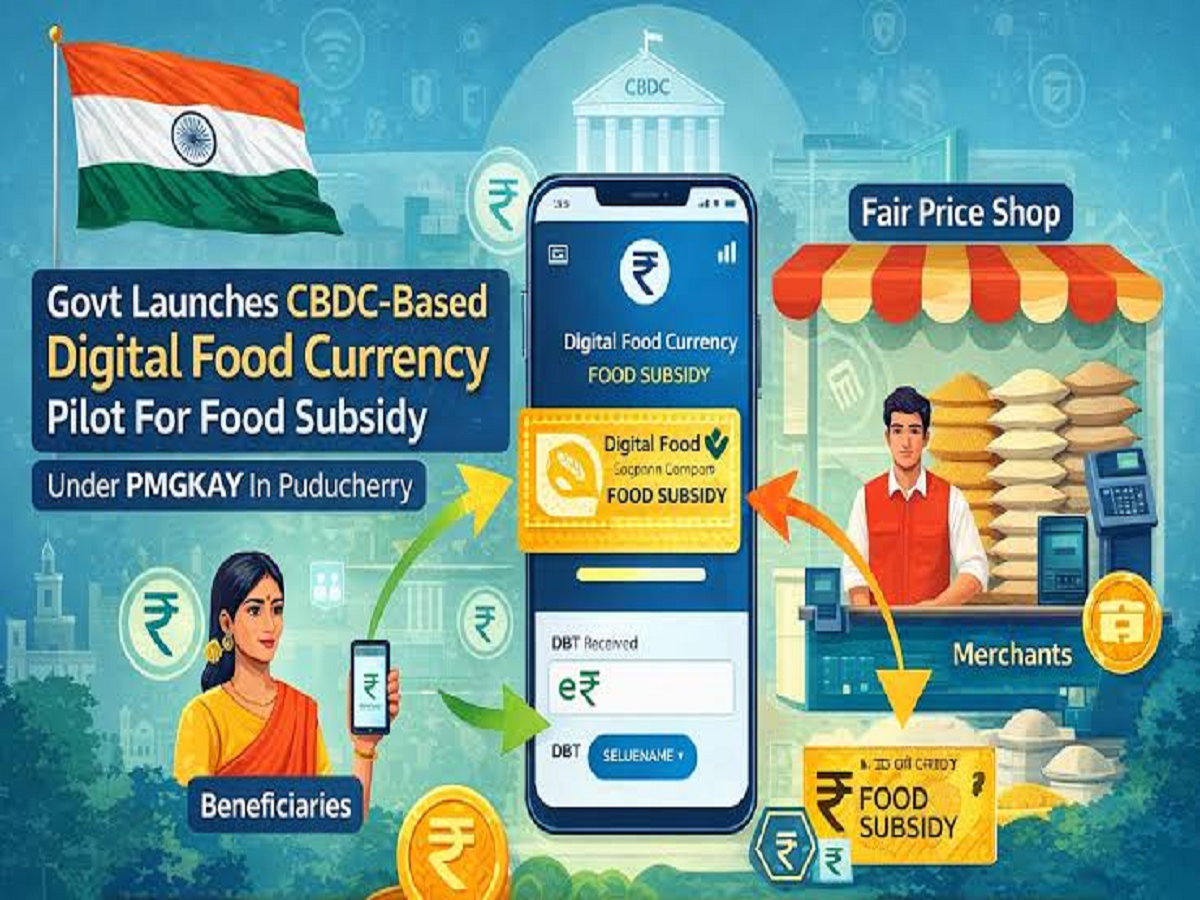
The way eligible families receive food subsidies is evolving as the Government of India explores digital payment technology for welfare programmes. In a new initiative, the government has introduced a Central Bank Digital Currency (CBDC)-based subsidy delivery system under the Pradhan Mantri Garib Kalyan Anna Yojana (PMGKAY) in Chandigarh and Dadra and Nagar Haveli.
The initiative is designed to make food subsidy delivery more transparent and traceable, while allowing beneficiaries to purchase foodgrains through participating merchants using a digital currency wallet.
What Is the New Digital Ration Subsidy System?
Traditionally, eligible households receive subsidised foodgrains through the Public Distribution System (PDS). Under the new pilot, the government is testing a different approach in which food subsidies are credited to beneficiaries through a CBDC wallet rather than a conventional bank account transfer.
CBDC is a digital form of central bank money issued by the Reserve Bank of India. Unlike private cryptocurrencies, it is issued by the central bank.
The government intends to use this technology to improve the traceability of subsidy payments and ensure that the benefit is used for its designated purpose.
Where Has the Initiative Been Introduced?
The CBDC-based food subsidy initiative has been rolled out in:
-
Chandigarh
-
Dadra and Nagar Haveli
The programme builds on earlier pilot projects conducted in Gujarat and Puducherry in February 2026. The latest expansion is intended to provide more experience with digital currency in government welfare delivery.
This is currently a limited rollout, not a nationwide replacement of the existing ration distribution system.
How Will Beneficiaries Receive the Benefit?
Under the pilot, eligible beneficiaries receive the food subsidy in a designated CBDC wallet. They can then use the digital balance to purchase foodgrains from participating merchants.
The system is designed to provide a traceable transaction record and reduce the handling of cash in the subsidy process.
The actual process for receiving and using the digital benefit depends on the arrangements in place in the participating area. Beneficiaries should follow instructions issued by their local administration and authorised service providers.
Will Every Ration Card Holder Need a Digital Wallet?
No. The announcement concerns a pilot programme in selected Union Territories. It does not mean that every ration card holder across India must immediately download a digital wallet or change how they receive foodgrains.
Families should continue following the existing Public Distribution System procedures unless their local administration officially informs them that the pilot applies to their household.
Anyone receiving a message demanding payment or sensitive banking details to activate a government ration benefit should verify it through an official channel.
What Are the Potential Benefits?
The government expects the digital approach to offer several advantages:
-
Greater traceability: Digital transactions can make it easier to track the movement and use of subsidy funds.
-
Faster processing: Digital currency transactions are designed to support prompt transfers.
-
Better monitoring: Authorities may be able to monitor subsidy utilisation more effectively.
-
Reduced diversion: Restricting the use of the benefit to designated purchases is intended to reduce the risk of misuse.
The actual effectiveness of these measures will depend on implementation, accessibility and the experience of beneficiaries.
What Should Ration Card Holders Do Now?
If you live outside the pilot locations, there is no need to change your existing ration arrangements solely because of this announcement.
If you live in Chandigarh or Dadra and Nagar Haveli, check with the local food and civil supplies department to determine whether your household is covered and how the digital wallet process works.
For official information, visit the Department of Food and Public Distribution at dfpd.gov.in or check government announcements at pib.gov.in.
The Bottom Line
The CBDC-based subsidy pilot represents an experiment in combining digital currency with food security programmes. If implemented effectively, it could offer useful lessons for improving transparency and monitoring in welfare delivery.
For now, the initiative applies only to selected locations. Ration card holders should rely on official announcements rather than social media messages claiming that the traditional ration system has been replaced nationwide.