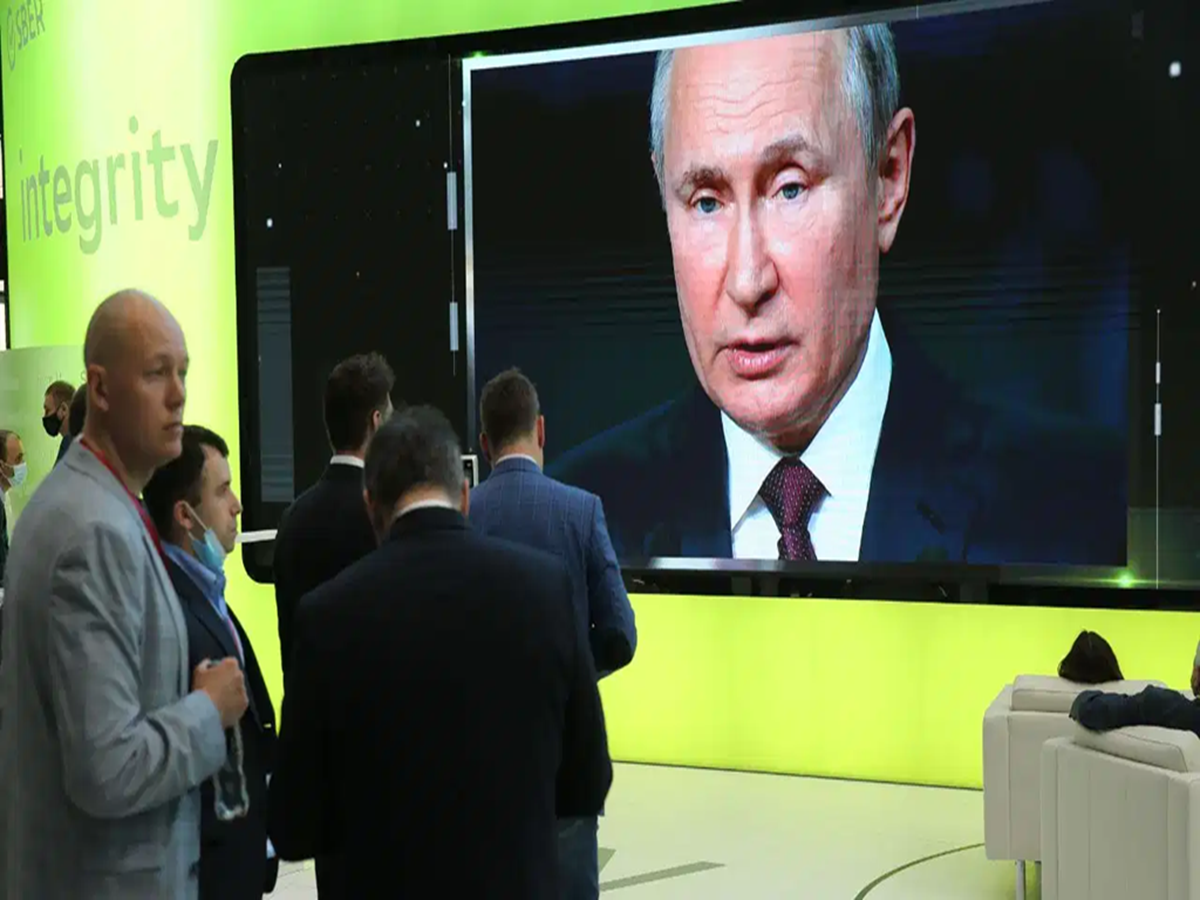
Following heightened global security concerns after reports of high-profile geopolitical tensions, Russian authorities have reportedly taken precautionary steps to strengthen surveillance protection around President Vladimir Putin.
The move comes amid fears that advanced artificial intelligence and cyber tools could be used to analyze surveillance data and potentially expose sensitive security patterns.
Special camera network temporarily shut down
According to reports, Russia’s Federal Security Service (FSB) temporarily disabled parts of a specialized camera monitoring system used to track the movements of Vladimir Putin and senior officials.
The decision was taken to conduct a security audit of the system, including:
Network access controls
Password and authentication systems
Data storage and transmission security
Officials feared that AI-powered tools could be used to extract detailed behavioral patterns from surveillance footage.
Why surveillance systems became a concern
Moscow reportedly operates nearly 300,000 surveillance cameras as part of its city-wide monitoring network. However, the concern is not the general system, but the dedicated high-security infrastructure linked to state protection.
Security analysts warned that modern AI systems can:
Scan massive amounts of video data quickly
Identify movement patterns of individuals
Map daily routines and travel routes
Correlate locations with time and activity
This has raised concerns that sensitive information about high-level officials could be inferred even without direct system breaches.
AI-driven cyber threats increase global anxiety
The broader concern is the rise of AI-assisted cyber operations. Reports cited in the story refer to incidents where AI tools were allegedly used to automate large portions of cyberattacks targeting organizations across sectors such as:
Government
Finance
Technology
Industry
These developments have raised fears that surveillance systems themselves could become intelligence sources if compromised.
Security review and system tightening
After the audit, some parts of the surveillance network were reportedly reactivated with stronger safeguards. These include improved encryption, restricted access controls, and tighter monitoring of system interactions.
The goal, according to reports, is to ensure that even if AI tools are used by attackers, they cannot reconstruct sensitive movement or behavioral patterns.
Growing global concern over AI and surveillance
Experts say the issue reflects a larger global trend: surveillance systems are no longer just passive recording tools. With AI integration, they can potentially become powerful analytical systems capable of reconstructing detailed human behavior.
This has led governments worldwide to reassess how surveillance infrastructure is secured against emerging cyber threats.
Conclusion
The reported security changes around Vladimir Putin highlight a growing reality: modern surveillance systems are now as much about data protection as physical security. As AI capabilities expand, governments are increasingly focused on preventing sensitive intelligence from being extracted through digital analysis rather than direct hacking.