BUSINESS
Prices of 15 Out of 16 Essential Food Items Rise Ahead of Festive Season; Check the Full List
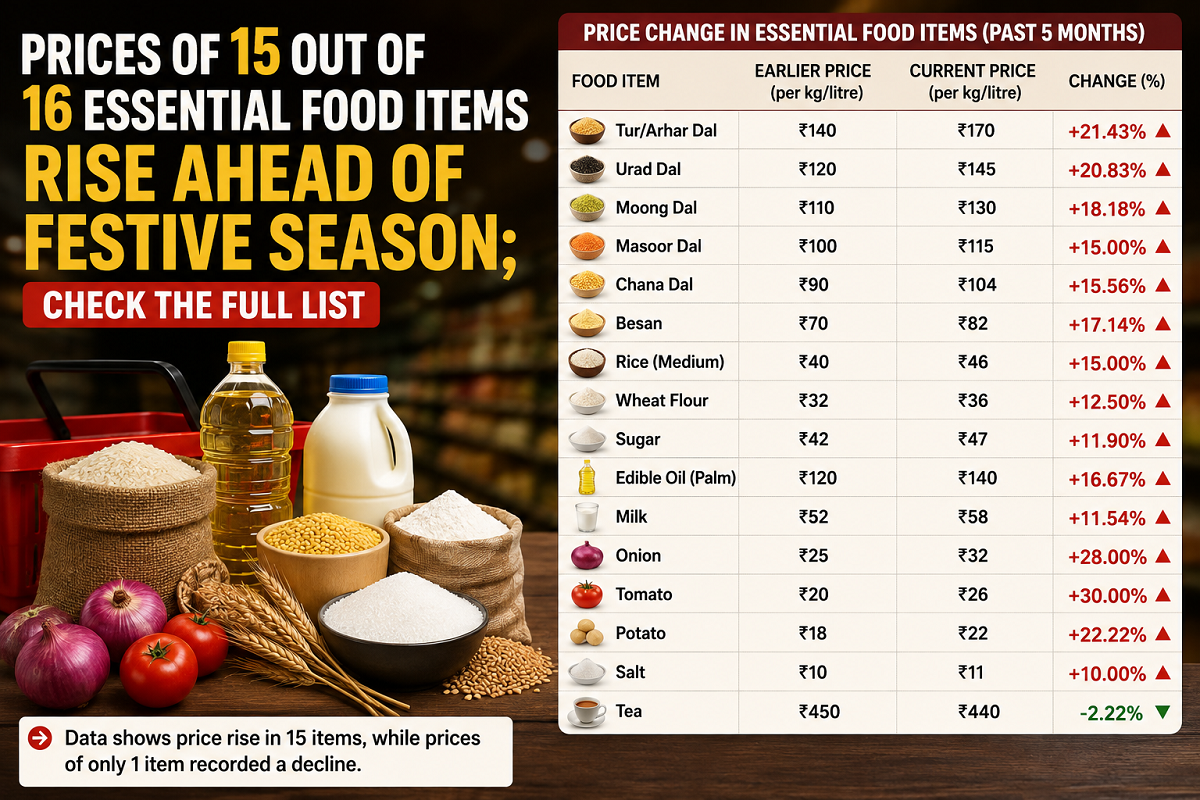
As the festive season approaches, household budgets are coming under increased pressure due to rising food prices. Recent data from the government's Price Monitoring System indicates that the cost of 15 out of 16 commonly used food items has increased over the past five months, affecting everyday grocery expenses across the country.
The rise in prices has added to the financial burden on families, as staples and kitchen essentials have become more expensive ahead of the festival period.
Food Inflation Pushes Up Household Expenses
The latest price data suggests that the majority of essential grocery items have witnessed an upward trend in recent months. Consumers are now paying more for several products that are part of their daily diet, making routine household shopping costlier than before.
With demand typically increasing during the festive season, rising prices could further impact monthly household budgets.
15 of 16 Everyday Grocery Items Become Costlier
According to the Price Monitoring System, almost every major food category has recorded a price increase over the last five months.
While the exact change varies across products and regions, the overall trend points to higher retail prices for many essential food items used in Indian households.
The categories that have reportedly become more expensive include:
-
Rice
-
Wheat and wheat flour
-
Pulses
-
Edible oils
-
Sugar
-
Tea
-
Milk
-
Vegetables
-
Fruits
-
Spices
-
Cooking essentials
-
Packaged grocery products
-
Other commonly consumed food items
Only one item among the monitored basket reportedly remained unchanged or did not record a significant increase during the review period.
Festive Demand May Keep Prices Elevated
Market experts note that demand for food products generally rises ahead of major festivals, leading to increased pressure on supply chains.
Factors such as seasonal demand, transportation costs, weather-related disruptions, and fluctuations in agricultural output can also influence retail food prices.
If supply remains tight while demand continues to rise, prices of several essential commodities may remain elevated in the coming weeks.
Higher Grocery Bills Impact Household Budgets
The increase in prices means families may have to allocate a larger portion of their monthly income toward groceries.
For households already managing fixed budgets, even modest increases in the prices of everyday essentials can significantly affect overall spending. Items purchased frequently, such as cereals, edible oils, vegetables, and dairy products, have the greatest impact on monthly expenses.
Consumers may increasingly compare prices, look for discounts, and plan purchases more carefully to manage rising costs.
What Consumers Can Do
While retail prices are influenced by market conditions, consumers can take a few practical steps to reduce the impact of food inflation:
-
Prepare a monthly grocery budget before shopping.
-
Compare prices across local markets and retail stores.
-
Purchase non-perishable items during promotional offers.
-
Avoid unnecessary bulk buying of highly perishable products.
-
Monitor government price updates for essential commodities.
These measures may help households manage expenses more effectively during periods of rising food prices.
Rising Food Prices Highlight Inflation Concerns
The latest data underscores the continued pressure of food inflation on household finances. With 15 out of 16 essential food items becoming more expensive over the past five months, consumers are likely to feel the impact on their monthly grocery bills, particularly during the festive season when spending typically increases.
As market conditions evolve, shoppers may need to keep a close watch on price movements and adjust their household budgets accordingly.