Some lessons from childhood stay with us quietly. At the time, they may seem like ordinary customs or family traditions. Years later, we often realize that they were teaching us something much deeper about life, responsibility and our relationship with nature.
One such lesson can be found in Kerala, where faith and nature have traditionally existed side by side.
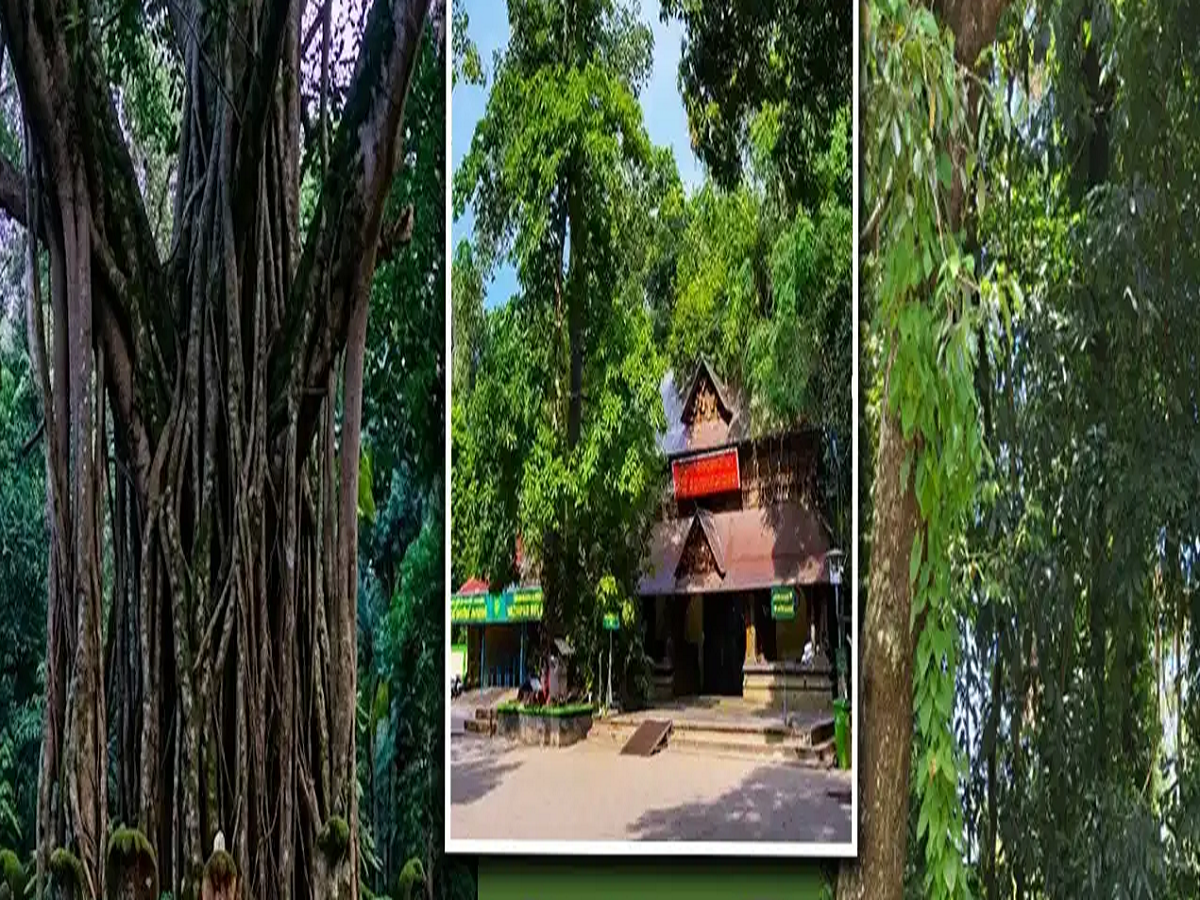
Near Haripad stands the famous Mannarasala Sri Nagaraja Temple, a sacred centre dedicated to serpent worship. Surrounded by dense greenery, winding pathways and a sacred grove known as a Nagavana, the temple is home to thousands of serpent idols placed among the trees.
But there is another fascinating aspect of the temple: its chief priest, traditionally known as Mannarasala Amma, is a woman.
Why Does a Woman Serve as the Chief Priest?
The role of Mannarasala Amma is deeply connected to the temple's long-standing traditions. Unlike the conventional image of male priests in many Hindu temples, Mannarasala has preserved a tradition in which a woman holds the central priestly position.
For visitors, the experience is not simply about entering a temple. The surrounding sacred grove is an important part of the atmosphere. Trees, plants, pathways and serpent images exist together, creating a space where nature itself becomes part of the religious experience.
As children, we may simply see such practices as rituals. But with time, they can reveal another message: nature is not merely something to be used; it is something to be respected.
Kerala's Sacred Groves: Where Nature Became Sacred
Traditional Kerala households often maintained small patches of protected vegetation known as Kaavu or sacred groves. These spaces were associated with deities and serpent worship and were generally left undisturbed.
The idea was simple. If a place was considered sacred, people were less likely to clear it, develop it or interfere with the plants and creatures living there.
For generations, such traditions helped create small pockets of greenery around homes and communities.
The people who followed these customs may not have used modern terms such as biodiversity, conservation or ecological balance. Yet the underlying idea was remarkably simple: some parts of nature should be allowed to exist without human interference.
The Tradition of Planting Five Trees for Every One Cut
One particularly meaningful tradition remembered in some families and local communities was the practice of planting five trees when one tree had to be cut down.
The idea went beyond simply replacing a tree.
Before cutting a tree, a ritual or prayer could be performed, acknowledging that something living was being removed. Then, instead of planting just one replacement tree, five new trees would be planted and cared for.
This was not necessarily a universal rule followed throughout Kerala. Rather, it was a practice remembered in certain families and communities.
But the lesson behind it is powerful.
If you take something from nature, you also take responsibility for replacing and protecting what you have taken away.
Planting Is Not Enough
There is an important difference between planting a tree and actually helping it survive.
A sapling needs water, protection and time. It has to be cared for until it becomes strong enough to survive on its own.
The person who plants those five trees may never enjoy their shade. Someone else might.
And perhaps that is the deeper meaning of the tradition: responsibility does not always mean receiving something in return.
Sometimes we do something today so that someone we may never meet can benefit tomorrow.
Is It Really Necessary to Cut the Tree?
Modern development often begins with a question: "Can this land be used?"
Traditional thinking sometimes began with another question: "Does this tree really need to be removed?"
That difference may appear small, but it represents two very different ways of looking at nature.
A tree may stand on privately owned land, but its benefits extend far beyond its owner. Birds may nest in it, insects may depend on it, its roots may help hold soil together, and its shade can benefit people and animals alike.
In that sense, a tree is rarely just a tree.
What Our Ancestors Understood Differently
Our ancestors did not have today's scientific vocabulary around climate change, carbon emissions and biodiversity. But many traditional practices were built around the idea that certain elements of nature deserved protection.
Forests could be sacred.
Snakes could be regarded as protectors.
Trees could become part of religious traditions.
Sacred groves could be left untouched.
These beliefs were religious and cultural rather than scientific explanations of nature. Yet they could have a practical conservation effect by discouraging people from disturbing certain spaces.
The Bigger Lesson Behind the Five Trees
Perhaps the story of five trees is ultimately about more than trees.
Someone gives us love—what do we give in return?
Someone places their trust in us—do we protect it?
Our parents devote years of their lives to us—how do we give back?
Society provides us with roads, schools, opportunities and resources—what do we contribute in return?
It is easy to calculate what we have received. It is much harder to think about what we owe.
A Lesson a Child Can Understand
A young child can understand the responsibility of caring for a tree. Give a child a sapling and ask them to water it every day, and they may do it without asking what they will get in return.
As adults, however, we often start calculating the benefits before deciding whether something is worth doing.
Perhaps that is why the simple idea of planting five trees for every one that is removed feels so powerful.
It teaches us that taking is only one part of the relationship.
The other part is giving back.
And maybe the real question we should ask ourselves is not just what we have received from the world, but what we are planting, protecting and leaving behind for the people who will come after us.