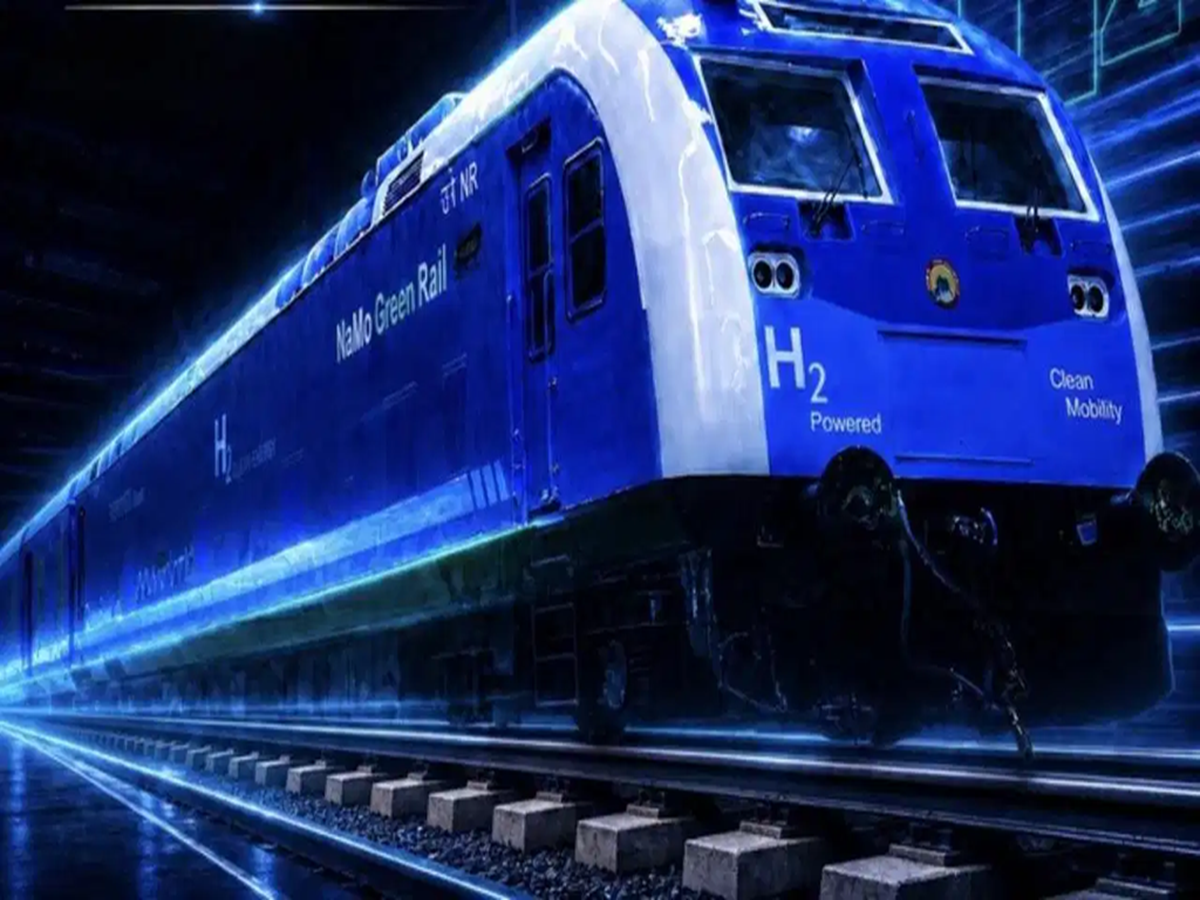
Indian Railways has taken a major step towards cleaner transportation by introducing its first hydrogen-powered train on the Jind–Sonipat route in Haryana. Developed using indigenous technology, the train represents a significant milestone in the country's efforts to adopt environmentally friendly rail transport.
Unlike conventional trains, this new service runs without diesel or overhead electric power, relying instead on advanced hydrogen fuel cell technology.
How Does a Hydrogen Train Work?
The train is powered by a Proton Exchange Membrane Fuel Cell (PEMFC), which generates electricity through a chemical reaction between hydrogen and oxygen.
At the heart of the system is a proton-conducting polymer membrane, which enables the electrochemical reaction that produces electricity to power the train's motors.
The process generates:
- Electricity to drive the train
- Water vapour
- Heat
Since no fossil fuels are burned during operation, the train produces water vapour instead of smoke or harmful exhaust emissions, making it a cleaner alternative to traditional diesel-powered trains.
Why Hydrogen Fuel Cells Matter
Hydrogen fuel cell technology is increasingly being adopted worldwide as a sustainable alternative to conventional railway traction systems.
Some of its key advantages include:
- Zero tailpipe carbon emissions during operation
- Lower maintenance requirements compared to diesel engines
- High energy efficiency
- Reduced dependence on fossil fuels
As countries move toward greener transportation, hydrogen-powered trains are expected to play an important role in reducing the environmental impact of rail travel.
Speed and Passenger Capacity
The hydrogen train has:
- Design speed: 110 km/h
- Approved operating speed: Up to 75 km/h
- Passenger capacity: Around 2,600 passengers
The current operating speed has been approved keeping safety and operational requirements in mind.
Dedicated Hydrogen Refuelling Facility
To support the new train, Indian Railways has established the country's largest hydrogen storage and refuelling facility at Jind, Haryana.
The facility can store approximately 3,000 kilograms of hydrogen at a time and has received the necessary approvals from the Petroleum and Explosives Safety Organization (PESO) for the storage and dispensing of compressed hydrogen gas.
A Step Towards Sustainable Rail Transport
The introduction of India's first hydrogen-powered train marks an important milestone in the modernization of Indian Railways. By combining indigenous technology with clean energy, the project showcases the potential of hydrogen as a future fuel for rail transport and reinforces the country's push towards greener, more sustainable mobility solutions.