SPORTS
Indian Blind Cricket World Champions Earn Just ₹3,000 per Match — A Harsh Reality Behind Their Glory
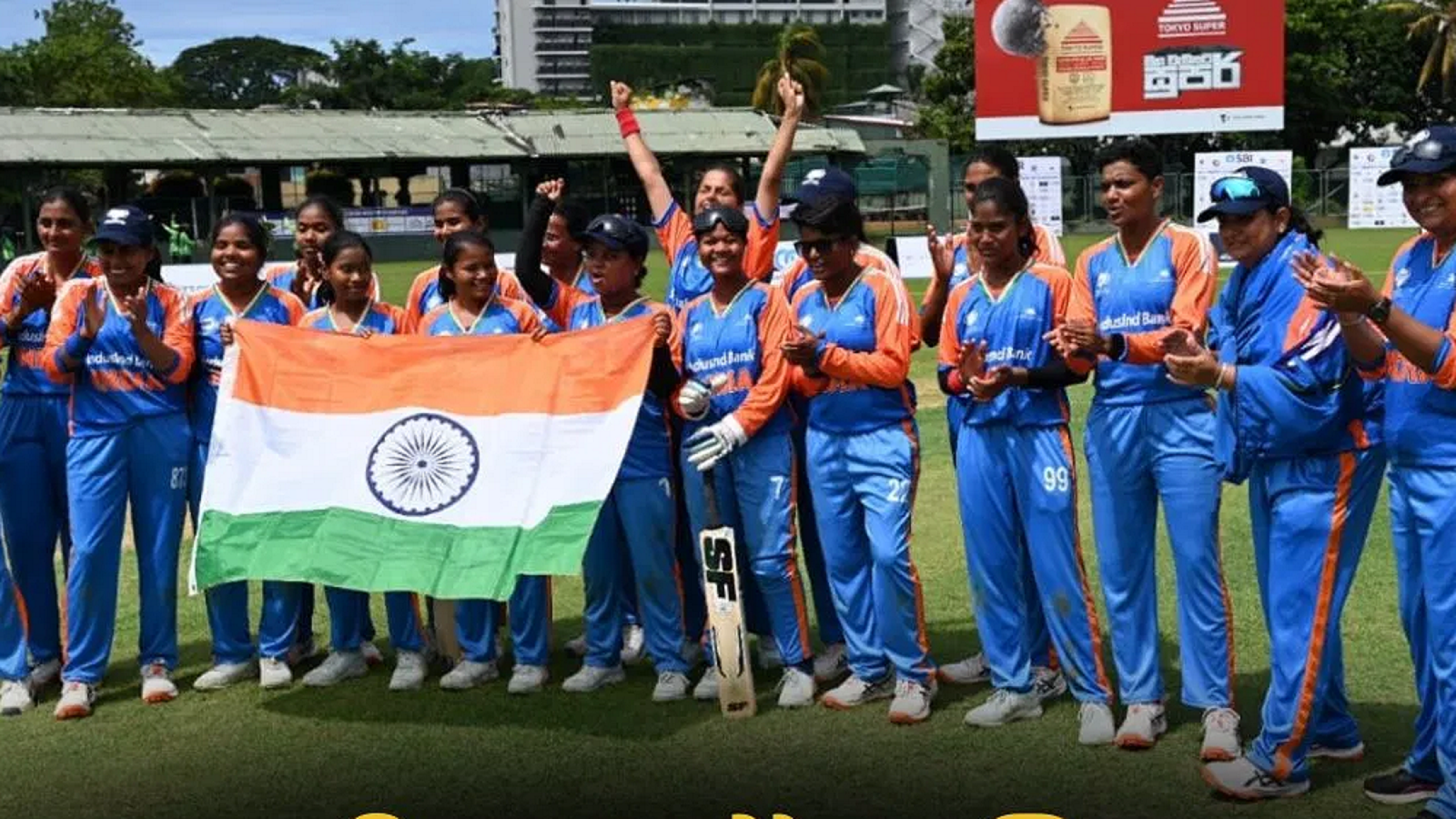
When the Indian Women’s Blind Cricket Team lifted the trophy in Colombo after winning the inaugural T20 World Cup, the country celebrated their extraordinary achievement. But behind this historic triumph lies a troubling truth: the world champion players earn only ₹3,000 per match.
Because blind cricket in India is not officially recognised by the BCCI, these athletes do not receive match fees from the world’s richest cricket board. Instead, their payments depend on a private trust—the Cricket Association for the Blind in India (CABI)—along with a few sponsors.
What do blind cricketers earn?
In a country where cricketers are adored and the BCCI pays its contracted players enormous sums—
• ₹15 lakh for a Test match
• ₹6 lakh for an ODI
• ₹3 lakh for a T20I
—blind cricketers earn only ₹3,000 per match, whether in the women’s or men’s team.
Despite their exceptional skill and passion, blind cricketers remain largely invisible in the mainstream cricketing structure. Their training camps, travel, kits, and international participation rely almost entirely on donations.
Other countries do better
While India has yet to give blind cricket full recognition, many countries have already taken the step:
• Pakistan offers central contracts to blind cricketers
• Australia, England, Sri Lanka, Bangladesh, New Zealand, and Zimbabwe officially recognise blind cricket
The contrast highlights not just a gap in funding, but a gap in respect and equality.
Prize money that tells a story
You may be surprised to learn that the Indian squad which won the Women’s Blind T20 World Cup 2025 received only ₹1 lakh each, and that too from a private sponsor, the Chintels Group—not from the BCCI.
The struggle makes their success even more remarkable
Despite limited financial support, the Indian women’s blind cricket team dominated the entire World Cup. They remained unbeaten, winning all seven matches—including crucial victories against strong teams like Australia and Pakistan.
Their dedication and resilience are unmatched. These athletes, who literally “play in the dark,” shine brighter than many who receive far more support.