NATIONAL
I-PAC approaches High Court to stop ED raid, but Mamata Banerjee’s arrival reverses course? Inside timeline of Kolkata drama
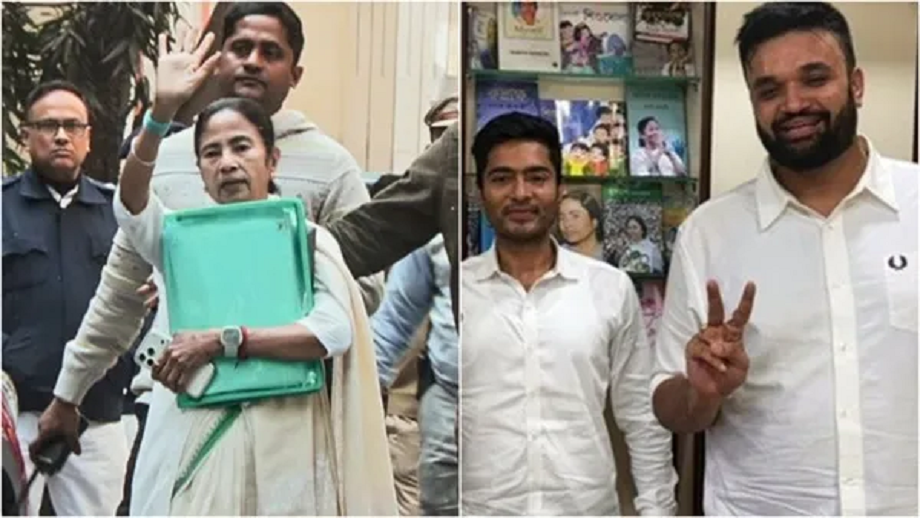
ED Raid I-PAC Timeline: What happened in Kolkata on January 8th created a huge stir in Bengal politics. The Enforcement Directorate (ED) raided the office of political consultancy firm I-PAC and the home of its director, Prateek Jain, then Chief Minister Mamata Banerjee suddenly arrived at the scene, and now I-PAC vs. approached the Calcutta High Court. The entire incident was nothing short of a political thriller. So, let’s explore the complete timeline.
Both ED and I-PAC reached the High Court
IPAC has now approached the High Court against the ED raid. It has demanded an immediate halt to the raid. Meanwhile, the ED has filed a petition in the Calcutta High Court alleging interference in its investigation.
ED Raid I-PAC TimeLine
The agency alleges that while it was conducting legitimate searches in connection with a money laundering case, certain individuals holding constitutional positions forcibly seized the documents. The ED has sought immediate court intervention. The matter is expected to be heard on Friday (January 9) before a bench headed by Justice Shubhra Ghosh.
In which case was the raid conducted?
According to the ED, the action was not targeted at any political party or election. The agency claims the raids were part of an investigation into illegal coal smuggling and related money laundering.
What is ED saying about the raid?
The ED clarified that no political party offices were raided. The investigation is limited to premises where inputs related to cash generation and hawala transfers were received. The agency also stated that during the searches, some individuals entered the scene and illegally interfered with the investigation and seized documents, which is a clear violation of the law.
How the atmosphere changed from morning to evening
Early on the morning of January 8th, ED teams arrived in Kolkata from Delhi. At daybreak, simultaneous searches began at two locations. The first team went to Pratik Jain’s home, located between Central and South Kolkata, while the second team entered the old I-PAC office in the Salt Lake area.
Initially, everything was proceeding normally, but after about 11:30 a.m., the situation began to change rapidly. First, Kolkata Police Commissioner Prateek Jain arrived at Jain’s residence. Shortly thereafter, West Bengal Chief Minister Mamata Banerjee herself arrived at the Loudon Street residence where the ED operation was underway.
Green File and major allegations
Mamata Banerjee remained inside for some time. Upon exiting, she was seen carrying a green file, further fueling speculation in political circles. The Chief Minister alleged that the raids were being conducted at the behest of Union Home Minister Amit Shah. She said the ED was attempting to seize information related to the Trinamool Congress’s election strategy, candidate lists, and sensitive data related to the party.
The matter reached the I-PAC office
After leaving Pratik Jain’s house, Mamata Banerjee went straight to the I-PAC office in Salt Lake. It was reported that she entered through the back door. About 15 to 20 minutes later, some officials from the Chief Minister’s Office were seen emerging, carrying files. These files were placed in the same vehicle in which the Chief Minister had arrived. However, it was not clear whether these documents were recovered during the ED search.
What did CM Mamata Banerjee say?
Mamata Banerjee sharply questioned whether the ED and the Home Minister were responsible for seizing party hard drives and candidate lists. She called it cheap politics and alleged that an attempt was being made to seize her party’s documents. The Chief Minister appealed to the Prime Minister to rein in his Home Minister and that if the BJP wanted to win the election, it should fight democratically.
BJP counterattacks
The BJP accused Mamata Banerjee of interfering in the investigation. Opposition leader Suvendu Adhikari said the Chief Minister had obstructed the work of the central agency, which warranted legal action. He questioned why the voter list was found at the I-PAC office and whether it was a party office.
What is I-PAC and why is it important?
The Indian Political Action Committee (I-PAC) is a political consultancy firm that specializes in election strategy, data-driven campaigns, media planning, and voter outreach for political parties. It was founded in 2013 by Prashant Kishor and Pratik Jain as Citizens for Accountable Governance. It was later renamed I-PAC.
After Prashant Kishor entered active politics, the organization’s leadership fell entirely to Pratik Jain. I-PAC has been working closely with the Trinamool Congress since 2021 and also manages the party’s IT and media cells.
All eyes are now on the High Court hearing on January 9th. This will determine the direction the ED investigation will take and the legal consequences of this high-voltage political confrontation. One thing is certain: this clash between I-PAC and the ED will resonate in Bengal politics for a long time.
PC:OneIndia