BUSINESS
Government Bans Export of Battery 'Black Mass': What Is It and How Will India's EV Industry Benefit?
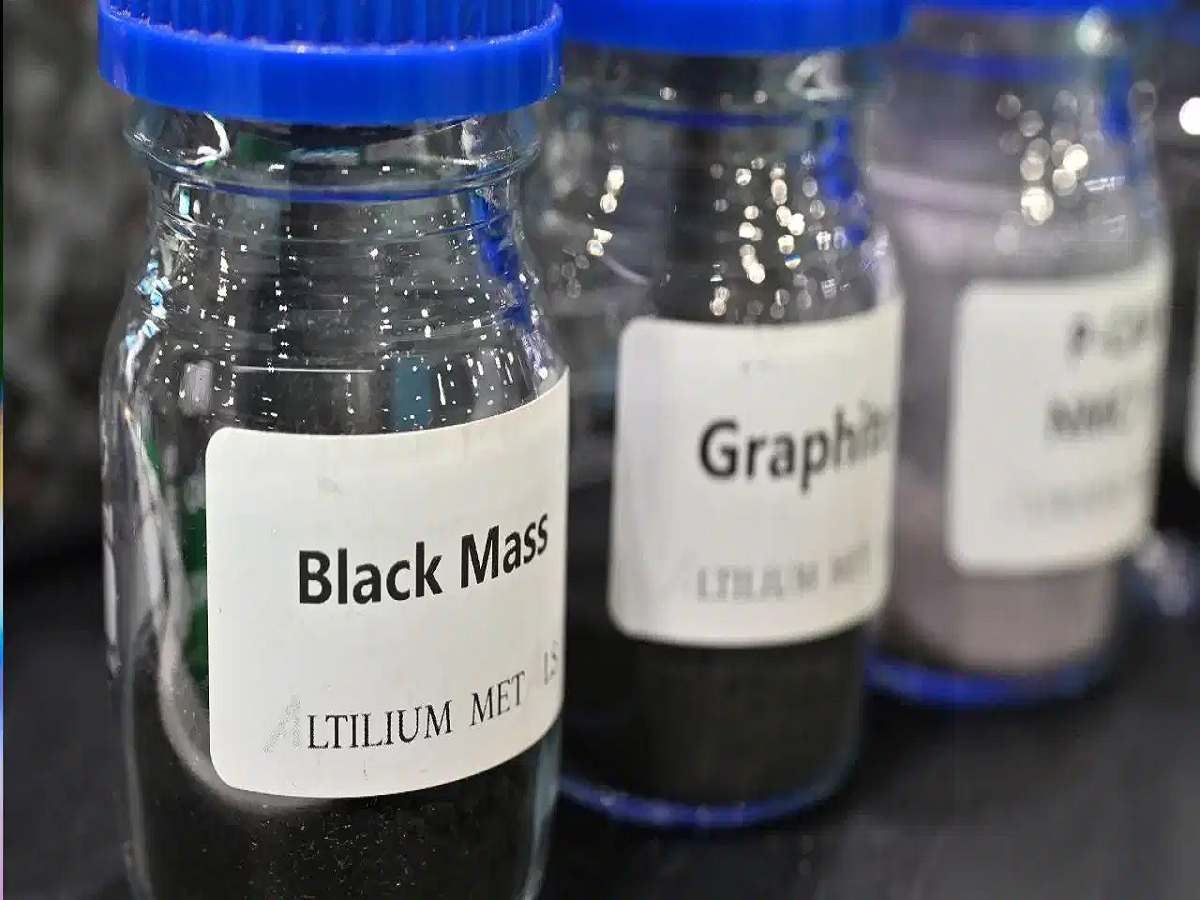
The Indian government has imposed an immediate restriction on the export of lithium-ion battery waste known as 'black mass'. The move is aimed at ensuring that valuable minerals recovered from used batteries remain available within the country, giving a boost to India's battery recycling industry, electric vehicle (EV) manufacturers and battery producers.
The Directorate General of Foreign Trade (DGFT), under the Ministry of Commerce, issued a notification changing the export policy for lithium-ion battery black mass from 'Free' to 'Restricted'. The restriction will remain in force until further orders.
The decision is expected to strengthen India's domestic supply of critical minerals and reduce dependence on imports for materials required in battery manufacturing.
What Exactly Is Battery Black Mass?
Black mass is a dark powder obtained by processing used or discarded lithium-ion batteries. It is produced when old batteries are dismantled, shredded and processed. Battery manufacturing waste can also be used to produce it.
This material contains valuable minerals such as lithium, cobalt, nickel and manganese. These minerals can be recovered through specialised recycling processes and reused in the production of new batteries.
Since these materials are essential for electric vehicles, energy storage systems and other battery-based technologies, black mass has become an important resource for the recycling industry.
Why Has the Government Restricted Its Export?
India depends significantly on imports to meet its demand for several critical minerals. At the same time, the country's ability to recover valuable materials from used batteries and electronic waste has been growing.
However, domestic recycling companies have faced a shortage of raw materials, preventing some of them from operating at their full capacity. A key concern is that black mass generated in India is being exported, while some Indian recycling companies are importing similar material from overseas to continue their operations.
By restricting exports, the government wants to ensure that more domestically generated black mass is available to Indian recycling businesses. This could improve raw material availability, support existing facilities and encourage investment in new recycling units.
How Will the ₹1,500 Crore Government Scheme Help?
The export restriction is linked to the government's broader efforts under the National Critical Mineral Mission (NCMM).
In September 2025, the Union Cabinet approved a ₹1,500 crore incentive scheme to promote the recycling of critical minerals from used batteries and electronic waste.
The scheme aims to encourage companies to establish and expand recycling facilities that can recover valuable minerals from discarded products. Ensuring an adequate domestic supply of black mass could help these facilities operate more efficiently and attract fresh investment.
The expansion of the recycling sector could also generate employment opportunities and strengthen India's capabilities in critical mineral recovery.
How Will the EV and Battery Industries Benefit?
The availability of domestically recycled lithium, cobalt, nickel and manganese could benefit India's electric vehicle and battery manufacturing industries in several ways.
-
Reduced import dependence: Domestic mineral recovery can lower India's reliance on overseas suppliers.
-
Better raw material availability: Battery manufacturers could gain access to a more reliable domestic supply of essential minerals.
-
Stronger recycling industry: More raw materials could help recycling companies improve capacity utilisation and expand operations.
-
Support for EV manufacturing: A stronger domestic battery supply chain could support the growing electric vehicle market.
-
Employment and investment: Expansion of recycling facilities could attract investments and create new jobs.
What Is Urban Mining and Why Is It Important?
The process of recovering valuable materials from discarded electronic products, batteries and other waste is known as 'urban mining'.
Instead of depending entirely on freshly mined minerals, companies can recover useful materials from products that have already reached the end of their useful life.
This approach reduces waste, improves resource efficiency and supports a circular economy. The government's latest move is expected to encourage this process by keeping more valuable battery waste within India.
Overall, restricting black mass exports is an effort to build a stronger domestic battery recycling ecosystem. If implemented effectively, it could help India secure critical minerals, support EV manufacturing and strengthen its position in the global clean energy supply chain.