TECH
From Gaming Chips to a $4.5 Trillion AI Giant: How Nvidia Became the World's Most Powerful Technology Company
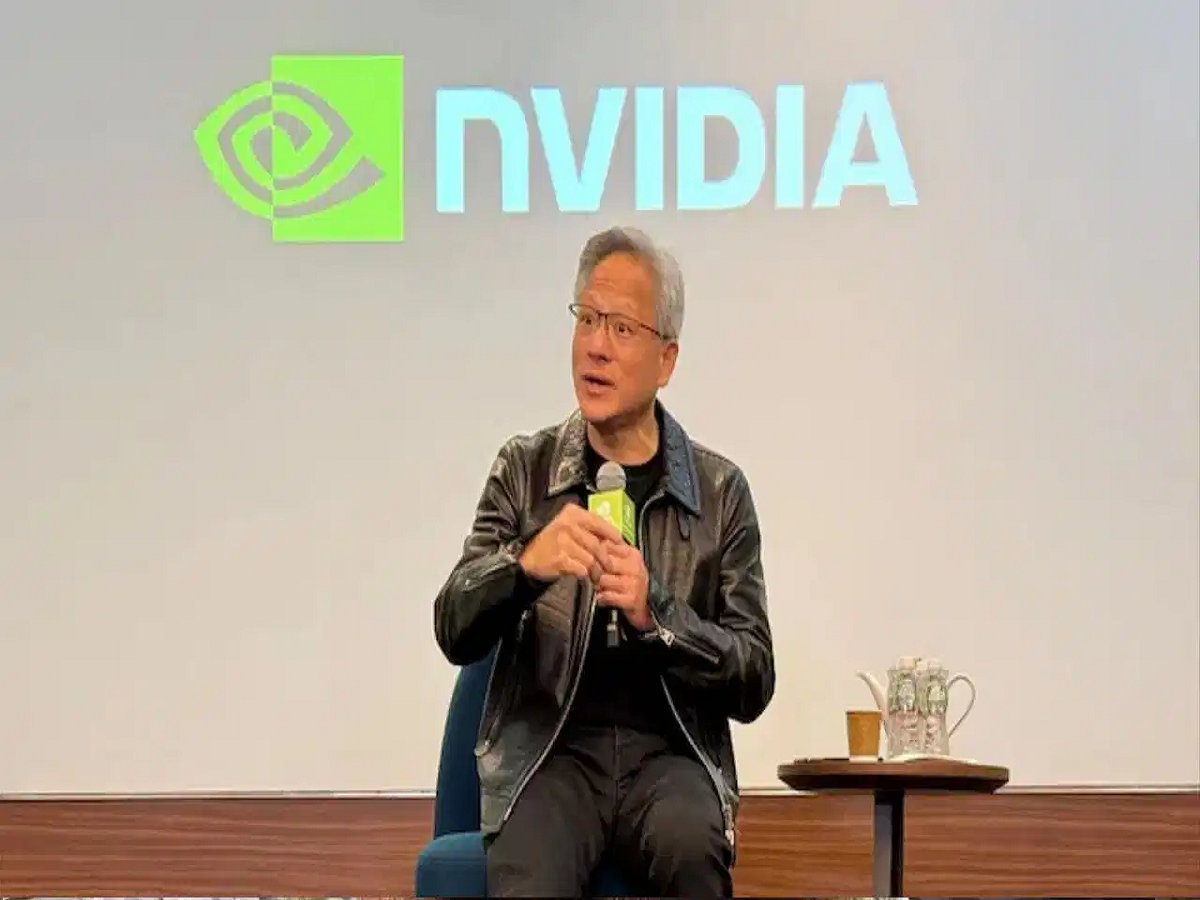
Nvidia has transformed itself from a company known primarily for manufacturing gaming graphics cards into one of the most influential players in the global artificial intelligence industry. Today, its advanced processors power some of the world's largest AI models, cloud computing platforms and data centres. With a reported market valuation of approximately $4.5 trillion, Nvidia has become a central part of the technology revolution.
The company's remarkable growth has also brought its business relationships, leadership and global influence into the spotlight. CEO Jensen Huang, who has led Nvidia for more than three decades, has played a significant role in transforming the company into an AI powerhouse.
But how did a gaming chip manufacturer become so important to companies like Microsoft, OpenAI and Oracle? And how extensive is its business network?
1. How Nvidia Built a $4.5 Trillion Technology Empire
Nvidia was originally established as a graphics processing technology company, with its products primarily serving the gaming and computer graphics industries.
Its graphics processing units (GPUs) were designed to handle complex visual calculations, making them particularly useful for video games, animation and professional graphics.
However, Nvidia gradually recognised that GPUs could do much more than improve gaming performance. Their ability to perform thousands of calculations simultaneously made them extremely valuable for artificial intelligence and machine learning.
As AI technology developed, demand for powerful computing hardware increased dramatically. Nvidia was well-positioned to benefit from this shift because it had already spent years developing advanced GPU technology.
According to the figures cited in the report, Nvidia's market capitalisation reached approximately $4.5 trillion, placing it among the world's most valuable companies.
2. Nvidia's Deep Business Relationship with OpenAI
One of Nvidia's most important relationships is with OpenAI, the company behind ChatGPT.
Developing advanced AI models requires enormous computing power, and Nvidia's GPUs are widely used to train and operate these systems.
According to the report, Nvidia has discussed an investment of up to $100 billion in OpenAI to support the expansion of its AI infrastructure and computing capabilities.
However, OpenAI is also diversifying its hardware partnerships to reduce dependence on a single chip manufacturer.
The company has entered into an agreement with AMD to use GPUs representing 6 gigawatts of computing capacity. The agreement also includes a provision allowing OpenAI to acquire up to 160 million AMD shares, subject to specified conditions.
This development highlights how competition in the AI chip industry is expanding, even as Nvidia continues to hold a strong position.
3. Oracle and Microsoft Are Also Important Nvidia Partners
Nvidia's influence extends well beyond OpenAI. Major cloud computing companies such as Oracle and Microsoft are also important participants in the AI infrastructure ecosystem.
Oracle has entered into a major cloud computing agreement with OpenAI, reportedly valued at $300 billion. To provide large-scale computing capacity, Oracle is investing heavily in data centre infrastructure, including advanced processors.
Nvidia benefits from this growing demand because its GPUs are widely used in data centres and cloud computing services.
Microsoft is another major player. Its substantial investment in AI infrastructure and partnership with OpenAI have contributed to increasing demand for powerful computing hardware.
Several other companies, including CoreWeave, Nebius, Intel, Mistral, Figure AI, xAI, Harvey AI, Anysphere and Ambience Healthcare, are also part of the wider AI technology ecosystem.
4. Why Are Nvidia's Chips So Important for Artificial Intelligence?
The biggest reason behind Nvidia's success is its ability to provide the computing infrastructure required for modern AI systems.
Training an advanced AI model involves processing enormous quantities of data and performing billions of mathematical operations. Traditional computer processors are not always efficient enough to handle these workloads at the required scale.
Nvidia's GPUs are designed for parallel processing, allowing them to perform many calculations simultaneously.
The company has also developed CUDA, a software platform that allows developers to use GPU computing for a wide range of applications.
This combination of specialised hardware, software and developer support has created a strong competitive advantage.
Today, Nvidia's technology is used in:
-
Training large language models and generative AI systems.
-
Operating AI-powered applications and chatbots.
-
Cloud computing and data centre infrastructure.
-
Autonomous driving technology.
-
Scientific research and advanced simulations.
-
Robotics and industrial automation.
This broad range of applications has made Nvidia an essential supplier in the global AI industry.
5. Why Is Jensen Huang So Important to Nvidia?
Jensen Huang has been one of the most influential figures in Nvidia's growth story.
Since co-founding the company in 1993, he has guided its transition from a graphics-focused business into a major provider of AI computing infrastructure.
His long-term investment in GPU computing and the CUDA software ecosystem helped Nvidia establish a strong position before the current AI boom began.
Because of his leadership and the company's extensive partnerships, developments involving Huang naturally attract attention from investors, technology companies and policymakers.
Any major leadership uncertainty could potentially influence market sentiment, although Nvidia's business strength also depends on its technology, workforce, customers and long-term contracts.
6. Why US-China Technology Tensions Matter to Nvidia
Another important factor affecting Nvidia's business is the ongoing technology competition between the United States and China.
The US government has introduced restrictions on the export of certain advanced semiconductor technologies to China, citing national security concerns.
These restrictions directly affect the market opportunities available to Nvidia and other American chip manufacturers.
The controversy described in the original report involving alleged espionage concerns has also brought attention to the security of sensitive technology and business relationships. However, allegations should not be treated as established facts unless supported by verified investigation findings.
For Nvidia, maintaining regulatory compliance and protecting its technology are essential, particularly because its products are increasingly important to global AI infrastructure.
What Makes Nvidia So Powerful in the AI Industry?
Nvidia's success is not simply the result of manufacturing powerful computer chips. Its real advantage comes from combining advanced GPUs, software platforms, developer support and relationships with some of the world's biggest technology companies.
As demand for artificial intelligence continues to expand, companies need increasingly powerful computing infrastructure. Nvidia is positioned at the centre of this demand.
The company's journey from gaming graphics cards to becoming one of the world's most valuable technology businesses demonstrates how investing in emerging technologies can transform an entire industry.
The bigger question now is whether Nvidia can maintain its dominance as competitors such as AMD and other semiconductor companies invest heavily in developing alternatives to its AI hardware.