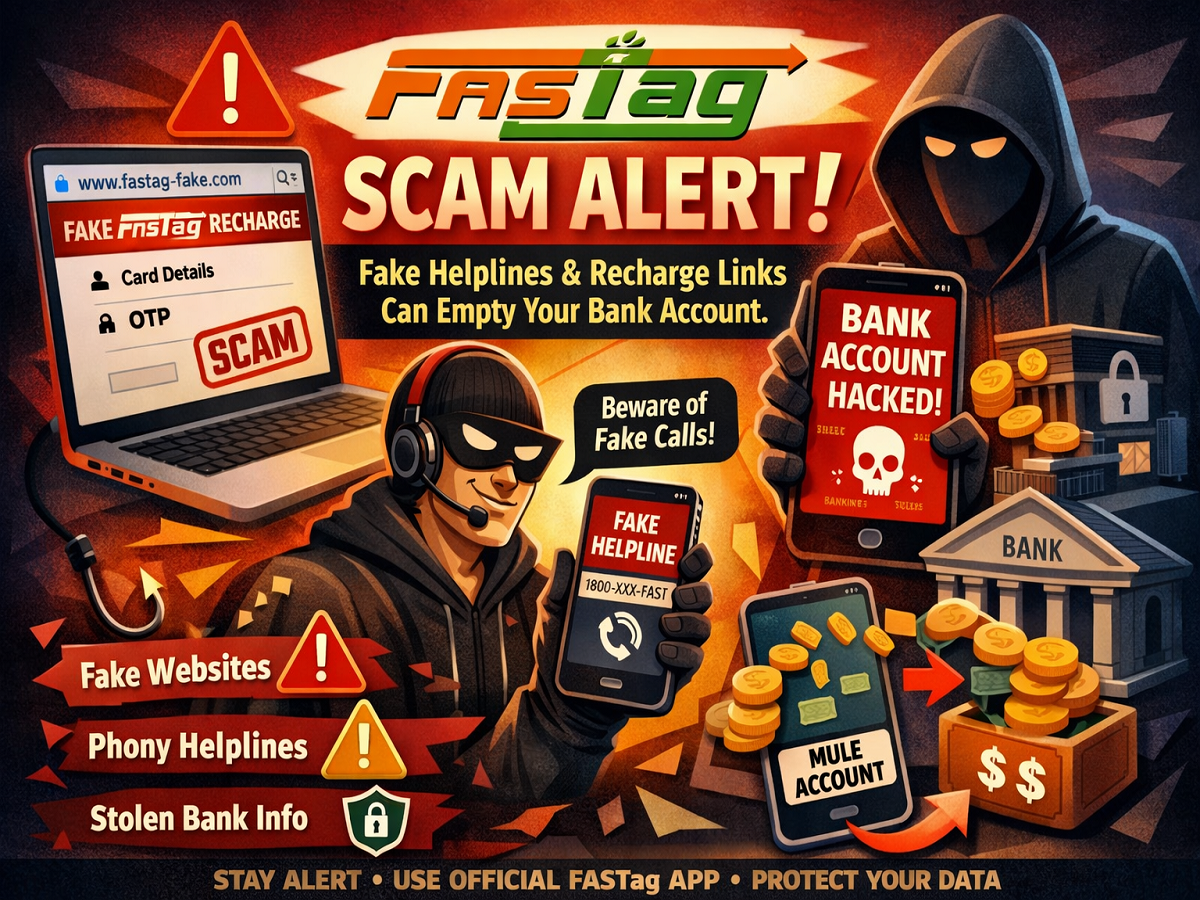
FASTag has made highway travel easier by reducing wait times at toll plazas and enabling automatic toll payments. But as digital payments become more common, cybercriminals are finding new ways to exploit unsuspecting users. One of the latest fraud trends involves fake FASTag helplines, counterfeit recharge websites, and scam calls designed to steal money and sensitive banking details.
If you use FASTag regularly, staying alert is now just as important as keeping your tag recharged. A small mistake, such as clicking on a fake link or calling an unofficial helpline number, can lead to financial loss and misuse of your personal information. Here is a clear look at how this fraud works and the precautions every FASTag user should take.
How FASTag fraud usually works
Fraudsters often build fake websites that look almost identical to official FASTag or highway authority portals. They may use names, logos, colors, and page layouts that resemble trusted brands, making it difficult for users to spot the difference at first glance.
Many scammers promote these fake pages through Google ads, social media posts, WhatsApp forwards, and SMS messages. They attract users with claims such as discounted FASTag recharge, cheap annual toll passes, instant activation, or urgent account verification.
Once a person clicks the fraudulent link, they are taken to a fake payment page. There, they may be asked to enter details such as:
- Vehicle number
- Mobile number
- FASTag ID
- Bank account details
- Card number
- UPI ID
- OTP
In some cases, the fraud does not stop at a fake payment page. Scammers may also pose as customer care executives and ask users to install remote-access apps like AnyDesk or TeamViewer. Once such access is granted, they can view the phone screen, capture banking credentials, and even transfer money directly.
The victim usually realizes the fraud only after the payment is completed and no recharge or toll pass is received.
Why this scam is dangerous
FASTag fraud can cause more than just a failed recharge. A careless click can expose your financial and personal data to criminals. This can lead to:
Money loss: Fraudulent payments may go directly into scam accounts.
Banking data theft: Card, UPI, or net banking details may be captured.
OTP misuse: Sharing one OTP can allow unauthorized transactions.
Personal data exposure: Mobile numbers and vehicle details may be reused for future scams.
Repeated harassment: Victims may start receiving more fake calls, links, and messages.
FASTag issues: In some cases, users may face double deductions, failed recharge records, or a blocked tag due to confusion during the process.
Common signs of a fake FASTag link or helpline
There are a few warning signals that should never be ignored.
A website may be fake if the web address looks unusual or contains spelling errors. Scammers often use URLs that are very close to genuine ones. They rely on users checking only the logo and not the full address.
A helpline number may be suspicious if it is found through a random search result, social media comment, or forwarded message instead of the official app or bank portal.
You should also be cautious if someone promises very large discounts, asks you to act urgently, or requests sensitive details such as OTP, PIN, CVV, or password.
Any support executive asking you to install screen-sharing or remote-access software is another major red flag.
How to stay safe
The best way to avoid FASTag scams is to follow a few simple safety habits every time you recharge or seek help.
Always use the official My FASTag app, the FASTag issuer’s official website, or your bank’s verified application. Avoid using random links shared on social media or messaging platforms.
Before making a payment, check whether the website begins with https:// and verify that the domain name is correct. Even then, it is better to type the official website address manually rather than opening it through an advertisement.
Never trust unknown customer care numbers just because they appear on Google or in a sponsored result. Visit the official website of your bank or FASTag provider and use only the helpline listed there.
Do not share your OTP, PIN, password, CVV, or UPI PIN with anyone under any circumstances. Genuine officials do not ask for these details.
Never install remote-access apps at the request of a stranger claiming to be from FASTag support. No legitimate recharge or complaint process requires that.
What to do if you suspect fraud
If you think you have clicked on a fake link or made a payment on a suspicious website, act immediately. Contact your bank and FASTag issuer at once, block your card or wallet if needed, and change your passwords. Keep screenshots, transaction IDs, and call details as evidence. Reporting the matter quickly can reduce the damage.
Final word
FASTag is a useful digital convenience, but only when used carefully. Fraudsters are taking advantage of people who are in a hurry, unaware, or tempted by fake offers. A few seconds of verification can save you from major financial trouble.