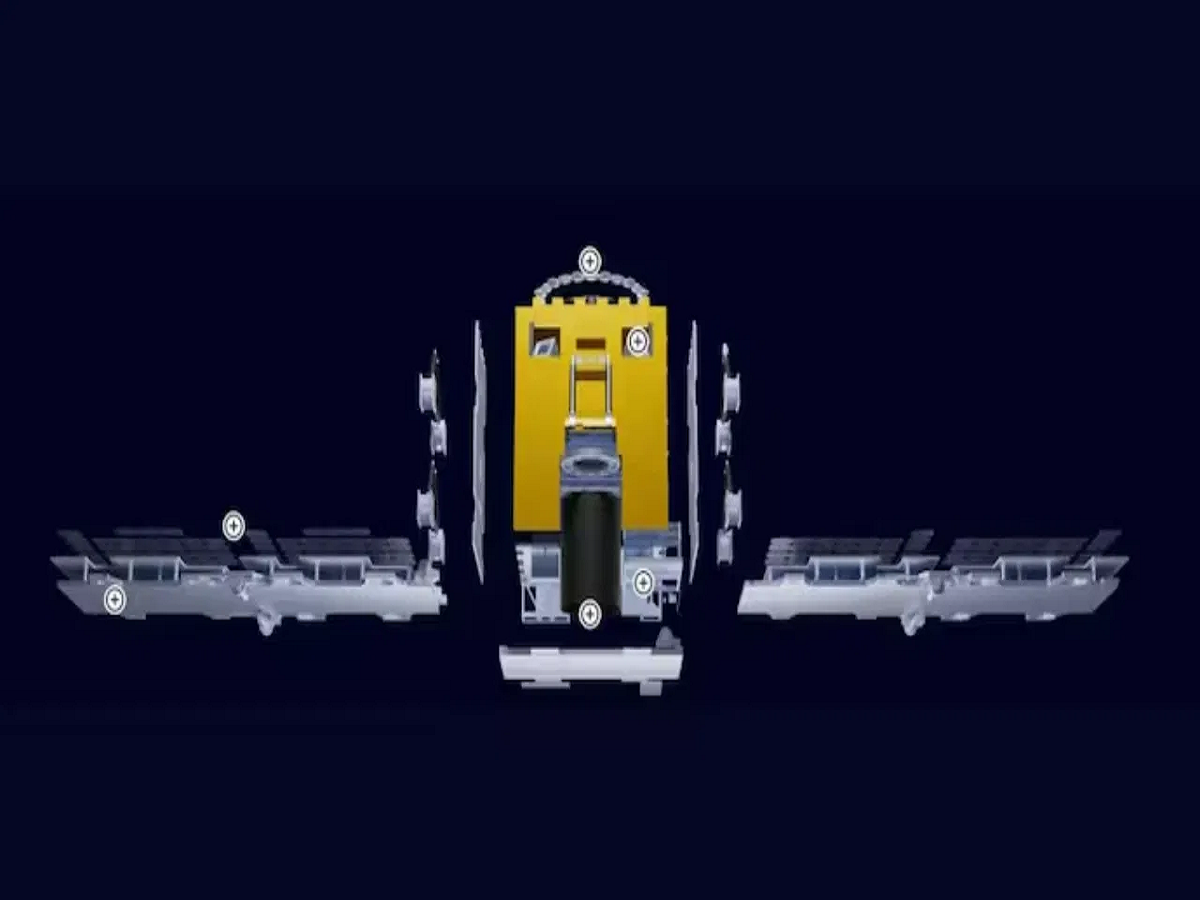
India has officially entered a new era of space-based security with the successful launch of the Drishti satellite. Launched on May 3, 2026, from Vandenberg, California, aboard a SpaceX Falcon 9 rocket, this mission marks a seismic shift in how India monitors its borders and interests.
More than just a piece of hardware, Drishti is a testament to the surging power of India's private space sector and a direct answer to the country's need for 24/7, all-weather surveillance. Prime Minister Narendra Modi hailed the achievement as a "historic milestone," crediting the innovative spirit of India's youth for this technological leap.
🛰️ The World’s First OptoSAR Technology
What sets Drishti apart from every other satellite in orbit is its pioneering OptoSAR technology. Developed by the Bengaluru-based startup GalaxEye, this system solves the two biggest problems in satellite imagery:
-
The Optical Limitation: Standard cameras take high-resolution "photos" but are blinded by clouds, smoke, or the dark of night.
-
The Radar Complexity: Synthetic Aperture Radar (SAR) can see through anything—storms, clouds, or total darkness—but the resulting images are often grainy and difficult for humans to interpret.
The Drishti Solution: By fusing these two technologies, Drishti provides crystal-clear, high-definition imagery that works 24 hours a day, regardless of weather conditions. India now possesses the ability to see through a monsoon or a midnight fog with the same clarity as a sunny afternoon.
🛡️ A Game-Changer for National Security
For years, India occasionally relied on foreign commercial satellite data to monitor sensitive border regions. The Drishti mission ends this dependency.
-
Military Advantage: The Indian Armed Forces now have a dedicated "eye" that never blinks. It allows for the real-time tracking of enemy movements and infrastructure changes in even the most rugged, cloud-covered terrains.
-
Disaster Management: Beyond defense, Drishti’s all-weather capability is vital for monitoring floods, cyclones, and landslides, allowing rescue teams to see the ground truth when traditional aerial surveys are impossible.
🇮🇳 The Rise of "Space-Tech" Startups
The Drishti mission is the result of five years of intensive research by GalaxEye, supported by IN-SPACe (Indian National Space Promotion and Authorization Centre).
-
Global Ambition: GalaxEye CEO Suyash Singh confirmed that the satellite is safely in orbit and will soon begin transmitting data.
-
The Future: This is just the beginning. The company plans to launch a constellation of similar satellites over the next five years. Through a partnership with NSIL (NewSpace India Limited), this cutting-edge Indian data will soon be available to global markets, positioning India as a leader in commercial space intelligence.
The Bottom Line
With the launch of Drishti, India has proven that its private sector can compete—and win—on the global stage. By mastering OptoSAR technology, India hasn't just sent a satellite into space; it has rewritten the rules of how we observe and protect our world from above.