BUSINESS
EPF vs EPS: Does Every PF Member Get a Monthly Pension After Retirement? Here's What the Rules Say
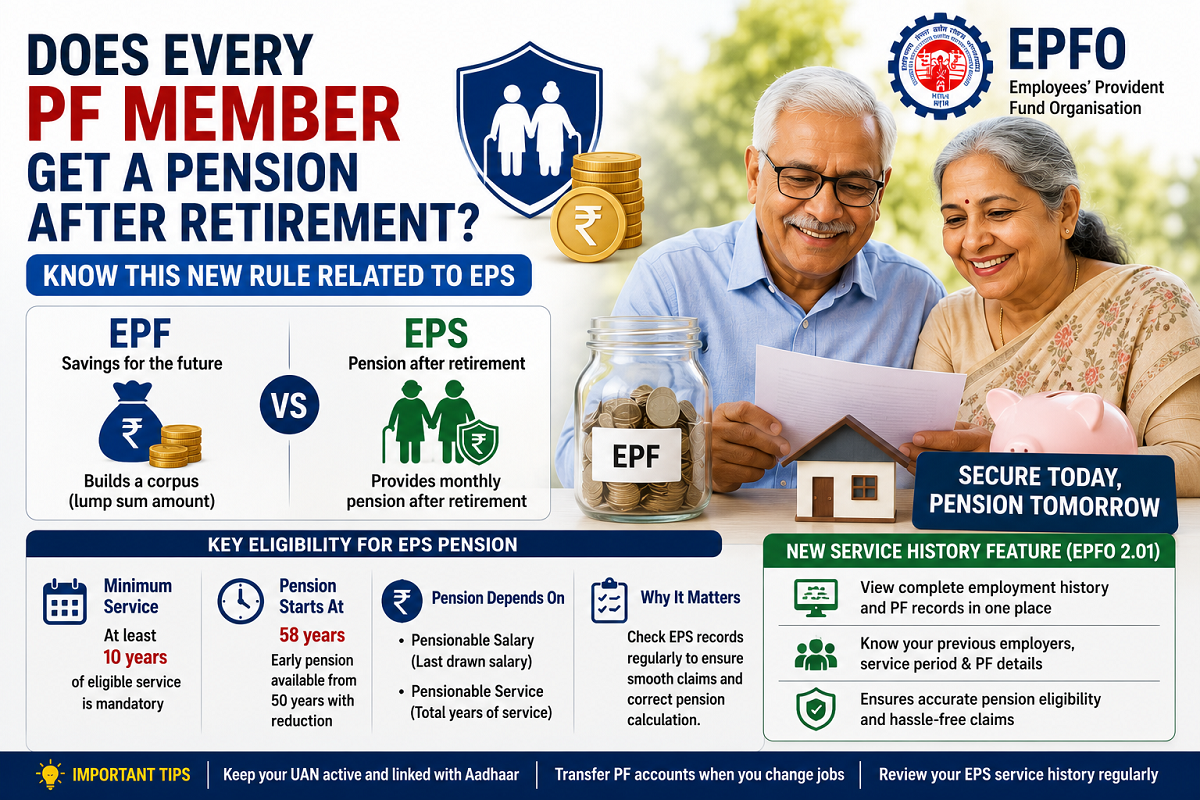
EPF Pension Rules: Many salaried employees believe that contributing to the Employees' Provident Fund (EPF) automatically guarantees a monthly pension after retirement. However, this is a common misconception. While EPF and the Employees' Pension Scheme (EPS) are linked, they are separate schemes with different objectives and eligibility conditions.
Receiving a monthly pension after retirement depends on meeting the eligibility criteria under the Employees' Pension Scheme (EPS) rather than simply having an EPF account.
Here's a detailed explanation of who qualifies for an EPS pension and the conditions that must be fulfilled.
EPF and EPS Are Different Schemes
Although both schemes operate under the Employees' Provident Fund Organisation (EPFO), they serve different purposes.
-
EPF is a retirement savings scheme that builds a lump-sum corpus through contributions from both the employee and employer.
-
EPS is a pension scheme that provides eligible members with a monthly pension after retirement, subject to specific conditions.
Therefore, having an EPF account alone does not automatically make an employee eligible for a pension.
How Is the Pension Fund Created?
Every month, both the employee and the employer contribute 12% of the employee's Basic Salary plus Dearness Allowance (DA) toward retirement benefits.
The employer's contribution is divided into two parts:
-
8.33% is allocated to the Employees' Pension Scheme (EPS).
-
3.67% is credited to the employee's EPF account.
The employee's own 12% contribution goes entirely into the EPF account.
The monthly pension payable after retirement is funded through the employer's contribution made to the EPS, subject to the scheme's applicable wage ceiling and EPFO rules.
Minimum 10 Years of Eligible Service Is Mandatory
One of the most important conditions for receiving an EPS pension is completing the required service period.
According to EPS rules:
-
A member must complete at least 10 years of eligible service to qualify for a monthly pension.
-
Service across multiple employers can be combined, provided the EPF and EPS accounts are properly transferred and linked.
Employees who change jobs should ensure their EPF accounts are transferred to maintain continuity of service. Failure to do so could affect the calculation of pensionable service.
At What Age Does the Pension Begin?
Under the Employees' Pension Scheme, the normal retirement age for receiving a full pension is 58 years.
The rules generally provide:
Regular Pension
Members who have completed at least 10 years of eligible service can claim their monthly pension after attaining the age of 58 years.
Early Pension
Eligible members may choose to start receiving pension from 50 years of age, subject to the provisions of the EPS.
However, an early pension is paid at a reduced amount, as the pension is subject to reduction for each year it is claimed before the normal retirement age of 58.
How Is the Pension Amount Calculated?
The monthly pension payable under EPS depends mainly on two factors:
Pensionable Salary
This refers to the salary considered for pension calculation as defined under the EPS rules.
Pensionable Service
The total number of years during which eligible contributions were made to the pension scheme.
Generally, a longer period of eligible service can result in a higher monthly pension, subject to the applicable provisions of the scheme.
Why You Should Regularly Review Your EPS Records
Many employees frequently check their EPF balance but overlook their EPS records.
Reviewing your pension records periodically can help you:
-
Confirm your total eligible service period.
-
Verify that contributions have been correctly credited.
-
Identify missing employment records.
-
Ensure successful processing of pension claims after retirement.
-
Avoid delays caused by incomplete service history.
EPFO's recently introduced digital features, including Service History, can help members verify employment records and pension-related information more conveniently.
Key Takeaways for EPF Members
Before planning your retirement, remember these important points:
-
Every EPF member is not automatically entitled to a monthly pension.
-
Pension benefits are governed by the Employees' Pension Scheme (EPS).
-
Completing at least 10 years of eligible service is essential.
-
The normal pension age is 58 years, while early pension may be available from 50 years with applicable reductions.
-
Keeping your EPF and EPS records updated after every job change is important to avoid future claim-related issues.
Understanding the difference between EPF and EPS can help employees plan their retirement more effectively and ensure they meet all eligibility requirements before applying for pension benefits.
Disclaimer
This article is intended for general informational purposes and is based on the current provisions of the Employees' Pension Scheme (EPS) administered by the Employees' Provident Fund Organisation (EPFO). Pension eligibility, contribution rules, and benefits are subject to applicable laws, EPFO regulations, and future amendments. Employees should verify the latest guidelines through official EPFO notifications or consult a qualified financial or legal advisor before making retirement-related decisions.