The period of the Emergency in India (1975-1977) was marked by political upheaval and intense government control, and it also deeply impacted Bollywood. Much like today, the film industry during that time was divided into two clear camps — those who supported the government’s policies and those who opposed them. This ideological divide affected not only big stars but even supporting actors, creating an atmosphere of tension and cautious persuasion behind the scenes.
The Emergency was declared on June 25, 1975, under Prime Minister Indira Gandhi’s leadership. With the Union Ministry of Information and Broadcasting led by Vidya Charan Shukla, strict censorship rules were imposed on filmmakers. Films critical of the government, or those depicting violence and dissent, faced bans or forced edits. Even the climax of the iconic film Sholay was changed to meet these guidelines before its release on August 15, 1975.
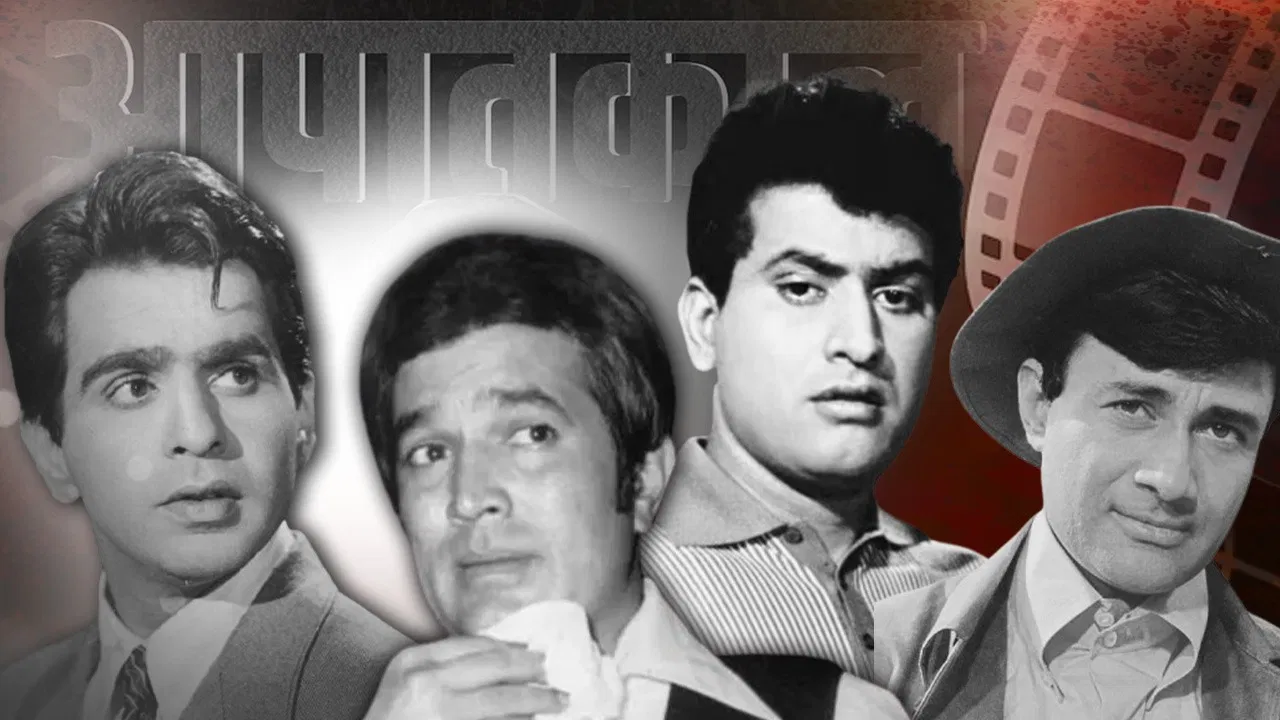
As the government's grip tightened, dissatisfaction grew in the industry. Many actors protested the restrictions, while others sided with the government to enforce the new rules. This led to the emergence of two camps. On one side were stars like Dilip Kumar, Sunil Dutt, Nargis Dutt, Rajesh Khanna, Jeetendra, and Amitabh Bachchan, who largely supported or stayed silent on the Emergency. On the other side were prominent figures such as Dev Anand, Kishore Kumar, and Manoj Kumar, who openly or quietly resisted government interference.
Kishore Kumar, the celebrated singer, became a victim of this divide when he refused to sing for a government jingle promoting Indira Gandhi, citing illness. As a result, his songs were temporarily banned from radio broadcasts. Manoj Kumar, famously known as ‘Bharat Kumar’ for his patriotic films like Upkaar, faced the government’s displeasure when he refused to make a pro-Emergency documentary scripted by Amrita Pritam, a writer supportive of Indira Gandhi. His film Das Numbri, which depicted corruption and black marketing, was also stalled during this period.
Dev Anand was among the most vocal critics of the Emergency. He openly condemned it as dictatorial and refused to participate in government propaganda programs. His opposition angered many in the establishment. Although Dilip Kumar accompanied him to one government function, Anand soon left, unwilling to be part of what he saw as an attempt to glorify Sanjay Gandhi’s controversial role in the Emergency. Despite being a Nehruvian socialist in his film ideology, Anand resisted the government’s attempts to co-opt Bollywood.
Even though the “trinity” of Dilip Kumar, Raj Kapoor, and Dev Anand was devoted to Nehruvian ideals, the Emergency and especially Sanjay Gandhi’s aggressive policies alienated them. Dev Anand’s anti-Emergency stance was so strong that his films were banned on Doordarshan, the state-run television.
Interestingly, many who supported or remained neutral during the Emergency included some of the biggest names of the time, such as Amitabh Bachchan, Rajesh Khanna, and writers like Harivansh Rai Bachchan, Amrita Pritam, and Rajinder Singh Bedi. Their stance reflected the complex dynamics of the time, where fear, pragmatism, and political allegiance shaped the industry’s divided response.
The Emergency years left an indelible mark on Bollywood, showcasing how even the glamorous world of cinema was not immune to the country’s political battles — and how stars took sides, shaping the industry’s history for years to come.