BUSINESS
E20 Petrol Debate Grows: Government Expert Suggests Lower-Ethanol Fuel Option, What Car and Bike Owners Should Know
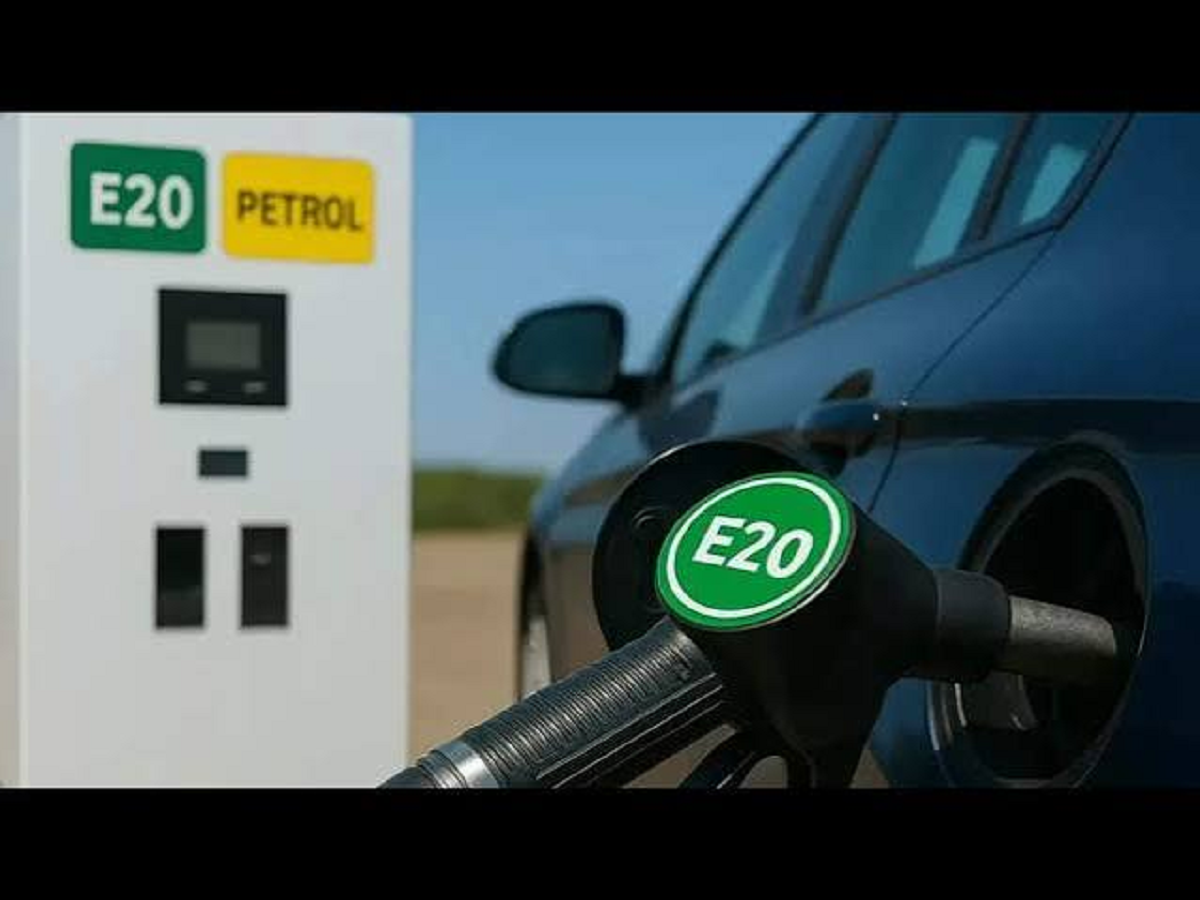
India's ethanol-blended petrol policy has come under fresh discussion after Chief Economic Adviser V. Anantha Nageswaran argued that lower-ethanol fuel such as E10 could be offered alongside E20 petrol. His comments come amid concerns from some vehicle owners about compatibility, performance and the experience of using E20 in older vehicles.
What Is E20 Petrol?
E20 petrol contains up to 20% ethanol blended with petrol.
The government has been increasing ethanol blending as part of its efforts to reduce crude-oil imports and lower emissions. Since April 1, 2026, E20 has been the standard petrol available nationwide, according to the recent report.
Ethanol is a renewable fuel produced from sources such as sugarcane and other agricultural feedstocks. Increasing its use can reduce the amount of petrol required from crude oil.
Why Are Some Vehicle Owners Worried?
The main concern is older vehicles.
Modern vehicles designed to work with higher ethanol blends are generally better equipped to handle E20. However, some older cars and two-wheelers were designed when lower ethanol blends were more common.
Concerns have included possible effects on certain rubber components, fuel-system parts, mileage and long-term durability. The Chief Economic Adviser's recent comments specifically acknowledged concerns surrounding older two-wheelers and suggested giving consumers more choice.
Could E10 Petrol Return?
The proposal does not mean that E10 petrol has already been officially brought back across India.
Rather, the Chief Economic Adviser has suggested that lower-ethanol options such as E10 could be made available alongside E20. The idea is to provide consumers with a choice, particularly where vehicle compatibility is a concern.
Any actual change in fuel availability would require an official policy decision and implementation by the relevant authorities.
Will E20 Damage Your Car or Bike?
It would be incorrect to say that E20 automatically damages every vehicle.
The impact depends on the vehicle's design, fuel-system components, manufacturer's specifications and age.
If you own an older car or motorcycle, check the owner's manual or contact the manufacturer to confirm the recommended ethanol-blend compatibility before assuming that E20 is unsuitable.
What About Mileage?
Ethanol contains less energy per litre than petrol, so fuel economy can vary when using higher ethanol blends.
However, the actual difference experienced by an individual vehicle depends on its engine, calibration, driving conditions and fuel quality.
Therefore, one vehicle owner may notice a mileage change while another may notice little practical difference.
What Should Vehicle Owners Do?
If you are concerned about E20, don't immediately panic or stop using your vehicle.
Instead:
- Check your owner's manual for ethanol compatibility.
- Ask the manufacturer or authorised service centre if you're unsure.
- Keep the vehicle properly serviced.
- Don't use unverified fuel additives claiming to “neutralise” ethanol.
- Monitor unusual changes in performance, starting or fuel-system behaviour.
- Keep records of recurring problems and discuss them with an authorised service centre.
Why Is This Debate Important?
India's ethanol programme is closely linked to energy security. Greater ethanol blending can help reduce the country's dependence on imported crude oil.
At the same time, consumer concerns need to be considered, particularly for people who own older vehicles and may not have the option of replacing them immediately.
The recent suggestion to make lower-blend petrol available alongside E20 highlights this balance between energy policy and consumer choice.
The Bottom Line
The latest development does not mean that E20 petrol is being withdrawn.
Instead, a senior government economic adviser has suggested bringing back lower-ethanol options such as E10 alongside E20, especially to address concerns surrounding older vehicles.
For now, vehicle owners should check their manufacturer's recommended fuel compatibility rather than relying on social-media claims about E20.