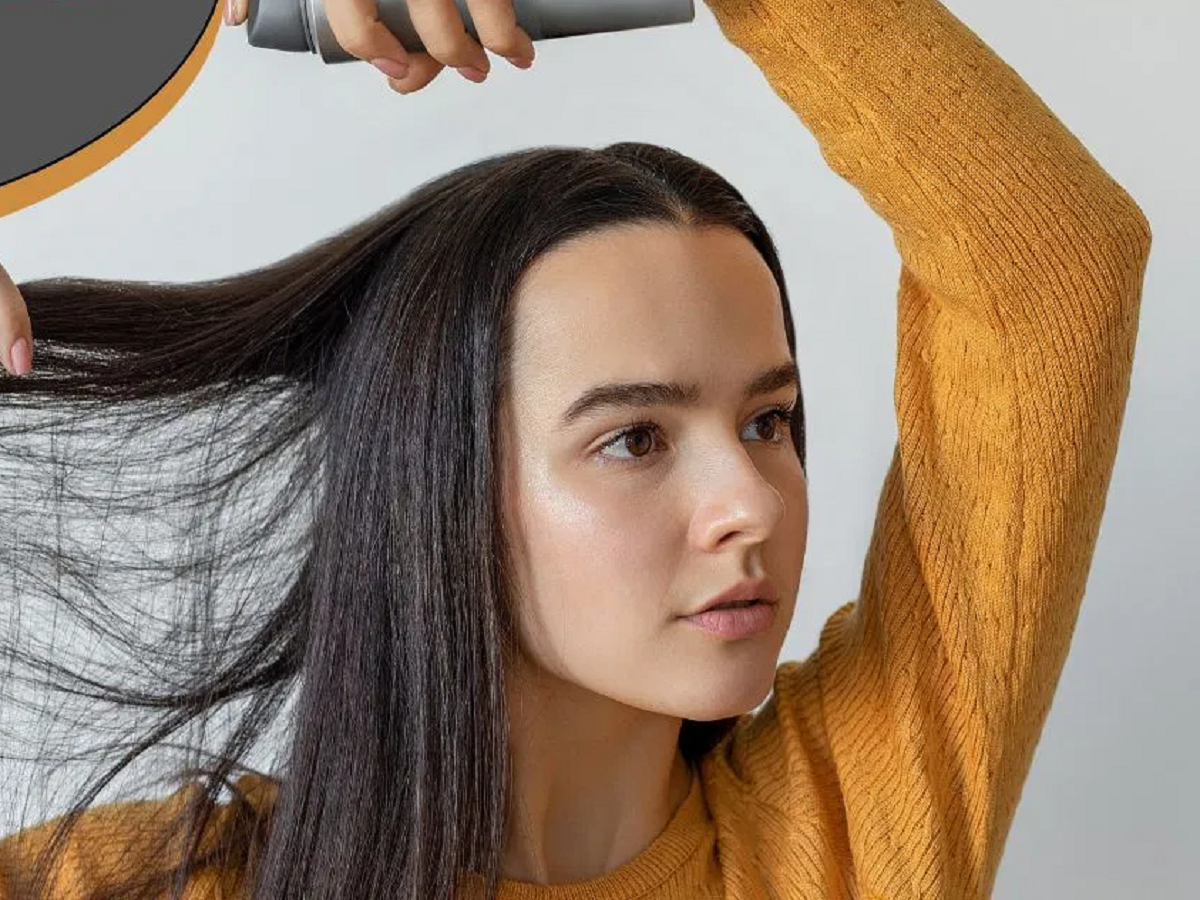
Dry shampoo has become a quick beauty hack in today’s busy lifestyle, especially for working women, travellers, and those who style their hair frequently. When there’s no time for a proper hair wash and you still want a fresh, oil-free look, dry shampoo feels like a blessing. However, just like any other beauty product, dry shampoo also needs to be used correctly. If applied the wrong way, it can create more problems than it solves.
Recently, a video went viral on social media in which a woman shared her unpleasant first experience with dry shampoo. The user, Shrishama, posted a video showing how she sprayed dry shampoo on her hair after parting it from the front. Instead of absorbing oil, the product stuck to her hair and turned it visibly white and grey. Even after spraying again, the residue didn’t go away easily, leaving her anxious and uncomfortable. She eventually managed to remove the whiteness, but the experience served as a warning for first-time users.
One of the biggest mistakes people make while using dry shampoo is not shaking the bottle properly. Dry shampoo contains ingredients that settle over time, and if the bottle isn’t shaken well, the product may come out unevenly, leaving white patches on the hair. Shaking the bottle ensures the contents are mixed properly and spray evenly.
Using too much dry shampoo is another common error. Excess product can make hair feel heavy, dry, sticky, and dull instead of fresh. It’s always better to start with a small amount and add more only if required. Overuse can strip moisture from the hair and worsen its appearance.
Distance also matters while applying dry shampoo. Spraying it too close to the scalp can clog hair follicles and cause buildup. Ideally, dry shampoo should be applied from a distance of about 15–20 cm from the roots to allow even distribution and avoid residue concentration in one area.
Lastly, massaging and brushing the hair after application is essential. Gently massaging the scalp helps absorb excess oil, while brushing spreads the product evenly and removes any white residue. Skipping this step often leaves the hair looking powdery and unnatural.
In short, dry shampoo can be helpful when used occasionally and correctly, but improper use can lead to visible residue, dryness, and scalp issues. Understanding the right method before using it can save your hair from unnecessary damage and embarrassment.