NATIONAL
Budget 2026: Will India end its dependence on China? The government may take a major decision in the budget
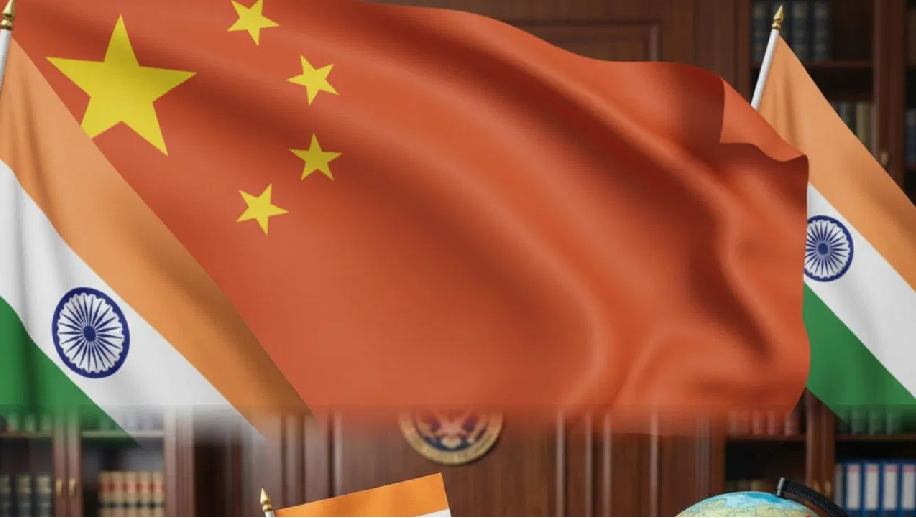
Ahead of Budget 2026, the government is preparing strategic steps to reduce growing import dependence on China. The focus is now shifting from cheap supplies to building secure and reliable supply chains, increasing domestic manufacturing, and strengthening self-reliance in key sectors.
Budget 2026 is just a few weeks away, and this time the government's focus doesn't seem to be limited to taxes or schemes. Discussions are swirling about whether India will take concrete steps to reduce its heavy dependence on China. The government could make major strategic changes, particularly in key sectors like electronics, energy, defense, machinery, and raw materials.
Over the past few years, the coronavirus pandemic, global wars, and supply chain disruptions have made it clear how risky it can be to become overly dependent on any one country. This experience has helped shift India's thinking.
Secure supply is essential
Until now, India's policy has been to import goods from wherever they are cheap and readily available. But now the government is realizing that low prices aren't everything. If that supply is cut off during a crisis, the entire industry could come to a standstill. The government is now pursuing a policy of de-risking. This doesn't mean a complete ban on imports, but rather, where necessary, dependence will be reduced and alternative routes will be developed.
Imports from China became the biggest concern
India's imports from China are significant in many sectors. China's share is particularly high in electronics parts, solar panels, machinery, toys, umbrellas, eyewear, agricultural equipment, and many consumer goods. In some sectors, as much as 80-90 percent of goods come from China. This is why the government has identified approximately 100 products where dependence on China can be reduced by increasing domestic production.
What can the government do through the budget?
The government may take several steps in Budget 2026. While domestic companies may be encouraged, customs duties on some imported goods may be increased. The aim is to make manufacturing goods in India more profitable. Additionally, schemes like the Public Interest Litigation (PLI) in sectors such as electronics, automobiles, steel, and green energy may be strengthened to encourage companies to manufacture more extensively in India.
Mobiles are being made, but parts are being imported.
India has become a major powerhouse in smartphone production, but the reality is that key components like semiconductors, displays, and camera modules still come from abroad. The government's efforts are now focused on establishing the entire supply chain in India, not just assembly. Electric vehicle and battery plants in states like Tamil Nadu are considered major steps in this direction.
Strategy also changed in the energy sector
India remains import-dependent on oil and gas, but the government is now adopting a policy of sourcing supplies from multiple countries rather than relying solely on a single region. Additionally, there is an emphasis on renewable energy, including solar, wind, and green hydrogen, to mitigate the impact of a future global oil crisis on the country's economy.
New technology, new dependency
The era of electric vehicles, batteries, and green energy is creating new dependencies. India's self-sufficiency in minerals like lithium, cobalt, and rare earth minerals is extremely low. The government is now working to promote investment in mineral assets abroad, supply agreements, and recycling. A national mission has also been launched for this purpose, with investments worth thousands of crores of rupees proposed.
Self-reliance in the defense sector is most important
Dependence on imports in the defense sector is directly linked to national security. This is why the government has begun prioritizing domestic defense production. Indian companies are now being given more opportunities in defense procurement and export opportunities are also being opened, allowing companies to produce on a large scale.
Experts agree that simply raising taxes on imports won't suffice. The real need is to develop technology, skills, finance, and large-scale production capabilities. If India truly wants to reduce its dependence on China, companies here must strengthen their manufacturing capabilities at every level, from design to production.
What will change after Budget 2026?
Budget 2026 is expected to empower the government to take decisions with risk in mind. Policy will no longer be focused solely on cost reduction, but rather on enhancing economic security and strategic strength. If this plan is implemented correctly, India could not only reduce its dependence on imports in the coming years but also become a strong global manufacturing hub.
PC: