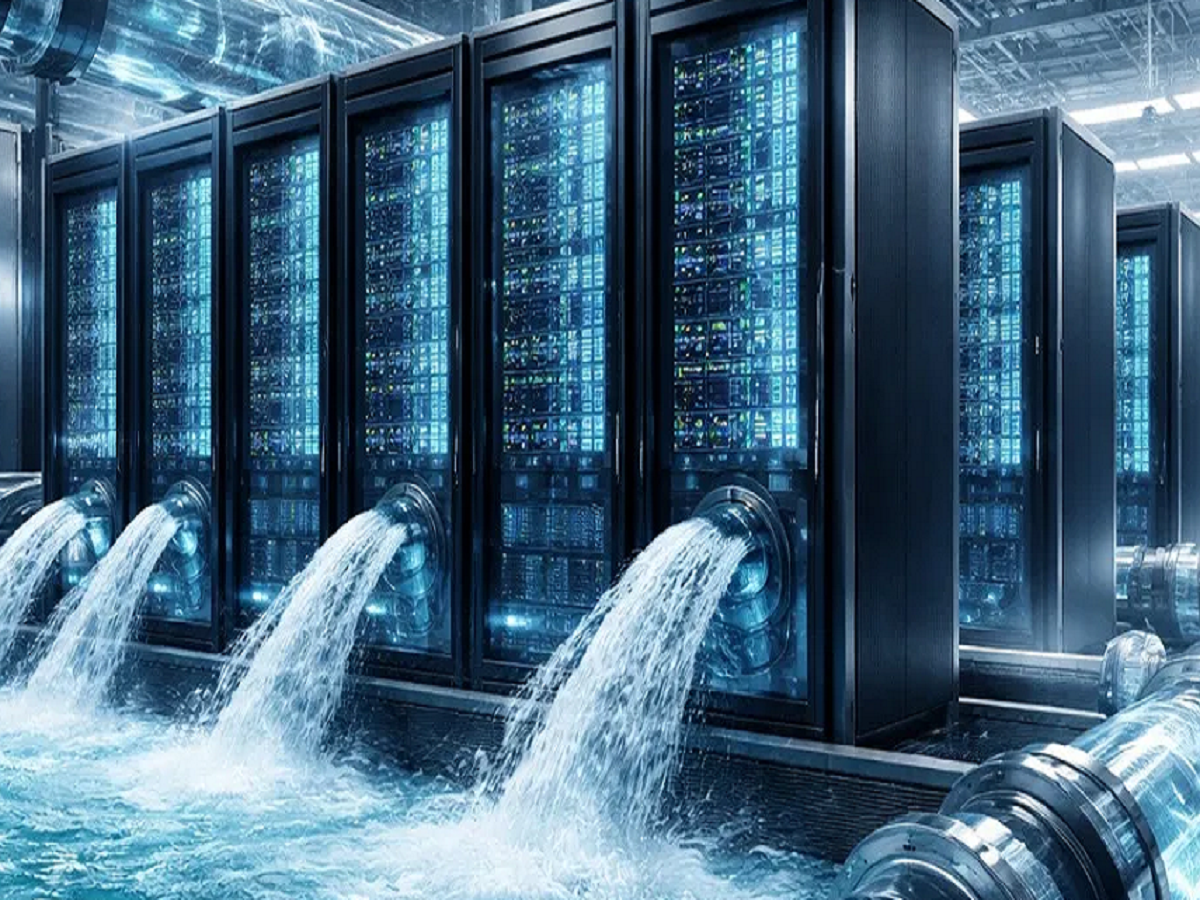
While artificial intelligence may appear to operate entirely in the digital realm, its infrastructure relies heavily on physical resources—especially water. Recent findings highlight the significant amount of water required to keep AI data centers operational, sparking concerns about environmental sustainability.
According to the Environmental and Energy Study Institute (EESI), a medium-sized data center can consume approximately 110 million gallons of water annually. This is comparable to the yearly water usage of around 1,000 households. The situation becomes even more striking with larger facilities, which can use up to 5 million gallons of water per day—amounting to nearly 1.8 billion gallons annually. This level of consumption is similar to that of a city with a population ranging from 10,000 to 50,000 people.
The primary reason behind such high water usage is cooling. AI systems rely on powerful hardware, including GPUs and large-scale servers, which generate substantial heat during operation. Without effective cooling mechanisms, these systems risk overheating and failure. To manage this, many data centers employ evaporative cooling technology, which uses water to dissipate heat efficiently.
However, this growing demand for water has raised serious concerns, particularly in regions already experiencing water shortages. As AI adoption continues to expand globally, experts are increasingly calling for more sustainable cooling solutions and better resource management to reduce the environmental impact of data centers.
The findings serve as a reminder that even the most advanced digital technologies carry real-world environmental costs, making sustainability a critical consideration for the future of AI infrastructure.