BUSINESS
8th Pay Commission Update: How Basic Pay and HRA Could Rise Under Different Fitment Factor Scenarios
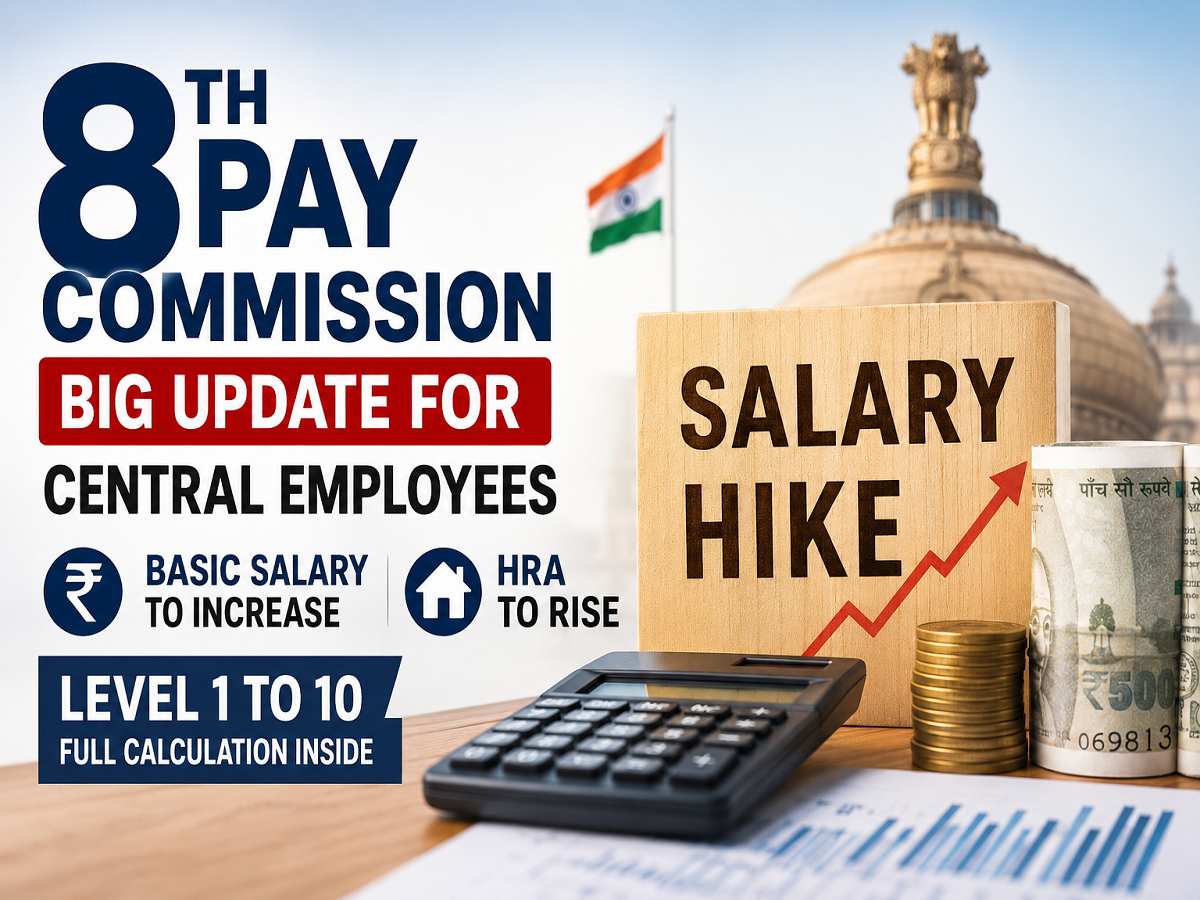
8th Pay Commission News: Discussions surrounding the 8th Pay Commission continue to generate interest among central government employees and pensioners. While much attention has been focused on the proposed increase in basic salary, another major component that could significantly impact take-home pay is the House Rent Allowance (HRA). If the government approves a higher fitment factor, both the revised basic pay and HRA could increase substantially.
Employee organizations have also recommended revising HRA rates to better reflect rising housing costs, especially in metro cities. Although no final decision has been announced, various fitment factor scenarios are being widely discussed.
HRA Could Increase Along With Basic Salary
Under the 7th Pay Commission, HRA is calculated as a fixed percentage of an employee's basic pay. Therefore, any increase in the basic salary through the 8th Pay Commission's fitment factor would automatically raise the HRA amount.
For employees posted in cities classified under the X category, this could result in a notable increase in monthly earnings, particularly if the government adopts a higher fitment factor such as 2.28 or 2.57.
Current HRA Structure Under the 7th Pay Commission
At present, cities are divided into three categories for HRA calculation:
-
X Category Cities: 30% of Basic Pay
-
Y Category Cities: 20% of Basic Pay
-
Z Category Cities: 10% of Basic Pay
These revised HRA rates came into effect after the Dearness Allowance (DA) reached 50% in January 2024 and continue to remain applicable.
Employee Unions Seek Higher HRA Rates
Several central government employee organizations have urged the 8th Pay Commission to revise HRA percentages in line with increasing rental costs across the country.
Among the key recommendations are:
-
NC-JCM, AIDEF, and FNPO have proposed increasing HRA rates to:
-
40% for X cities
-
35% for Y cities
-
30% for Z cities
-
-
AINPSEF has suggested revised HRA rates of:
-
36% for X cities
-
24% for Y cities
-
12% for Z cities
-
Employee representatives have also requested that future HRA revisions remain linked to increases in Dearness Allowance and that eligible pensioners receive corresponding benefits where applicable.
How the Fitment Factor Affects HRA
Since HRA is calculated as a percentage of the revised basic salary, a higher fitment factor directly increases the allowance.
For example, a Level-1 employee currently drawing the minimum basic pay of ₹18,000 in an X-category city receives 30% HRA, which equals ₹5,400 per month.
If the government adopts different fitment factors, the estimated calculation would be:
| Fitment Factor | Estimated Basic Pay | HRA @ 30% (X City) |
|---|---|---|
| 2.00 | ₹36,000 | ₹10,800 |
| 2.10 | ₹37,800 | ₹11,340 |
| 2.28 | ₹41,040 | ₹12,312 |
| 2.57 | ₹46,260 | ₹13,878 |
These figures are illustrative estimates based on current HRA rates and proposed fitment factors. Final pay will depend on official government notifications.
Level 10 Employees Could See a Significant Increase
One of the most discussed examples involves a Level-10 entry-level officer posted in an X-category city such as Delhi.
Based on estimates circulating around a 2.57 fitment factor, the officer's monthly HRA alone could increase to approximately ₹43,250, provided the current HRA percentage remains unchanged. This would substantially boost overall take-home salary in addition to the revised basic pay.
Actual figures, however, will depend on the fitment factor and HRA structure ultimately approved by the government.
Final Recommendations Yet to Be Announced
The 8th Pay Commission has been holding consultations with employee representatives and stakeholders regarding salary revision, allowances, and pension-related issues. While several proposals have been submitted—including revisions to HRA and fitment factors—the government has not yet announced any final recommendations or approved salary structure.
Until the Commission submits its report and the government issues official orders, all salary projections remain estimates based on various proposed fitment factor scenarios.
What Employees Can Expect
If a higher fitment factor such as 2.28 or 2.57 is approved, central government employees could witness a substantial increase in:
-
Basic salary
-
House Rent Allowance (HRA)
-
Overall monthly take-home pay
-
Retirement-related benefits linked to basic pay
However, the exact increase will become clear only after the government officially accepts and implements the recommendations of the 8th Pay Commission.
Disclaimer
The salary and HRA figures mentioned in this article are illustrative estimates based on currently discussed fitment factor scenarios and the existing HRA calculation methodology under the 7th Pay Commission. The Government of India has not yet announced the final recommendations or implementation details of the 8th Pay Commission. Actual salary revisions, allowances, and benefits may differ from these estimates once official notifications are issued.