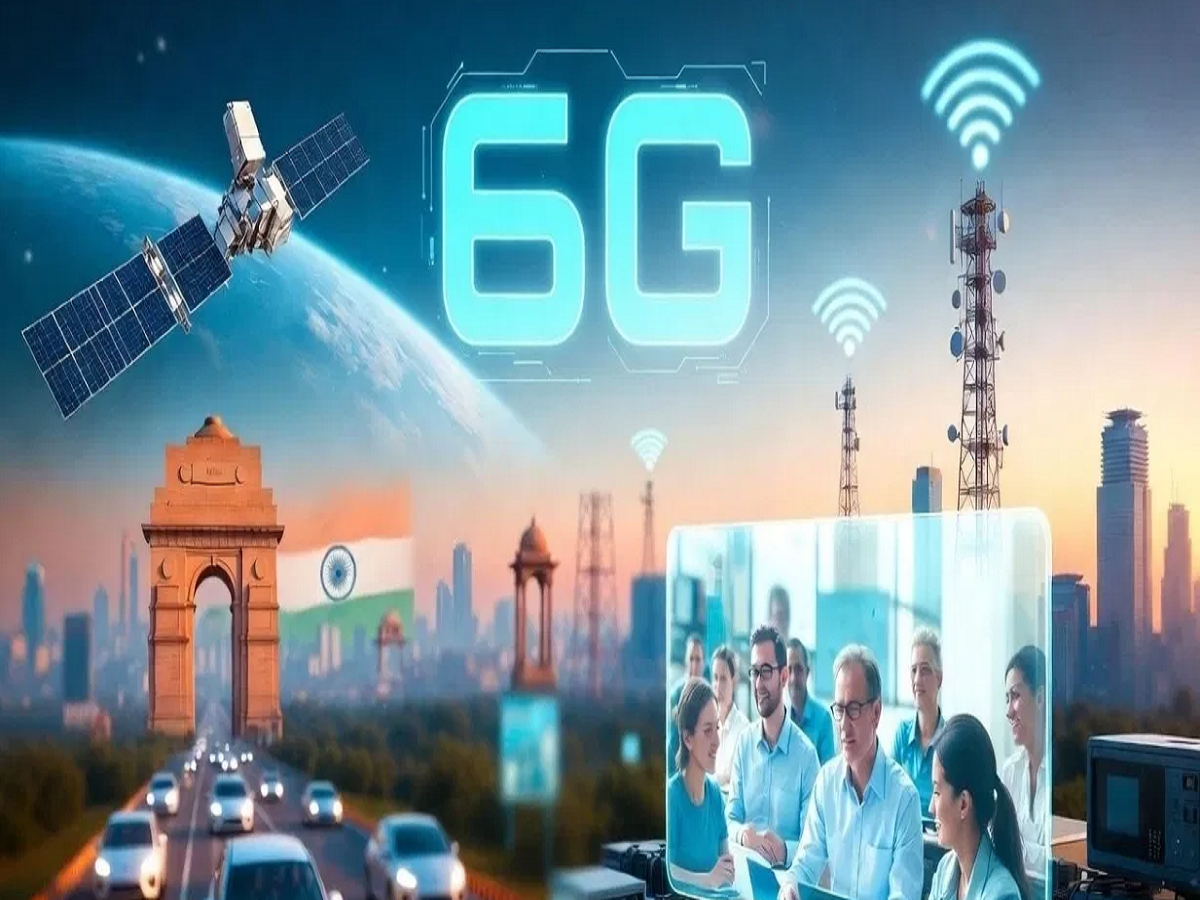
India is gearing up for the next major leap in digital connectivity with preparations for 6G technology already underway. After the rapid expansion of 5G across the country, the government is now focusing on introducing a more advanced network that promises to redefine internet usage. According to Union Communications Minister Jyotiraditya Scindia, India aims to roll out 6G services by the year 2030, positioning itself among the global leaders in next-generation telecom technology.
The upcoming 6G network is expected to deliver speeds up to 1 terabit per second (Tbps), making it nearly 10 to 100 times faster than current 5G networks. This means users could download large files, high-quality 4K or even 8K videos, and heavy data content within seconds. Another key advantage will be ultra-low latency at the microsecond level, which will make real-time communication and data transfer almost instantaneous, significantly enhancing the overall digital experience.
Beyond speed, 6G is set to transform the way people interact with technology. It will integrate advanced innovations like artificial intelligence, enabling smarter and more autonomous systems. Futuristic applications such as real-time 3D hologram communication, self-driving vehicles, smart cities, remote surgeries in healthcare, and immersive virtual classrooms in education could become a reality. This marks a shift toward a highly intelligent and interconnected digital ecosystem.
To support this vision, the government has introduced a comprehensive roadmap under the India 6G Vision initiative. With an investment of around ₹271 crore, over 100 research and development projects have been approved. This funding is being directed toward startups, academic institutions, and industry players through dedicated programs, ensuring that India not only adopts but also develops cutting-edge technology.
India is also actively participating in setting global standards for 6G by collaborating with international organizations such as the International Telecommunication Union and 3GPP. The goal is to contribute significantly—up to 10%—to global patents and technological standards, strengthening India’s position in the global telecom ecosystem.
In conclusion, while 6G is still a few years away, its impact is expected to be revolutionary. With faster speeds, minimal delays, and advanced AI integration, it will not only improve everyday internet usage but also unlock new possibilities across industries, making India a key player in the future of digital innovation.