TECH
3D Printing Is Evolving Into 4D Printing: The Technology That Could Change the Shape, Size and Function of Objects
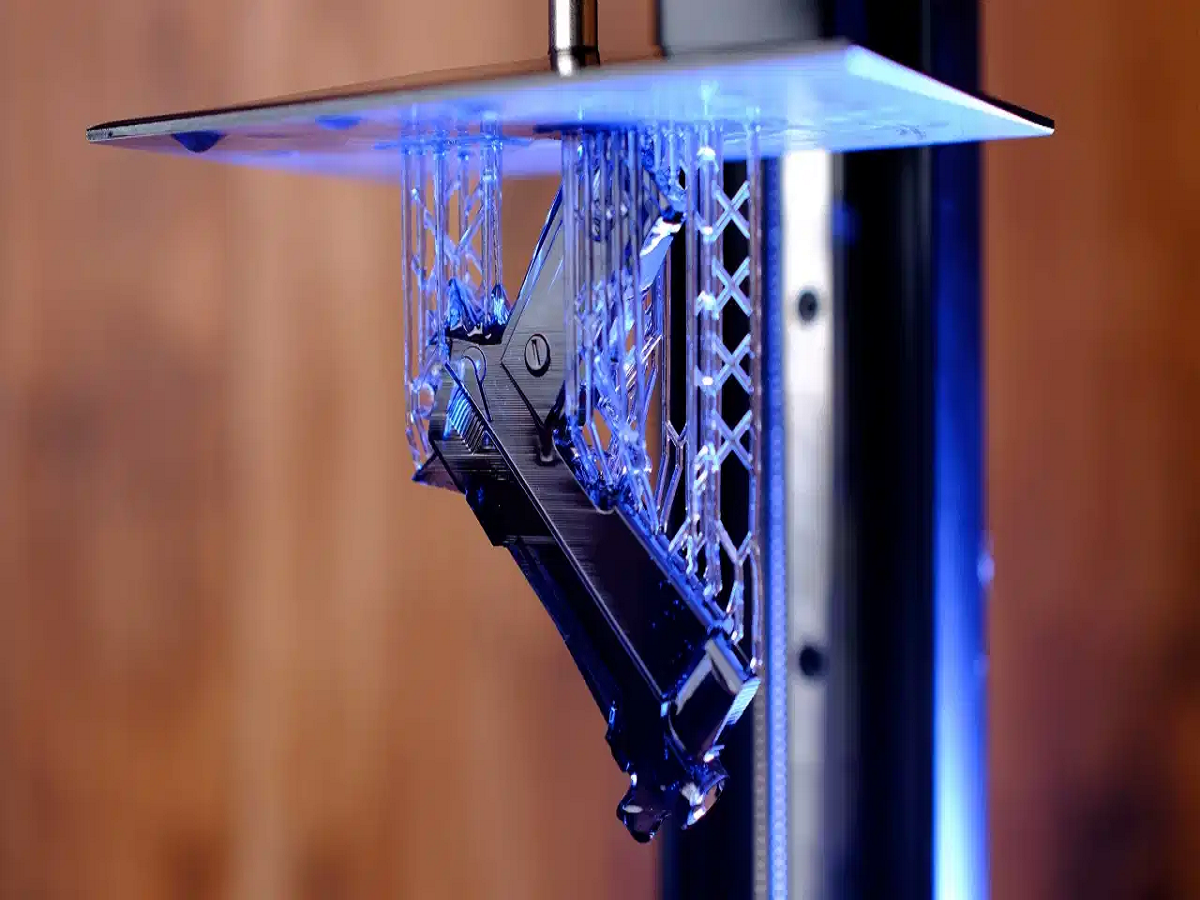
3D printing has already transformed manufacturing, healthcare, engineering, and product development. Now, researchers are taking the concept a step further with 4D printing, a technology that allows printed objects to change their shape or behavior when exposed to specific environmental conditions.
Unlike conventional 3D-printed products, 4D-printed objects can be designed to respond to temperature, humidity, light, magnetic fields, or pH changes. This ability could make the technology important for future applications ranging from medicine to aerospace.
What Is 4D Printing?
In traditional 3D printing, an object is produced layer by layer according to a digital design. Once printed, the object generally maintains the same shape and structure.
4D printing adds another dimension: time and transformation.
It uses smart materials that are programmed to respond to external stimuli. When the surrounding conditions change, the material can automatically bend, expand, contract, fold, or return to a predetermined shape.
For example, a smart material could be designed to change its shape when exposed to heat or water.
How Is 4D Printing Different From 3D Printing?
The biggest difference isn't simply the printer—it is the material and design philosophy.
3D printing focuses primarily on creating a specific shape and structure. 4D printing goes further by designing how that object will behave after it has been printed.
A 3D-printed component generally remains static, whereas a 4D-printed component can be programmed to respond to its surroundings.
This could eventually allow manufacturers to create products that adapt automatically instead of requiring motors, electronics, or manual adjustments.
Smart Materials Are the Key
Smart materials are at the heart of 4D printing.
Shape-memory polymers can return to a predetermined shape when exposed to heat. Hydrogels can expand or contract when they interact with water.
Researchers are also studying materials such as liquid-crystal elastomers and self-healing polymers. These materials could potentially make future 4D-printed products more flexible, responsive, and durable.
Potential Applications in Healthcare
Healthcare is one of the areas where 4D printing could have significant potential.
Researchers are exploring the possibility of creating medical implants that change shape inside the body. The technology could also potentially be used for targeted drug-delivery systems that release medicine at a specific location or under particular conditions.
Such applications could reduce the need for complicated mechanical components and allow medical devices to respond more naturally to their environment.
However, extensive testing would be required before these technologies could be widely used in patients.
Could Transform Aerospace Technology
4D printing could also have interesting applications in the aerospace industry.
A structure could potentially be manufactured in a compact form to save space during transportation. Once it reaches its destination, environmental conditions could trigger it to expand into a much larger structure.
For example, researchers could explore self-deploying antennas, solar-panel structures, or other spacecraft components.
Such technology could potentially reduce the space and mechanical systems required to deploy large structures.
Will 4D Printing Replace 3D Printing?
Not anytime soon.
4D printing is still largely in the research and prototype stage. Researchers need to overcome challenges involving material strength, transformation speed, reliability, repeatability, and long-term durability.
As a result, 4D printing is more likely to complement 3D printing rather than replace it.
The real promise of 4D printing is that future products may not simply be manufactured into a fixed shape. Instead, they could be designed to adapt, transform, and respond to changing conditions automatically—potentially opening an entirely new chapter in advanced manufacturing.