TECH
Your Car Could Soon Talk to Traffic Lights: How Vehicle-to-Everything Technology Is Making Roads Smarter
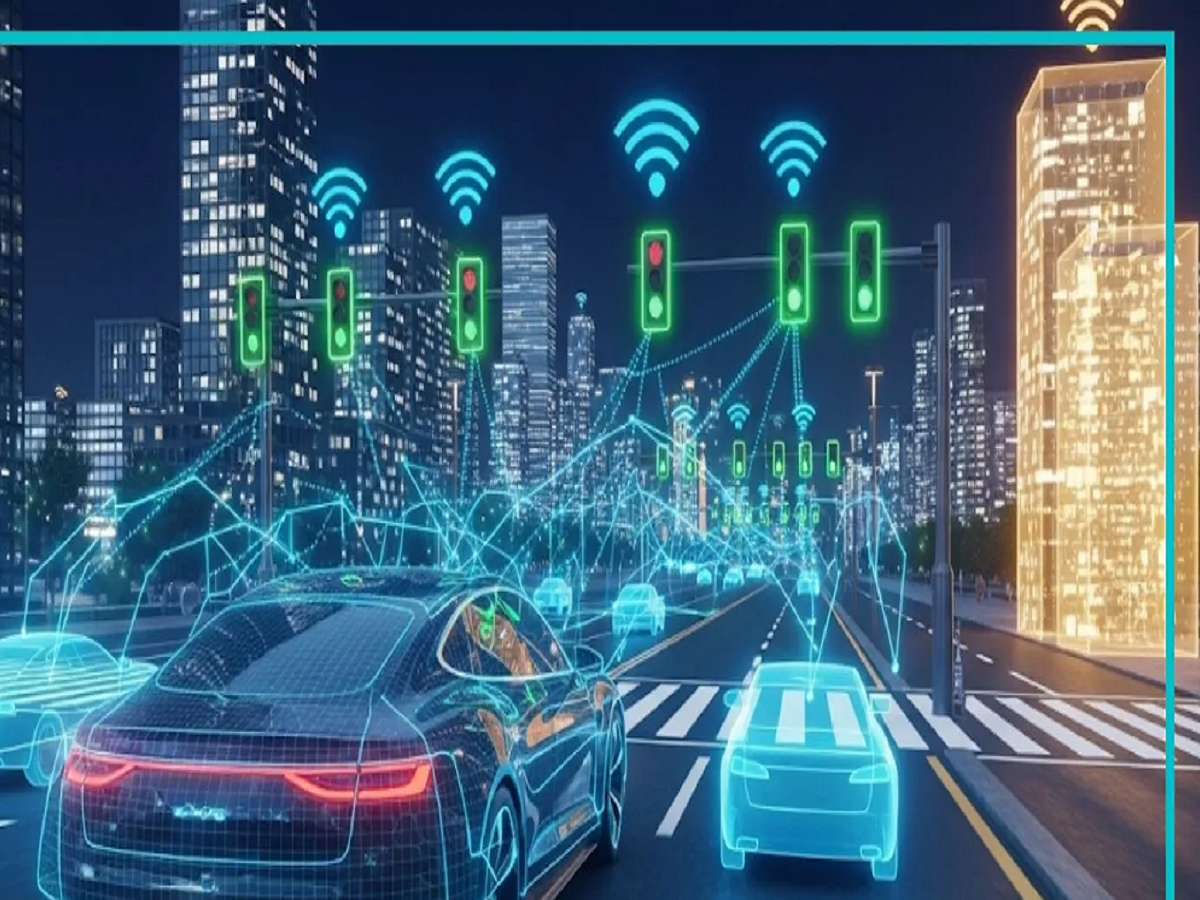
Imagine driving towards a busy intersection and receiving an alert that the traffic light is about to turn red. Your car warns you about a vehicle approaching from a blind corner, detects an accident ahead and suggests a safer route before you even see the traffic jam.
These possibilities are driving the development of Vehicle-to-Everything (V2X) technology, a communication system designed to help vehicles exchange information with other vehicles, road infrastructure, pedestrians and network services.
As the automotive industry moves towards connected and increasingly automated vehicles, V2X could become an important part of how future roads operate.
What Is Vehicle-to-Everything Technology?
Vehicle-to-Everything, commonly known as V2X, allows vehicles to communicate with elements around them to improve road awareness and safety.
Unlike conventional driving assistance systems that rely mainly on cameras, radar and other onboard sensors, V2X can provide information from outside the vehicle's immediate field of view.
The technology includes several forms of communication:
-
Vehicle-to-Vehicle (V2V): Vehicles exchange information about their position, speed and driving conditions.
-
Vehicle-to-Infrastructure (V2I): Vehicles communicate with traffic signals, road sensors and other connected infrastructure.
-
Vehicle-to-Pedestrian (V2P): Compatible systems exchange relevant safety information involving pedestrians or cyclists.
-
Vehicle-to-Network (V2N): Vehicles use network connectivity to access services such as traffic updates, hazard notifications and cloud-based information.
Together, these capabilities could help drivers become aware of potential hazards earlier than they otherwise would.
How Does the Technology Work?
A connected vehicle can generate information about its location, speed, direction and movement. Depending on the system, this information may be transmitted directly to nearby vehicles or through network infrastructure.
For example, if a connected vehicle brakes sharply because of an obstacle, it may send a warning to other vehicles approaching the same area.
Similarly, a connected traffic signal could provide information about its current state or expected changes, helping compatible vehicles and driving systems respond more effectively.
Different V2X implementations use different communication technologies, including dedicated short-range communications and cellular-based systems.
The effectiveness of the system depends on communication reliability, deployment coverage, compatible equipment and how well the information is interpreted.
Five Ways V2X Could Change Driving
1. Earlier Warnings About Accidents
One of the most promising applications is sharing hazard information between vehicles.
A car approaching a blind bend may not have a clear view of an accident further along the road. If another connected vehicle has detected the hazard and communicates it, the approaching driver could receive an earlier warning.
Such alerts may provide valuable extra time to react, particularly on highways and roads with limited visibility.
However, the benefit depends on the hazard being detected, the information being transmitted successfully and the receiving vehicle having compatible systems.
2. Smarter Traffic Signals
Connected traffic lights could communicate information about signal timing and road conditions.
In some settings, this could help vehicles approach intersections more smoothly, reduce unnecessary stopping and improve traffic coordination.
Traffic-management systems could also use aggregated information to adjust signal timings in response to changing traffic volumes.
These benefits would require suitable infrastructure and careful coordination between vehicles and road authorities.
3. Better Protection for Pedestrians
Pedestrians and cyclists can be difficult for drivers to notice, especially at night or near obstructed intersections.
V2X-enabled systems could potentially share information about vulnerable road users through compatible devices or infrastructure.
For example, a vehicle might receive a warning about a pedestrian near a crossing even when the person is partly hidden from the driver's view.
Such systems would complement, rather than replace, cameras, radar, careful driving and conventional pedestrian-safety measures.
4. Reduced Traffic Congestion
Traffic jams often result from a combination of high traffic volume, sudden braking, poorly coordinated signals and incidents that disrupt road flow.
Connected vehicles could share traffic information more quickly, allowing navigation and traffic-management systems to respond to developing congestion.
In the future, coordinated systems may help smooth traffic flow and reduce unnecessary braking.
However, communication technology alone cannot eliminate congestion caused by insufficient road capacity, roadworks or excessive demand.
5. Support for Autonomous Vehicles
Self-driving systems need reliable information about their surroundings to make driving decisions.
Cameras, radar and other onboard sensors remain essential, but V2X could provide additional context about events beyond the vehicle's direct line of sight.
For example, a connected vehicle might receive a warning about a collision around a corner or information about an approaching emergency vehicle.
Combining external communication with onboard sensing could improve situational awareness, although autonomous vehicles must still operate safely when communications are unavailable or inaccurate.
What Could V2X Mean for India?
India's roads present distinctive challenges, including mixed traffic, unpredictable movements, crowded intersections and varying infrastructure quality.
Connected-vehicle technology could eventually support better traffic management, emergency warnings and coordination at selected intersections or highway corridors.
For instance, a connected traffic system could help communicate information about road closures, approaching hazards or changing signal conditions.
However, widespread deployment would require substantial coordination among vehicle manufacturers, telecom operators, infrastructure providers and government authorities.
Compatibility standards, network coverage, installation costs, cybersecurity and the reliability of road infrastructure would all influence how quickly the technology could be adopted.
India's diverse mix of cars, motorcycles, commercial vehicles, bicycles and pedestrians also means that systems would need to account for road users who do not have connected devices.
Does Every Car Need Internet Access for V2X?
Not necessarily.
Some V2X systems are designed for direct communication between nearby devices, which can operate without sending every message through the public internet.
Other applications rely on cellular networks or cloud services to provide broader coverage and access to updated information.
The distinction matters because network-based services may depend on coverage, while direct communication systems have their own range, compatibility and interference limitations.
A practical connected-road network may combine several communication methods.
The Biggest Challenges Ahead
Despite its potential, V2X technology faces several obstacles.
Infrastructure Costs
Traffic signals, road equipment and vehicles may need additional communication hardware. Installing and maintaining this infrastructure across large road networks could be expensive.
Cybersecurity
Connected vehicles could become targets for malicious interference if communication systems are not properly secured. Authentication, encryption, secure software updates and effective incident-response procedures are essential.
Privacy
Vehicle location and movement information can reveal sensitive details about people's routines. Systems must carefully limit data collection and protect information from misuse.
Reliability
A vehicle must not rely blindly on external messages. Communications can be delayed, unavailable or incorrect, so systems need to handle failures safely.
Compatibility
Different manufacturers and regions must support compatible communication standards for V2X to deliver its full potential.
Will V2X Make Accidents a Thing of the Past?
No technology can eliminate every road accident.
Driver behaviour, road design, weather, vehicle condition and many other factors influence safety. V2X can provide additional information and earlier warnings, but it cannot guarantee that every danger will be detected or avoided.
Its greatest value may come from combining connected communication with established safety features, better road engineering and responsible driving.
Conclusion
Vehicle-to-Everything technology could transform roads from isolated vehicles and traffic signals into a more connected transportation system.
By enabling cars to exchange information with nearby vehicles, infrastructure and network services, V2X could improve hazard awareness, support traffic coordination and provide valuable information to future driving systems.
The technology still requires investment, common standards and strong security protections. Its impact will also depend on how widely connected systems are deployed.
As vehicles become more intelligent, the next major advance in road safety may not come only from better sensors inside cars. It may also come from vehicles learning to communicate with the world around them.